


Expert Buying Guide
36000 BTU Mini Split: 3 Ton Heat Pump Buying Guide
A few years ago, I got called out to a barndominium just outside of Austin. The owner had tried to cool a massive 1,500-square-foot open room with a couple of dinky window units. Predictably, it was a swamp. What he actually needed was a 36,000 BTU mini split—a true 3-ton beast. Here’s how you get sizing and setup right the first time.
When you scale up to 36k BTUs, you’re officially entering the heavy-duty tier of HVAC. We’re talking about equipment engineered to handle huge open-concept living spaces, multi-zone homes, massive workshops, or commercial storefronts.
Look, dropping a system this big into your property isn't cheap. If you screw up the sizing or pick the wrong indoor configuration, you’re going to deal with horrible temperature swings, a short-cycling compressor, and utility bills that will make you wince. To be honest, there's a lot of bad advice out there. So, I’m going to break down what you actually need to know about square footage, single vs. multi-zone setups, and how these things perform when the snow starts falling.
What Exactly Is a 36,000 BTU Mini Split?
In the trade, we measure cooling and heating in British Thermal Units (BTU). Exactly 12,000 BTUs equals one ton of air conditioning. Simple math: a 3-ton heat pump pushes 36,000 BTUs per hour.
Ductless 36000 BTU systems are fundamentally different from those clunky old central ACs that leak half their air into your attic. These use variable-speed inverter compressors. Instead of kicking on with a massive roar, blasting you with freezing air, and then shutting off entirely, an inverter works like a gas pedal. It ramps up during the brutal afternoon heat and scales back to a whisper at night. The result? You get insane comfort and genuinely lower electric bills.
Usually, I recommend a 3-ton setup for:
- Homes that need one big condenser outside to run four or five separate room handlers inside.
- Giant open spaces. Think great rooms with cathedral ceilings, or a finished 3-car garage.
- Commercial spots that get a lot of foot traffic or pack in heat-generating equipment.

The Reality Check on Square Footage
The biggest lie I see floating around on forums is the blanket rule that "3 tons cools exactly 1,500 square feet."
Sure, that's an industry average, but it completely ignores the real world. A house in humid Florida is going to perform way differently than a well-insulated cabin in Maine. If you want the exact number, you need an ASHRAE Manual J load calculation. But to give you a realistic baseline, here is what a 36,000 BTU single-zone system typically covers based on Department of Energy (DOE) climate zones.
A 36,000 BTU mini split covers 1,100–1,900 sq ft depending on climate and insulation. Hot-humid southern climates shrink effective cooling coverage closer to 1,100 sq ft, while well-insulated northern homes stretch it toward 1,900 sq ft. Always adjust for ceiling height, sun exposure, and single vs. multi-zone layouts.
Sizing by Climate Zone & Insulation
| DOE Climate Zone | Region Example | Low Insulation (Older Home) | High Insulation (Modern Build) |
|---|---|---|---|
| Zone 1-2 (Hot/Humid) | Florida, Texas, Arizona | 1,100 - 1,200 sq. ft. | 1,400 - 1,500 sq. ft. |
| Zone 3-4 (Mixed) | Carolinas, Tennessee | 1,300 - 1,400 sq. ft. | 1,500 - 1,600 sq. ft. |
| Zone 5-6 (Cold) | Ohio, New York, Colorado | 1,400 - 1,500 sq. ft. | 1,600 - 1,800 sq. ft. |
| Zone 7-8 (Subarctic) | Maine, North Dakota | 1,500 - 1,600 sq. ft. | Up to 1,900 sq. ft.* |
*(A quick note on those extreme northern zones: heating demand is what actually dictates your size up there. A 3-ton unit can cool 1,900 sq ft easily in North Dakota, but you better make sure it has the guts to heat that same space when it drops to sub-zero). For a deeper dive into full room-by-room distribution, check out our full BTU sizing calculation guide.
Picking Your Setup: Single vs. Multi-Zone
The beauty of ductless tech is the flexibility. You can pair that massive 36K outdoor condenser with a few different indoor styles depending on the layout of your space.
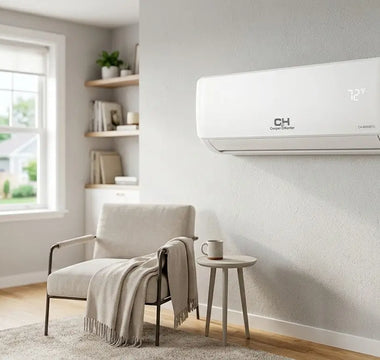
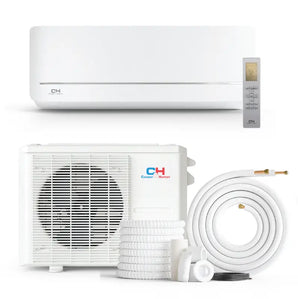
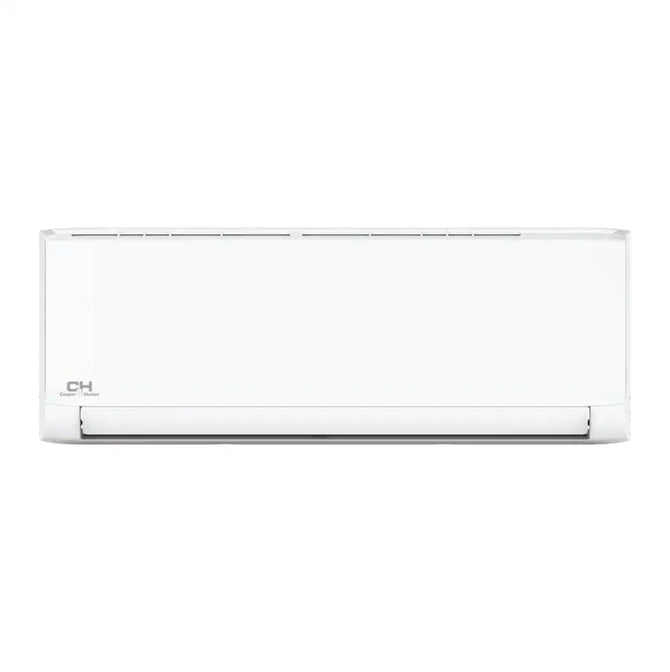
- The High-Wall Mount: This is your standard rectangular unit. It sits high up on the wall and sweeps air across the room. It’s the cheapest to buy and easiest to install. Perfect for a big open basement.
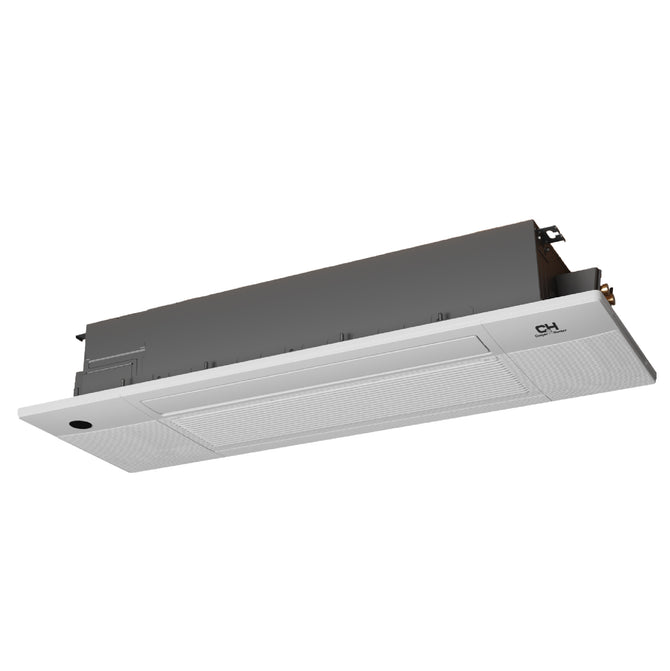
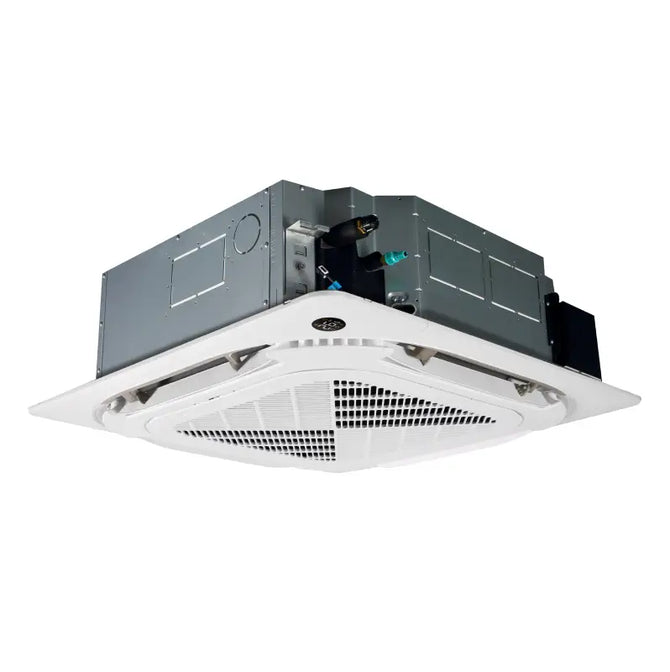
- The Ceiling Cassette: My personal favorite if you've got the ceiling clearance. It sits perfectly flush, hiding the ugly mechanical bits up in the joists, and blows air in four directions. Great for commercial spaces or modern aesthetics.
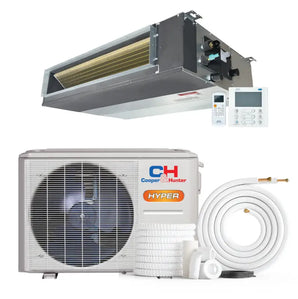
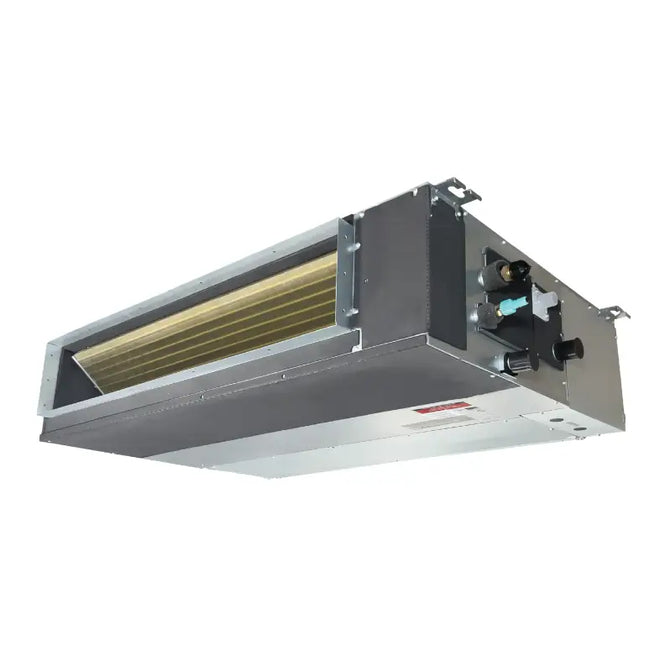
- Concealed Duct: Want the efficiency of a mini split but absolutely hate the look of wall units? We hide these in a closet or an attic and run short ducts to normal ceiling registers. It's essentially invisible.

When you're figuring out your zones, think about how you use your house. Dumping all 36,000 BTUs into one massive living room with a single air handler is highly efficient. But if you've got closed bedrooms down the hall, they are going to suffocate.
Alternatively, you could split that capacity into four smaller units (say, 9K each for four bedrooms). You'll pay more for the equipment and the installation labor, but you get total control. You can turn off the AC in empty guest rooms, saving serious money. A great example is pairing a 3-ton condenser with multiple concealed duct indoor units.
Hyper Heat: Can it Actually Handle Winter?
Old-school heat pumps were basically useless up north once it started snowing. They'd lose half their heating capacity the second temperatures dipped below freezing.
Today's inverter heat pumps—specifically those stamped with "Hyper Heat"—are a totally different animal. Standard units still choke around 17°F, but a solid Hyper Heat model will maintain a high percentage (often 80–100%) of its rated heating capacity down to 5°F. Some premium models will keep producing reliable heat even when temperatures drop to -13°F, though you should expect heating capacity to naturally taper off in extreme sub-zero conditions.
By the way, keeping an eye on efficiency ratings is crucial. Look at SEER2 for cooling (anything 18+ on a 3-ton system is fantastic) and HSPF2 for heating (aim for 8.5 or higher). Modern R-32 and R-454B refrigerants also transfer heat much better, lowering your running costs.
Let's Talk Installation & Money
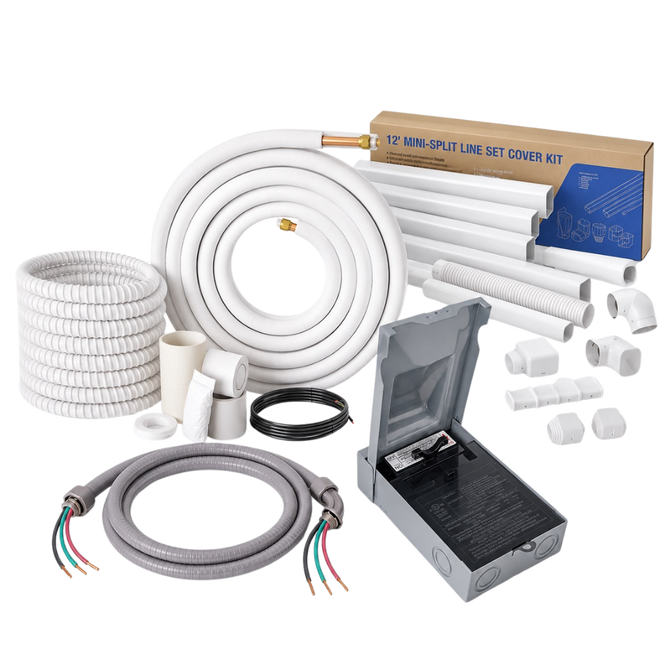
Don't let anyone on YouTube convince you that slapping a 3-ton system onto your house is a casual weekend DIY project. It draws serious power. You absolutely need a 230V circuit—you can't just plug this into a wall outlet. You're typically looking at a dedicated double-pole breaker (25 to 30 amps) and thick 10/2 stranded copper wire. If your specific 36k unit requires a 35-amp or 40-amp breaker, you must step up to a thicker 8/2 wire.
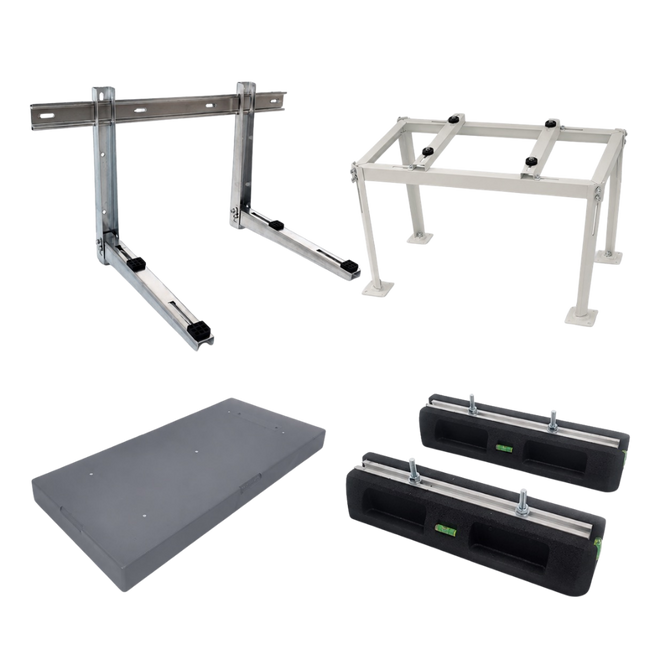
The outdoor condenser often has dual fans and weighs north of 200 pounds. You need a solid concrete pad or a heavy-duty bracket bolted to the studs. Always hire a certified pro to handle the high-voltage lines and the refrigerant charge to protect your factory warranty.
Honestly, it varies widely by region and setup, but for a rough budget:
- A solid single-zone wall unit equipment package runs between $1,800 and $2,800.
- Multi-zone or hidden ceiling cassette hardware often lands between $3,200 and $4,800.
- Professional labor usually costs $1,500 to $3,500 depending on the complexity of running the copper line sets.
Verifying Your Choice — A 5-Minute Sizing Worksheet
Run through these steps before buying to ensure 36,000 BTU is truly your magic number.
3-Ton BTU Target Calculator
Base BTU
Multiply your square footage by 15–18 BTU/sq ft (use 16 for an average home).
Example: 1,800 sq ft × 16 = 28,800 BTUCeiling Height Adjustment
If ceilings are between 8 and 10 ft, multiply base BTU by (ceiling height ÷ 8). For vaulted ceilings over 10 ft, use percentage bumps (+25-30%) as warm air stratifies.
Example: 10-ft ceilings → 28,800 × (10÷8) = 36,000 BTUSun & Window Exposure
Heavy sun / west-facing glass: + 10–20% | North-facing / well-shaded: − 5–10%
Internal Gains
Add 600 BTU per occupant above 2 people. Add heavy equipment load estimates if sizing a commercial shop or loaded kitchen (+3,000–8,000 BTU).
Insulation Adjustment
Poor insulation (older, drafty home): + 15% | Good insulation (modern build, spray foam): − 10%
If your final result falls within 10–15% of 36,000 BTU, you’re in the perfect range. If it lands well above 40,000 BTU, look into multiple systems or a larger 4-ton unit. If it comes in below 30,000 BTU, a 24K or 30K system is the smarter, more efficient fit.
My Top 36,000 BTU Recommendations Right Now
If I were outfitting a large house, a commercial space, or a massive shop right now, here is what I'd look at:
1. The "Keep My Ducts" Option:
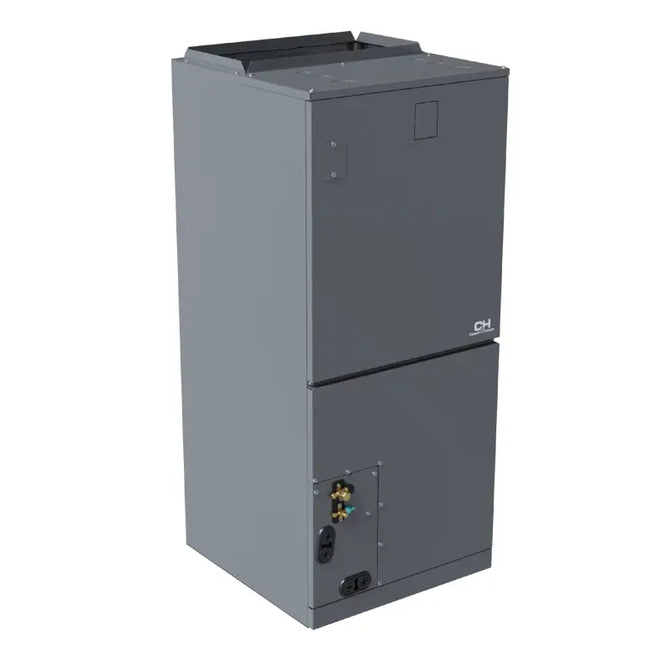
If you’re ripping out an old gas furnace but your house’s ductwork is still in great shape, I love the Cooper Hunter 36K BTU split system with air handler. It slaps a hyper-efficient modern inverter outside but uses a traditional central air handler inside. Best of both worlds.
2. The Garage/Warehouse Brawler:
Got a giant, hot workshop or a loft that just needs raw, affordable cooling power? The 36,000 BTU 230V Bravo wall-mounted heat pump skips the fancy multi-zone features and just delivers brutal, fast pull-down cooling for massive single rooms.
3. The Designer's Choice:
If your spouse is threatening to kill you for putting a massive plastic box on the living room wall, the 3-ton Hyper Series ceiling cassette is the way to go. It sits flush in a drop ceiling or drywall pocket and looks incredibly sleek while blowing air in a 360-degree pattern.
Quick FAQs (The Stuff I Get Asked Every Day)
How many square feet does a 36,000 BTU mini split actually cool?
Under normal conditions, about 1,400 to 1,600 sq ft. If you live in a swampy hot-humid climate, scale that down closer to 1,200. If you have a super-insulated new build up north, you can stretch it to 1,800 or 1,900 sq ft.
Is a 36,000 BTU mini split single or multi-zone?
It can be either! You can buy a massive 36K single-zone unit for a huge room, or buy a 36K multi-zone condenser that powers up to four or five smaller indoor units scattered around your house.
What size breaker does it need?
Usually a dedicated 230V circuit with a 25 to 30-amp double-pole breaker on 10 AWG wire. However, if your unit specifies a 35-amp or 40-amp breaker, you must use thicker 8 AWG wire. Always read the Minimum Circuit Ampacity (MCA) on the sticker on the side of the unit before you buy or run wire.
Do I need a soft start kit for a 3-ton unit?
Usually, no. Because these modern ductless systems use DC inverter compressors, they gently ramp up their power. You don't get that massive, lights-flickering power spike you see with old single-stage AC units.
The Bottom Line
Getting a massive 3-ton rig is a game changer for large open areas, commercial applications, or multi-zone households. Just get the sizing right, map out your indoor units carefully, don't skimp on the professional installation, and make sure you grab a Hyper Heat model if you live where it snows. You'll be set for the next decade.
Ready for 3 Tons of Comfort?
Browse our complete lineup of heavy-duty 36,000 BTU systems. Find the perfect high-wall, cassette, or multi-zone heat pump built specifically for your climate and floor plan.
Shop 36K Systems Now*Installation note: Mini split systems require proper refrigerant handling by EPA 608-certified technicians. Local electrical and mechanical codes govern circuit requirements and permitting. Always consult a licensed HVAC professional before finalizing equipment selection and installation plans.