


Installers' Guide
18,000 BTU Mini Split: Our No-Nonsense Sizing & Selection Guide
We’ve been on a hundred service calls that start exactly like this: a homeowner standing in a hot master bedroom at 10 PM, the ceiling fan aggressively chopping the air and doing basically nothing, asking us why their brand new air conditioner isn't keeping up.
Go too small, and you still sweat. Go too big, and the unit short-cycles. The air stays clammy, the compressor wears out prematurely, and you end up paying us to replace a board that shouldn't have failed for another decade.
The 18,000 BTU mini split (also known as a 1.5-ton ductless heat pump) sits in a massive sweet spot for residential HVAC. It has enough muscle for a large primary suite, an open-concept living room, or a properly insulated workshop. But "18,000 BTU" isn't a magic wand. It won't fit every situation.
We’re going to clear away the fuzzy sizing charts and the electrical "gotchas" that constantly surprise buyers, so you can actually get this right the first time.
What an 18K System Actually Cools (and Heats)
The standard textbook answer is that an 18000 BTU mini split handles about 700 to 1,000 square feet under normal conditions.
But let's be real—what the heck is a "normal" condition? A drafty, uninsulated garage in Texas and a shaded, tightly sealed basement bedroom in Seattle do not carry the same thermal load. The BTU rating tells you the unit's output under laboratory test conditions. It doesn't tell you what happens when the afternoon sun is baking your living room window.
The baseline math: 18,000 BTU ÷ ~18 BTU per square foot = about 1,000 sq ft as your absolute upper limit under ideal conditions. But in the real world, you almost never hit ideal conditions.

Where Does an 18K Unit Actually Belong?
Big Master Bedrooms (800–1,000 sq ft)
This is probably our most common install for an 18K. A primary suite with a walk-in closet and a big ensuite bath usually eats up this capacity perfectly.
We did an install last August for a guy with an 850 sq ft primary suite over a garage. Vaulted ceilings, massive west-facing windows. He originally wanted a 12K unit because a sizing calculator online told him it was enough. We talked him into the 18K. On a 95-degree day, that 18K was running full tilt just to keep the room at 72°F. If we had gone with the 12K, he would have been miserable.
Open-Concept Living Areas
Sizing gets weird here. A 700 sq ft living room that flows directly into a kitchen doesn't behave like an enclosed 700 sq ft box. Cooking heat, foot traffic, and lack of doors mean you're essentially cooling a much larger zone. An 18K unit will usually hold its own here, but it won't drop the temperature from 80°F to 68°F in ten minutes. It takes time.
Garages and Workshops
Garages are absolute thermal nightmares. We get calls all the time from guys who bought an 18000 BTU mini split for garage use, threw it in an uninsulated pole barn, and are angry it's not a meat locker in July.
Quick tangent: If your overhead garage door is an uninsulated piece of aluminum baking in the sun, do not buy a mini split yet. You are literally trying to air condition the neighborhood. Go spend $150 on foam panel inserts for your garage door, seal the drafts, and then look at HVAC.
If your space is uninsulated, double the BTU requirement. Seriously.
Throw Away the Chart: The Modifiers That Actually Matter
We don't expect you to do a full Manual J load calculation (the engineering software we use to size houses), but you need to account for reality. We just add or subtract based on a few rules of thumb:
- Vaulted/Cathedral Ceilings: Add 8-10% to your required BTUs. Heat rises, and you have way more air volume than a standard 8-foot ceiling.
- Sun-Basted Rooms: If the room has big West or South-facing windows, add 15%.
- Kitchens: If this unit is cooling a space where you actively use an oven, add 3,000 to 4,000 BTUs to your total requirement.
- Heavy Shade: You can actually subtract 10% if the room is buried in shade on the north side of the house.
If your math points to 19,000 BTUs after these adjustments, buy the 24,000 BTU system. Don't cross your fingers and hope the 18K will stretch. It won't.
The Electrical Reality Check
This is the part where we usually have to give bad news on a job site. Almost every 18,000 BTU mini split requires 208/230 volts on its own dedicated circuit.
You cannot just plug this thing into a wall outlet. You cannot piggyback it off your dryer's circuit.
We’ve had homeowners buy units online, call us to install them, and then have a meltdown when we tell them they need to pay an electrician $500 to run a new 230V line and install an outdoor disconnect box before we can even unbox the condenser.
Look at the unit's spec sheet. Find the MCA (Minimum Circuit Ampacity). Usually, for an 18K, it's going to call for a 20-amp or 25-amp double-pole breaker and 10 AWG or 12 AWG wire, depending on the specific model. Plan for this expense upfront.
Cold-Climate Heating: Read the Fine Print
If you live in Minnesota, Ohio, or anywhere the air hurts your face in January, pay attention to the HSPF2 rating and the derated heating capacity.
A standard 18K heat pump will produce 18,000 BTUs of heat at 47°F. But when the temperature drops to 5°F, a standard unit’s output might plummet to 10,000 BTUs. It’s physically running out of heat to extract from the outdoor air.
If this is your primary heat source in a cold climate, you absolutely must buy a "Hyper-Heat" or low-ambient model (like the Mitsubishi H2i series). They have flash-injection compressors that allow them to pump out 100% of their rated heating capacity all the way down to 5°F, and they keep working down to -13°F.

The Brand Breakdown (Our Honest Opinion)
Here’s our entirely subjective take after lugging hundreds of these compressors through muddy side-yards and wrestling with them on ladders.
| Model | SEER2 | Best For | Our Two Cents |
|---|---|---|---|
| Olmo | 18.5 - 19.0 | Tight budgets, Straightforward installs | A great budget option that doesn't feel overly cheap. The installation is usually painless, though the indoor chassis plastics can be a bit rigid. They cool reliably and are perfect for a garage or workshop where you don't need all the fancy bells and whistles. |
| Bravo | 18.0 | Entry-level, Simple room cooling | Similar to other entry-level units, you get what you pay for. They function perfectly fine, but we highly recommend cutting off their factory flares on the linesets and making our own. If budget is your only concern, they work, but be gentle when snapping the indoor head onto the wall bracket. |
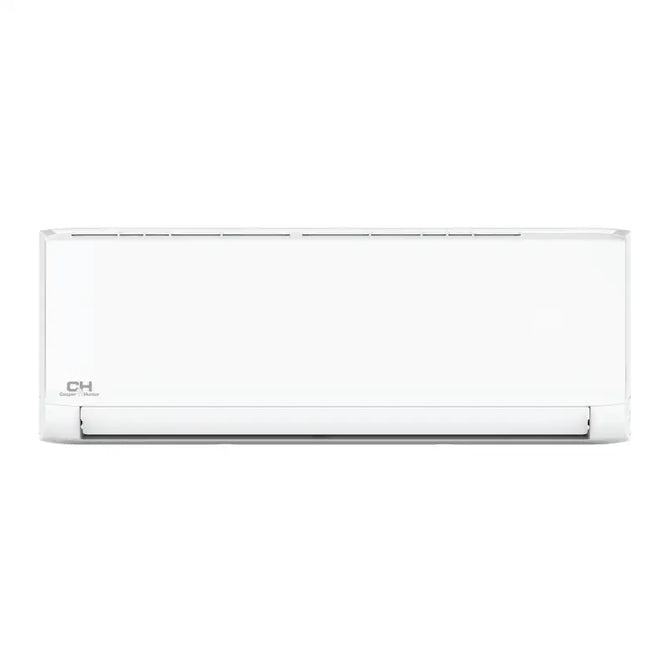
| Cooper & Hunter | 20.0+ | High value, Cold climates | Honestly, C&H is one of our go-to brands right now. The build quality rivals the big premium names, especially their hyper-heat models. The wall plates are sturdy, the compressors are incredibly quiet, and their tech support is surprisingly helpful. You get premium performance without the massive price tag. |
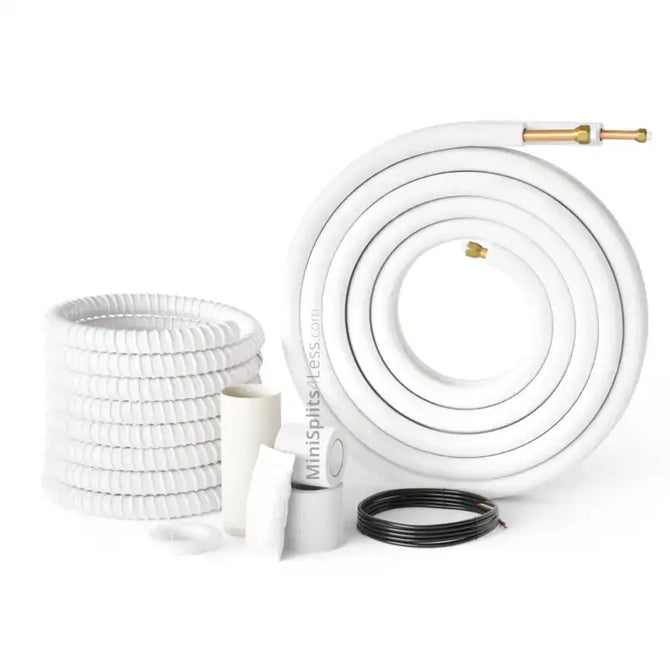
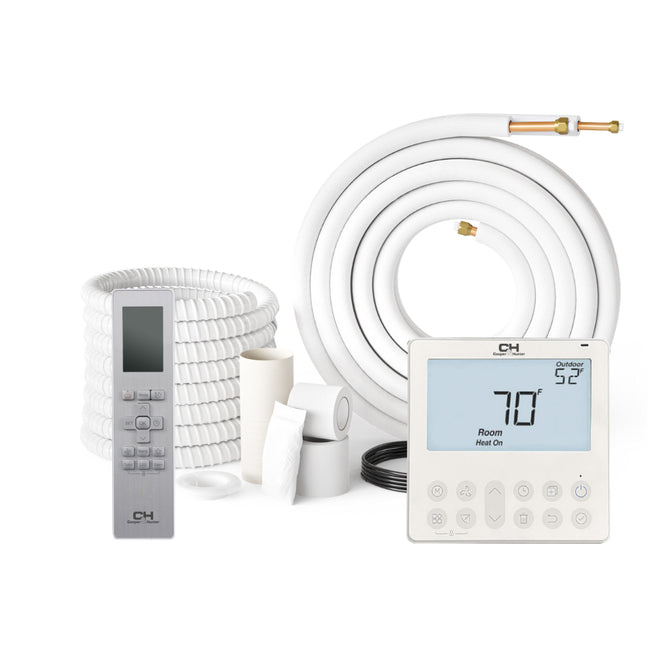
If you buy a cheaper brand, the copper flares they put on the linesets from the factory are often garbage. They look like they were cut with a butter knife. We end up cutting them off and re-flaring the copper ourselves on almost every job to prevent refrigerant leaks. If you are doing a standard (non-precharged) install yourself, check those flare faces!
DIY vs Professional Install
Can you do this yourself?
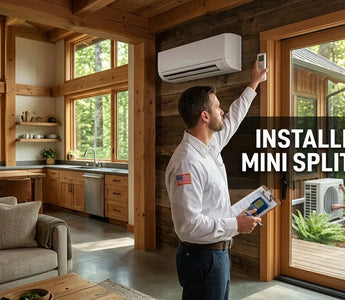
The short answer is no. If you want your system to function properly—and more importantly, if you want to keep your manufacturer's warranty valid—you absolutely need a professional installation. Almost all major mini split brands strictly require proof of installation by a licensed HVAC contractor. If you attempt to install the unit yourself, your 7 to 12-year warranty is typically voided the moment you open the box.
Beyond the serious warranty implications, standard systems require specialized tools and training to set up safely. You need an EPA 608 certification to handle the refrigerant legally, a micron gauge, a vacuum pump to pull down the lineset, and a nitrogen tank to pressure test your flares. Keep your coverage intact and just hire a pro. An installed 18K system from a contractor will typically run you between $3,000 and $4,800 all-in.
Final Pre-Purchase Checklist
Before you hit "Add to Cart", check yourself:
Did you adjust for room conditions?
(Ceiling height, windows, kitchen heat).
Do you have space in your electrical panel?
You need two open slots for a 230V breaker.
Are you in a freezing climate?
If yes, verify the unit is a low-ambient/hyper-heat model.
Do you have a plan for the condensate drain?
The indoor unit produces water. It needs to flow downhill via gravity, or you’ll need to buy a condensate pump (and those little pumps can be noisy).
Frequently Asked Questions
How many amps does an 18,000 BTU mini split draw?
Most modern 18,000 BTU systems will draw between 6 and 10 amps while running. However, because you need to account for startup spikes and the Minimum Circuit Ampacity (MCA), almost all manufacturers require installing them on a dedicated 20-amp or 25-amp double-pole breaker at 208/230V.
Can an 18,000 BTU mini split cool multiple rooms?
It depends on the airflow. A single indoor air handler will struggle to push cold air down long hallways or through standard doorways into enclosed rooms. If you have an open-concept space (like a living room opening directly into a dining area), it works great. If you need to cool totally separate bedrooms, you should look into a multi-zone system with one outdoor compressor and multiple smaller (e.g., 9K) indoor heads.
How much does it cost to run an 18K system per month?
Because they use inverter technology, these systems rarely run at 100% capacity constantly—they throttle down to maintain temperature. Depending on your local electricity rates and the unit's SEER2 rating, expect it to cost anywhere from $20 to $50 per month during peak cooling or heating seasons.
Do I need a concrete pad for the outdoor unit?
Not necessarily. While a poured concrete pad or a pre-fabricated equipment pad works well, many installers (especially in snowy areas) prefer to mount the compressor directly to the exterior wall using a heavy-duty wall bracket, or use a raised ground stand to keep it clear of snowdrifts and debris.
An 18,000 BTU mini split is a workhorse. Matched to the right room, it will quietly keep you comfortable for 15 years. Just do the math, respect the electrical requirements, and whatever you do—don't bend the copper lineset too sharply.
Ready to look at actual units? Check out the curated, AHRI-certified inventory over at minisplitsforless.com. Compare specs, read the electrical requirements carefully, and grab the right system for your space.