


Installer Insight
18,000 BTU Mini Split: 220V vs 110V Power Requirements (Bench Tested)
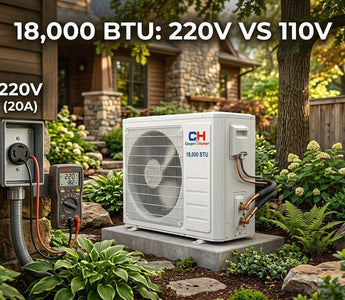
If you are buying a 1.5-ton ductless system, here is the bottom line: 95% of 18,000 BTU mini splits require a dedicated 208–240V single-phase circuit on a 15A or 20A double-pole breaker. Trying to plug one of these into a standard 110V wall outlet will instantly trip your breaker or severely choke the inverter compressor's efficiency. Electrician costs for this dedicated run usually land between $300 and $800, with permits billed separately by your municipality.
Just last Tuesday, a DIY customer down in Houston called us in a panic. He tried to wire a new 18K unit to an old 100A panel shared with an electric dryer, and the breaker box literally started smoking. To help you avoid this kind of expensive nightmare, the team at Mini Splits For Less pulled these systems onto our warehouse test bench. We grabbed our clamp meters, tracked actual amp draws, and mapped out exactly what you need to hand to your local electrician.
If you haven't yet verified that 1.5 tons is the exact capacity your space requires, take a moment to use our complete 18K BTU sizing & selection guide before diving into the wiring specs below.
The Direct Answer: You Need 220V
Almost every reputable 18,000 BTU system on the market mandates a 220V power supply. It comes down to raw physics. A 1.5-ton heat pump moves a massive volume of refrigerant to condition up to 750 square feet of space.
Sure, there are exactly two obscure 18K 110V models floating around sketchy third-party marketplaces right now. We don't stock them. We actively warn customers away from them. Why? Both of these 110V outliers post a miserable SEER2 rating below 17. By forcing an 18,000 BTU compressor to run on 110V, manufacturers have to artificially cap the maximum compressor speed. The result? Sluggish cooling times and horrible winter heating performance. When you invest in a premium mini split, you want ultra-high efficiency. That requires the robust power delivery of a 220V line.
Let's Talk Amp Draw: Why 110V Circuits Choke
A standard U.S. wall outlet delivers 110/120V on a 15-amp breaker. According to the National Electrical Code (NEC), a continuous load should never exceed 80% of the breaker's capacity. That gives you 12 usable amps.
An 18,000 BTU compressor running at steady-state maximum cooling or heating capacity pulls about 1,500 to 1,800 watts. (Defrost cycles are a separate, higher-draw event — more on that in the bench test data below.)
- At 220V, 1,800 watts draws roughly 8.1 amps. Smooth sailing.
- At 110V, that exact same load demands 16.3 amps. Boom. Instant breaker trip.

To prevent trips, 110V 18K units restrict the compressor. You never actually get the full 18,000 BTUs when you need it most. Furthermore, modern mini splits use variable-speed DC inverters. Converting 220V AC to DC is highly efficient. Forcing the unit to draw massive amperage from a 110V line generates excessive heat in the control board, frying components and drastically reducing the system's lifespan.
Real Amp-Draw Test Data (Our Bench Results)
Manufacturer spec sheets are great, but we prefer real numbers. We hooked two of our most popular 18K units up to a calibrated digital clamp meter right here in our facility.
Test Conditions: 95°F ambient outdoor temperature for cooling, 32°F ambient for heating.
| Operational Phase | Cooper Hunter 18K 230V MIA Series | Bravo Milano 18,000 BTU 230V |
|---|---|---|
| Startup Amp Draw (Soft Start) | 1.2 Amps | 1.1 Amps |
| Steady-State Cooling (95°F) | 6.8 Amps | 7.0 Amps |
| Max Heat Mode / Defrost (32°F) | 9.4 Amps | 9.7 Amps |
| Nameplate MCA (Min Circuit Ampacity) | 13.0 Amps | 14.0 Amps |
| Nameplate MOCP (Max Breaker) | 20 Amps | 20 Amps |
Why is defrost higher than the steady-state number above? During a defrost cycle, the unit briefly reverses its cycle and can engage supplemental resistance heat to melt ice off the outdoor coil — that combined load is why this row (9.4–9.7A, roughly 2,070–2,130W at 220V) runs higher than the 1,500–1,800W steady-state range you'll see quoted elsewhere in this guide. It's a short-duration spike, not the unit's normal running load.
The takeaway: Because of advanced soft-start technology, these units never spike the panel during startup. No flickering lights in the living room. But during deep winter defrost, they sit comfortably around 9.5 amps. That right there is hard proof of why a dedicated 15A or 20A 220V circuit is non-negotiable.
Electrical Panel Compatibility: 3 Real-World Scenarios
Your ability to install this system depends entirely on your main electrical panel. You need two open, adjacent slots for a double-pole breaker. Here is what we see in the field every week:
Found in older urban rowhouses or smaller mid-century homes. If you have an electric oven, an electric dryer, and a 100A main breaker, you are tapped out. The 18K mini split will be the straw that breaks the camel's back. You'll need a subpanel or a 200A service upgrade.
Common in 1980s suburban builds. This can usually handle a new 20A 220V circuit, provided you aren't simultaneously charging two Teslas and running an electric furnace. Have an electrician perform an NEC 220.83 load calculation.
The standard for modern construction. Locate two open slots, and your electrician can run the line straight to the condenser.
The Spec Sheet for Your Electrician
Print this out. Hand it to your sparky or use it to verify your materials if you are pulling the homeowner permit yourself.
- Breaker Size: 15A or 20A Double-Pole (Check unit's MOCP rating).
- Wire Gauge (Under 40 ft): 12 AWG stranded copper (THHN/THWN-2). Do not use aluminum.
- Wire Gauge (40 ft and beyond): 10 AWG stranded copper (controls voltage drop on longer runs).
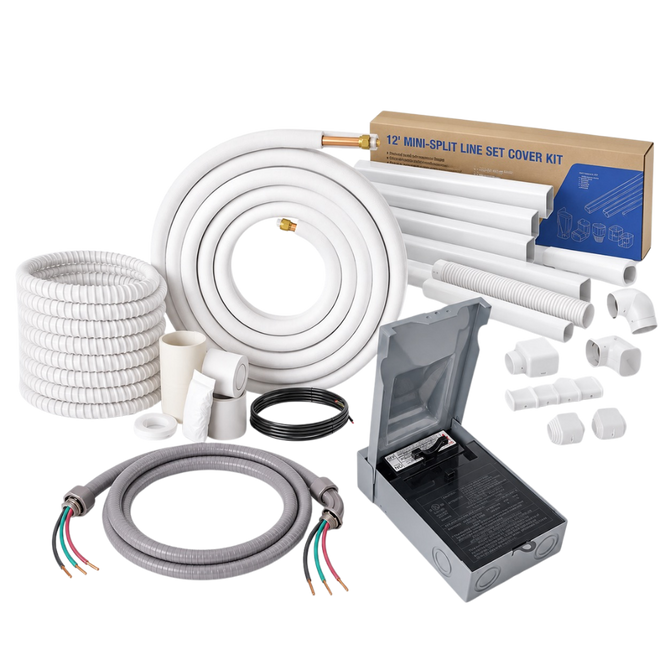
- Disconnect Box: NEMA 3R non-fused or fused disconnect, mounted outdoors within line of sight of the condenser.
- Electrical Whip: 1/2-inch liquid-tight flexible metal conduit (LFMC).
Electrician Cost Breakdown: $300–$800
Financial anxiety stalls a lot of HVAC projects. Based on hundreds of customer invoices we review, a clean installation costs $300 to $800 in electrician labor and materials. This assumes your panel is in the garage or basement, the condenser is directly on the other side of the wall, and the wire run is under 40 feet.
- Labor (2-4 hours): $200 – $500
- Materials (Wire, Breaker, Disconnect, Whip): $100 – $300
Separate from the electrician's quote: your municipality will also charge a permit fee, typically $50 to $250 depending on jurisdiction. That's paid to the city, not the electrician, so budget for it on top of the $300–$800 range above.
Watch out for cost inflators: If your panel is full, a tandem breaker consolidation adds about $150. If you require a completely new subpanel, expect to add $1,200 to $2,500 to the bill.
Recommended 18,000 BTU 220V Units (In-Stock)
Once your electrical plan is validated, it's time to select the hardware. These are the top-performing, most reliable 220V units we test and ship daily.
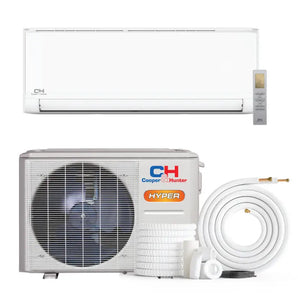
- The Premium Performer: Bravo Milano 18,000 BTU 230V. High SEER2, whisper-quiet operation, and heavily favored by installers for its robust build quality.
- The Value Heavyweight: Bravo Roma 18,000 BTU 230V budget pick. Excellent reliability and heating capability at a highly aggressive price point.
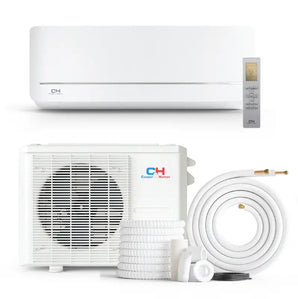
- The Smart Climate Choice: Cooper Hunter 18K 230V MIA Series. Wi-Fi ready out of the box with exceptional cold-climate heating retention.
Who Should NOT Buy an 18K Mini Split
An 18,000 BTU system is a powerhouse. It is not a universal solution. Do not buy this size if:
- You live in a space under 500 sq ft. You will short-cycle the compressor. The room will get cold fast, but it won't run long enough to pull humidity out of the air, leaving you with a clammy, mold-prone room. Check our BTU sizing calculator to find your perfect match.
- You rent an apartment and cannot upgrade the panel. If your landlord denies the 220V electrical permit, you cannot safely run this unit.
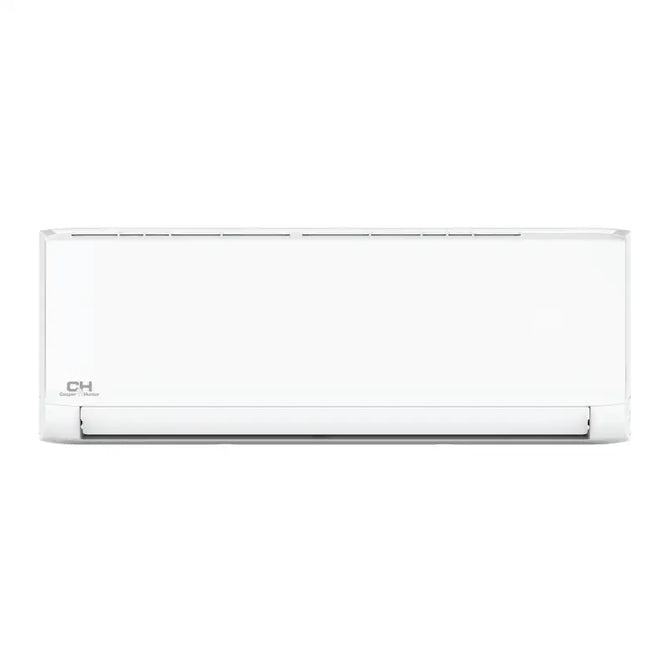
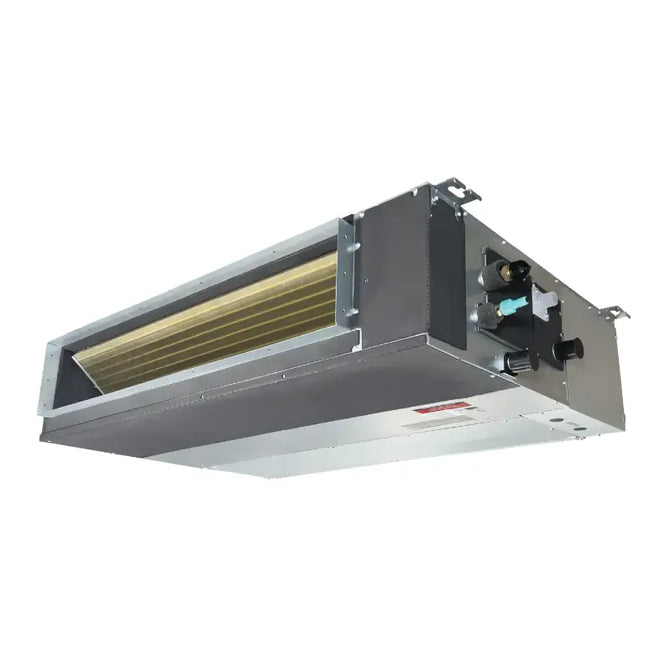
- You hate seeing a massive wall unit. 1.5-ton wall handlers are physically large. If aesthetics matter above all else, consider an 18K concealed duct 230V alternative that hides entirely in your ceiling.
Frequently Asked Questions
Yes. Approximately 95% of 1.5-ton systems require a dedicated 208–240V circuit. A handful of 110V models exist, but they are highly discouraged due to terrible efficiency (SEER2 ratings below 17) and restricted performance to prevent tripping your breakers.
Most 18,000 BTU 220V mini splits specify a 15A or 20A double-pole breaker. Always verify the unit's MOCP (Maximum Overcurrent Protection) on the nameplate before buying the breaker.
Absolutely not. Standard wall outlets max out at 15 amps at 110V. A 1.5-ton unit pulls around 16.3 amps on 110V; plugging one into a standard receptacle will instantly trip the breaker, risk an electrical fire, and violate NEC dedicated circuit mandates.
There's no blanket NEC-wide length limit as long as you pull a separate equipment grounding conductor inside the conduit — which is standard practice for a condenser whip. The often-cited "6 feet" figure only applies if the liquid-tight metal conduit itself is used as the ground path with no separate ground wire, and some local jurisdictions add their own 6-foot amendment regardless. Ask your electrician or inspector about your local code before assuming either way.
Yes, under the updated NEC standards, outdoor HVAC units require GFCI protection, though local code adoption varies by city.
No. Manufacturers explicitly require stranded copper wire for control and power lines to prevent terminal arcing and communication errors between the indoor and outdoor units.
Disclaimer: A2L refrigerants like R-32 require installation by certified technicians, and local building codes may vary. Always consult a licensed electrician to ensure your installation complies with the most recent National Electrical Code (NEC) updates in your jurisdiction.