


Complete Sizing Guide
24000 BTU Mini Split: How Much Square Footage Can It Cool?
You’ve measured your great room. You’ve checked a BTU chart online. And every source keeps giving you the same maddeningly fuzzy answer: “approximately 1,000 to 1,500 square feet.” Fine. But what does that really mean for your house, in your climate, with your 10-foot ceilings and that west-facing wall of glass? That’s exactly where this guide proves useful.
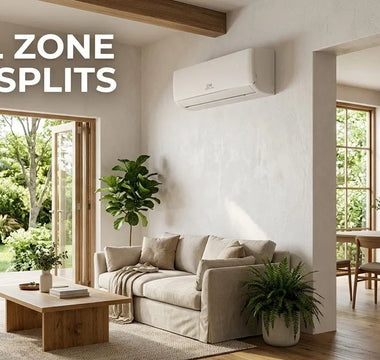
Whether you’re sizing a finished basement, an open-concept main floor, or a detached garage workshop, the 24,000 BTU mini split (also known as a 2-ton mini split) is one of the most common capacity options in the ductless market — and one of the easiest to size wrong. Let’s sort that out.
The Direct Answer: 1,000 to 1,500 Square Feet
Under standard benchmark conditions — 8-foot ceilings, average insulation (R-13 walls, R-30 attic), moderate sun exposure, and IECC Climate Zone 4 (think Louisville, KY or St. Louis, MO) — a 24,000 BTU mini split cools approximately 1,000 to 1,500 square feet.
That’s the clean, citation-friendly fact. Save it, screenshot it, stick it on a note — then keep going, because those conditions describe maybe 30% of actual installations.
A 24,000 BTU mini split covers 1,000–1,500 sq ft under standard conditions (8-ft ceilings, average insulation, IECC Zone 4). Hot-humid climates shrink effective coverage to ~1,000 sq ft. Well-insulated northern climates push it toward 1,500 sq ft. Always adjust for ceiling height, sun exposure, and occupancy load.
How BTU-to-Square-Foot Math Actually Works
The “20 BTU per square foot” rule of thumb is a starting point — not a final answer. It assumes a perfectly average home in a perfectly average climate. Real homes don’t work that way. That number comes from a simplified version of Manual J, the ACCA-published residential load calculation method HVAC engineers use when they size systems properly.
Manual J looks at 12+ variables: local design temperatures, wall U-values, window SHGC (solar heat gain coefficient), infiltration rates, internal gains from people and appliances, and more. A proper Manual J calculation for a 1,200 sq ft space might come back at anywhere from 14,000 BTU to 30,000 BTU depending on those inputs.
The rule of thumb flattens all of that into one multiplier. Helpful for a quick estimate? Yes. Enough to buy equipment with confidence? Not really. That shortcut is exactly how people end up with the wrong unit.
Why 24,000 BTU = 2 Tons of Cooling
If you’ve been comparing central HVAC systems or talking with contractors, you’ve probably heard “2-ton system.” Here’s what that means: 1 ton of refrigeration equals exactly 12,000 BTU per hour. So, 24,000 BTU ÷ 12,000 = 2 tons.
The term “ton” goes back to the days when ice handled cooling — one ton of ice melting over 24 hours absorbs roughly 12,000 BTU/hr of heat. Modern refrigeration kept the unit, and it never went away. So when a contractor quotes a “2-ton mini split,” they’re talking about the same thing you’re reading about here.

Six Variables That Move the 24K BTU Coverage Window
This is where generic charts let people down. These six factors can shift your real-world coverage by 20–40% in either direction.
1. Ceiling Height
The standard 20 BTU/sq ft baseline assumes 8-foot ceilings. Taller ceilings mean more air volume to condition. It’s not a perfectly linear relationship, but this is a solid working rule:
| Ceiling Height | Load Adjustment |
|---|---|
| 8 ft (standard) | Baseline (×1.0) |
| 9 ft | +10–12% |
| 10 ft | +20–25% |
| 12 ft (vaulted) | +35–45% |
A 1,200 sq ft loft with 12-foot exposed ceilings behaves thermally more like 1,600+ sq ft. Without that adjustment, your 24K BTU unit may come up short.
2. Climate Zone (IECC Zones 1–7)
This is easily the most ignored variable in online sizing guides. The International Energy Conservation Code (IECC) splits the country into climate zones based on heating and cooling degree-days. A 24,000 BTU mini split has a very different job in Miami (Zone 1) than it does in Minneapolis (Zone 6).
| IECC Climate Zone | Example Cities | Effective 24K BTU Coverage |
|---|---|---|
| Zone 1 (Hot-Humid) | Miami, Orlando | ~900–1,050 sq ft |
| Zone 2 (Hot-Humid) | Houston, New Orleans | ~1,000–1,150 sq ft |
| Zone 3 (Warm-Mixed) | Atlanta, Dallas | ~1,100–1,250 sq ft |
| Zone 4 (Mixed) | Louisville, St. Louis | ~1,200–1,400 sq ft |
| Zone 5 (Cool-Mixed) | Chicago, Boston | ~1,300–1,500 sq ft |
| Zone 6 (Cold) | Minneapolis, Burlington | ~1,400–1,550 sq ft |
| Zone 7 (Very Cold) | International Falls, MN | ~1,450–1,600 sq ft* |
*Zone 7 sizing skews toward heating load; cooling coverage is high because design cooling temps are lower. Consult a local HVAC professional for heating-dominant climates.
Why the gap? In hot-humid zones, the unit has to carry a heavy latent cooling load — pulling moisture out of the air — in addition to the sensible load, which is the actual temperature drop. That moisture removal eats up a meaningful chunk of available BTU capacity, so your effective square footage shrinks.
3. Sun Exposure and Window Orientation
A south- or west-facing room with large, unshaded windows can raise cooling load by 15–30% compared with a north-facing room with minimal glass. An 1,100 sq ft open-concept kitchen/living space with a wall of west-facing windows and no exterior shade can easily need 26,000–28,000 BTU at peak afternoon load.
If the space gets hammered by sun, add +10–25% and ask whether a 24K unit can truly handle the peak load — or whether a 36,000 BTU mini split is the better move.
4. Insulation Quality
Insulation R-value has a direct effect on how fast heat moves through your building envelope.
| Insulation Level | Description | Load Effect |
|---|---|---|
| R-11 or below | Poor / older construction | +15–20% above baseline |
| R-13 | Standard 2×4 walls | Baseline |
| R-19/21 | Standard 2×6 walls | −8–12% |
| R-30+ walls / R-49 attic | Superinsulated / new construction | −15–25% |
A well-insulated 1,500 sq ft Zone 5 home may need less cooling than a poorly insulated 1,000 sq ft Zone 3 home. In plenty of cases, insulation quality matters more than floor area.
5. Occupancy and Internal Heat Sources
Every person in a room generates about 250 BTU/hr at rest and up to 750 BTU/hr during activity. Then add cooking equipment, home office servers, gaming rigs, or commercial-grade lighting, and internal gains can change the load fast.
- A home office with two workstations and a server rack can add 2,000–4,000 BTU/hr of internal load.
- A kitchen running an oven, stovetop, and commercial refrigeration can add 5,000–8,000 BTU/hr.
- A busy household of 5 people adds ~1,500 BTU/hr in occupancy load alone.
Garage workshops with compressors, CNC equipment, or welders often need a real load calculation — a simple rule-of-thumb BTU chart just isn’t enough.
6. Building Tightness and Air Infiltration
Older homes with poor sealing, single-pane windows, and gaps around doors and fixtures constantly leak conditioned air. That “infiltration load” is basically wasted BTU. A 1970s ranch house with an ACH (air changes per hour) of 0.5 or higher may need 10–20% more cooling capacity than a comparable modern, tightly built home.
Ideal Use Cases for a 24,000 BTU Mini Split
Once you account for the variables, here’s where the 2-ton mini split really performs well:
- Large primary suites (600–900 sq ft): A master bedroom, walk-in closet, and ensuite bathroom treated as one zone — the 24K unit delivers quiet, accurate comfort with enough capacity to handle a high-end bathroom with heated floors and a soaking tub adding thermal mass.
- Open-concept great rooms (1,000–1,400 sq ft): This is the classic application. Main living, dining, and kitchen in one open layout, assuming decent ceiling height and solid insulation.
- Finished basements (1,000–1,500 sq ft): Basements have built-in thermal advantages — surrounded by earth, they stay cooler naturally. A 24K unit often performs better here than expected.
- Garage workshops (up to ~800 sq ft with high internal gains): Equipment raises the internal load enough to offset some climate advantage, so don’t overestimate coverage in an active garage.
- Detached ADUs and guest cottages (600–1,200 sq ft): Single-zone simplicity makes the 24K a strong fit for standalone structures where ductwork would cost too much.
- Dedicated server rooms or home theaters: Heavy internal gains can justify what looks like oversizing; a 600 sq ft server room may need a full 24,000 BTU based on equipment load alone.

Single-Zone vs. Multi-Zone at 24K BTU
Here’s a situation people rarely mention: your open-concept floor plan is technically 1,200 sq ft, but it’s L-shaped — with the kitchen tucked around a corner from the living room. You install a single-head 24,000 BTU mini split in the living room. Six months later, the kitchen sits at 79°F while the living area stays at 72°F.
Airflow throw distance is the hidden problem in complicated floor plans. A wall-mounted mini split head throws conditioned air roughly 20–30 feet horizontally, depending on the model and fan speed. Around corners, past partial walls, or into nearby alcoves, that airflow drops off fast.
For L-shaped or segmented open layouts, a multi-zone configuration often beats a single large head even when total capacity stays the same:
| Configuration | Total BTU | Best For |
|---|---|---|
| 1× 24K (single-head) | 24,000 | Rectangular open zones, ≤30 ft throw |
| 2× 12K (dual-zone) | 24,000 | Two rooms, L-shapes, split levels |
| 9K + 12K (dual-zone) | 21,000 | Bedroom + living area asymmetry |
| 9K + 9K + 6K (tri-zone) | 24,000 | Three distinct spaces, smaller footprints |
Multi-zone condensers give you independent temperature control in each zone, better humidity management for each space, and none of the airflow geometry compromises. The downside? Higher upfront cost and a more involved installation.
The Cost of Getting Sizing Wrong
Oversizing a 24,000 BTU mini split for a small space doesn’t just waste money — it hurts comfort and can shorten equipment life.
When a 24K unit serves an 800 sq ft space, it hits setpoint so fast that the compressor short-cycles, running in short bursts instead of longer, steady cycles. The results are real:
- Short-cycling increases by ~40%, according to ACCA research on oversized residential systems
- Indoor relative humidity rises 8–12 percentage points because the unit doesn’t run long enough to condense moisture out of the air — the classic “cold but clammy” problem
- Compressor lifespan decreases an estimated 3–5 years due to frequent start-stop thermal stress
- Energy bills actually increase despite shorter runtime, because startup current draw is the highest-consumption point in any refrigeration cycle
Undersizing causes a different set of problems. A 24K unit trying to cool 1,800 sq ft in Phoenix runs flat out all the time, never reaches setpoint on hot afternoons, piles on wear, and may even trigger thermal protection shutoffs. Expect energy bills 25–40% higher than with a properly sized unit — and a system that simply doesn’t dehumidify well enough.
The right size isn’t the biggest unit you can afford. It’s the smallest one that can handle your peak load reliably.
Verifying Your Choice — A 5-Minute Sizing Worksheet
Run through these six steps before you buy. This turns the article into a real decision tool.
BTU Target Calculator
Base BTU
Multiply your square footage × 20 BTU/sq ft.
Example: 1,200 sq ft × 20 = 24,000 BTUCeiling Height Adjustment
If ceilings are between 8 and 10 ft, multiply base BTU by (ceiling height ÷ 8). For vaulted ceilings over 10 ft, use the percentages in the table above instead of this linear formula, as warm air stratifies.
Example: 10-ft ceilings → 24,000 × (10÷8) = 30,000 BTUClimate Zone Adjustment
Zone 1: × 1.25 | Zone 2: × 1.15 | Zone 3: × 1.10 | Zone 4: × 1.00 | Zone 5–6: × 0.90 | Zone 7: × 0.85
Example (Zone 3, Atlanta): 30,000 × 1.10 = 33,000 BTUSun Exposure
Heavy sun / west-facing glass: + 10–20% | North-facing / shaded: − 5–10%
Internal Gains
Add 600 BTU per regular occupant above 2 people. Add equipment load estimates (kitchen: +3,000–5,000 BTU; office: +1,000–3,000 BTU)
Insulation Adjustment
Poor insulation (R-11 or less): + 15% | Good insulation (R-19+): − 10%
Your result is a more refined BTU target. If it falls within 10% of 24,000 BTU, you’re in a good range. If it lands well above 26,000 BTU, look at a 36K unit or multi-zone configuration. If it comes in below 21,000 BTU, a quality 18,000 BTU mini split is the smarter fit — and the cheaper one.
Recommended 24,000 BTU Systems
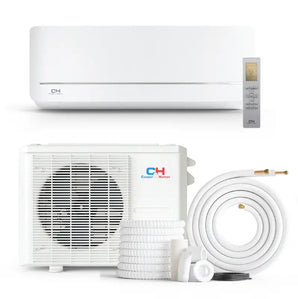
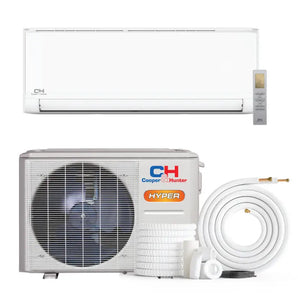
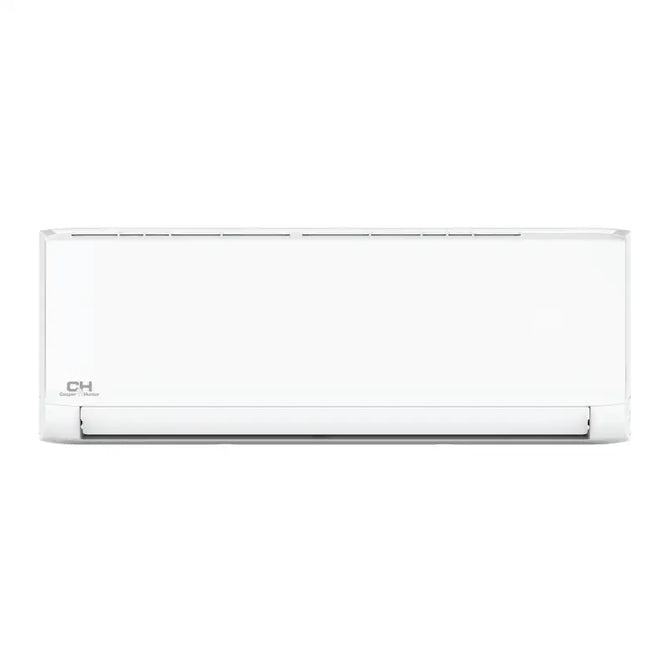
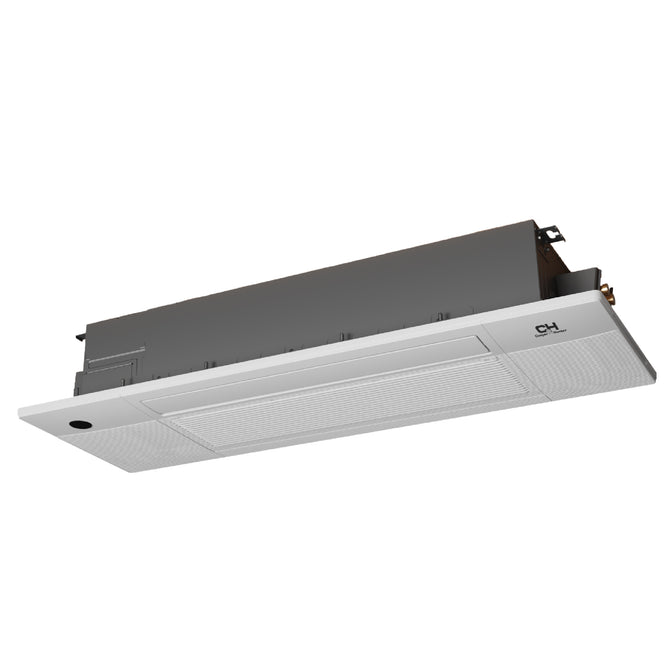
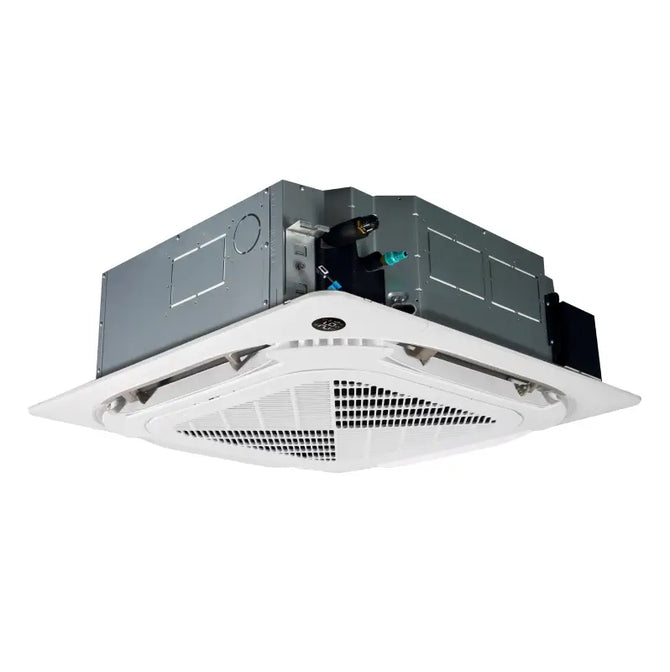
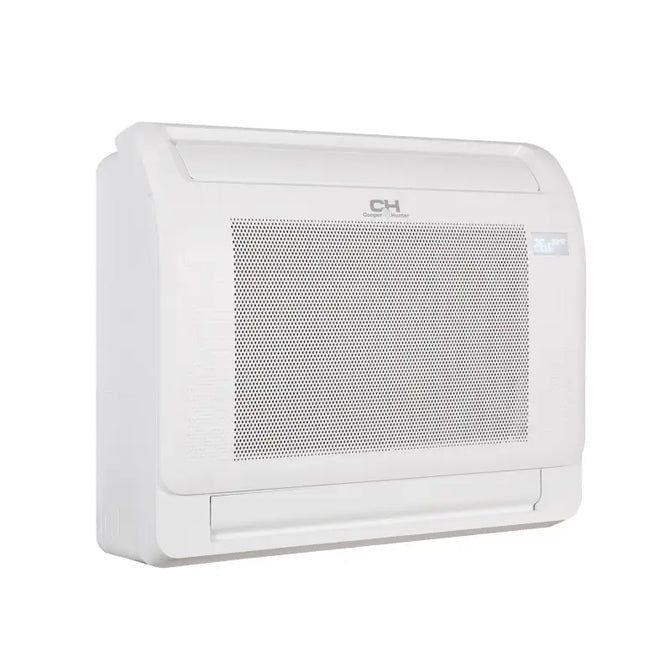
Sizing is only half the story. Efficiency, warranty, and build quality shape long-term satisfaction. When you’re comparing 24,000 BTU mini split systems, put these specs at the top of the list:
- SEER2 rating of 18+ — SEER2 is the updated efficiency metric under the post-2023 DOE standard; anything above 18 SEER2 delivers meaningful energy savings over a 10-year lifecycle
- HSPF2 8.5+ — in heating-heavy climates, this tells you how efficient the unit will be in winter
- Inverter compressor — this isn’t optional; inverter technology is what gives you variable capacity, quiet performance, and tighter humidity control
- AHRI-certified performance data — confirms the rated BTU has been validated in real-world testing, not just ideal lab conditions
- Heating operation at low ambient temperatures — look for rated operation at 5°F or lower (-13°F for hyper-heat / cold-climate models)
- Warranty terms — 5-year parts + compressor is the baseline; top brands offer 7–12 years
Brands with strong 24K BTU single-zone and multi-zone lineups include Mitsubishi Electric, Daikin, Pioneer, and MRCOOL — each brings different strengths in efficiency ratings, cold-climate performance, and DIY-friendly installation.
FAQ: 24,000 BTU Mini Split Sizing
What size mini split do I need for 1,200 square feet?
A 24,000 BTU unit is the standard match for 1,200 sq ft under default conditions. Drop to 18K only if the space is heavily insulated, shaded, and located in Climate Zone 5 or colder.
How many amps does a 24,000 BTU mini split draw?
Usually 15–20 amps on a dedicated 208/230V circuit. Always check the manufacturer’s Minimum Circuit Ampacity (MCA) rating — that’s the number your electrician uses for breaker and wire sizing.
Can a 24,000 BTU mini split heat as well as cool?
Yes. Modern inverter-driven heat pumps with HSPF2 8.5+ provide roughly 24,000 BTU of heating capacity. Standard models run down to 5°F outdoor temperature; extended cold-climate models operate at −13°F.
Will a 24,000 BTU mini split work in a 1,500 sq ft open-concept home?
Maybe, in Zones 3–5 with solid insulation. Once you get past 1,400 sq ft — especially in hot-humid climates or sun-heavy spaces — a multi-zone configuration usually gives you better comfort, better dehumidification, and more even temperatures across the whole area.
The Bottom Line
A 24,000 BTU mini split is a powerful, flexible system — a strong match for 1,000–1,500 sq ft when conditions line up, and still the right choice for smaller spaces with tall ceilings, heavy sun exposure, or high internal heat loads. But the “right unit” isn’t whatever the chart says on average. It’s the one that fits your actual conditions.
Run the 5-minute worksheet above. Check your climate zone. Measure those ceilings. And if your floor plan is anything other than a simple rectangle, take the multi-zone discussion seriously before you commit to a single-head install.
At minisplitsforless.com, you’ll find curated 24K BTU single-zone and multi-zone systems with full SEER2/HSPF2 specs, warranty details, and sizing support — so your investment works exactly the way you need it to from day one.
Find Your Perfect 24,000 BTU System
Browse top-rated 2-ton single-zone and multi-zone configurations. Get expert sizing help and wholesale pricing shipped directly to your door.
Shop 24K Systems Now*Installation note: Mini split systems require proper refrigerant handling by EPA 608-certified technicians. Local electrical and mechanical codes govern circuit requirements and permitting. Always consult a licensed HVAC professional before finalizing equipment selection and installation plans.