



The Definitive Mini Split Sizing Guide for 2026
Sizing a mini split is not guesswork — it is applied thermodynamics. An oversized unit short-cycles, fails early, and wastes money. An undersized one runs non-stop and never comforts. This guide gives you the real math, the real adjustments, and the real recommendations for Cooper & Hunter, OLMO, and BRAVO systems.
Start with 20 BTU × square footage, then apply multipliers for ceiling height (+15% above 8 ft), climate zone (±10-30%), sun exposure (+10%), insulation quality (±15%), and occupancy (+600 BTU per extra person). Round to the nearest commercially available size: 9k, 12k, 18k, 24k, 36k, 48k BTU. When in doubt, size slightly down, not up — modern Cooper & Hunter inverters handle peak loads better than oversized units handle part-load cycling.
Why Correct Sizing Is Non-Negotiable
Choosing the right mini split size is not a cosmetic decision — it is the single most important variable determining whether your system delivers comfort, efficiency, and longevity, or whether it becomes a thermal liability costing you hundreds every year.
Here is what proper sizing actually controls:
- Energy efficiency — A correctly sized inverter runs at 40-70% capacity most of the time, hitting peak SEER2 ratings. An oversized unit runs at 100% briefly, then shuts off, never reaching its efficiency sweet spot.
- Dehumidification — Mini splits remove humidity during their run cycle. Oversized units cool the air too fast, shut off before humidity drops, and leave your room feeling clammy at 72°F.
- Comfort consistency — Properly sized systems hold temperature within ±1°F. Oversized ones swing 3-5°F between cycles.
- Compressor longevity — Every start is the hardest moment for a compressor. Short-cycling (common with oversized units) can cut lifespan from 20 years to under 10.
- Electrical stability — Oversized units draw higher inrush current, accelerating wear on capacitors and contactors.
The Top 5 Mini Split Sizing Mistakes
The most common and most expensive mistake. Leads to short-cycling, poor dehumidification, and premature compressor failure. A 24k unit in a 500 sq. ft. space is not "powerful" — it is broken by design.
Choosing a 12k unit because it's on sale when your room needs 18k. You will spend more on electricity and replacements within 3 years than you saved on the initial purchase.
A 12k unit rated for IECC Zone 4 will struggle in Zone 7 winter. Cold-climate spaces need 20-30% more heating BTU and a Hyper Heat model rated for −13°F operation.
BTU sizing charts assume 8 ft. ceilings. Cathedral ceilings at 12 ft. add 50% more air volume — and your "correctly sized" 12k unit is now 30% undersized.
West-facing walls with large windows add 10-20% to cooling load. A kitchen adds 4,000 BTU for the stove alone. A garage gym with a treadmill adds another 2,000+ BTU.
Mini splits come in standard sizes: 9k, 12k, 18k, 24k, 30k, 36k, 48k, 60k. If your calculation says 15k, you don't order "15k" — you choose between 12k and 18k based on climate and priorities.
BTU Basics — What the Numbers Actually Mean
A British Thermal Unit (BTU) is the amount of energy required to raise one pound of water by one degree Fahrenheit. In HVAC, we measure BTU per hour (BTU/h) — the rate at which your mini split transfers heat into or out of a space.
BTU vs. Tonnage — Decoding the Industry Jargon
One "ton" of cooling equals 12,000 BTU/h. You'll see both units used:
- 9,000 BTU = 0.75 ton — typical for a bedroom or small office
- 12,000 BTU = 1.0 ton — the workhorse size for a living room
- 24,000 BTU = 2.0 tons — open-concept main floor
- 48,000 BTU = 4.0 tons — small whole-home applications
The Step-by-Step BTU Calculation
Professional contractors use Manual J load calculations — a formal ACCA-certified method. For homeowners, a simplified 4-step process gets you within ±10% of a Manual J result, which is close enough to select the correct standard size.
Step 1 — Measure Your Space (Square Footage)
Multiply length × width for each room the mini split will serve. For irregular shapes, break into rectangles and add.
Step 2 — Apply the Base BTU Formula
Step 3 — Adjust for Your Reality
Now layer in the multipliers. Each factor either increases or decreases your base BTU:
Step 4 — Round to a Standard Size
Mini splits are manufactured in fixed capacities. Round your final number to the nearest standard size:
9,000 • 12,000 • 18,000 • 24,000 • 30,000 • 36,000 • 48,000 • 60,000 BTU
Rule of thumb: if your calculation is within 10% below a standard size, choose that size. If it is more than 10% below, drop to the next smaller size — your inverter can handle peak loads, but cannot fight short-cycling.
The 2026 Mini Split BTU Sizing Chart
This chart assumes baseline conditions: 8 ft. ceilings, moderate climate (IECC Zones 3-5), average insulation, 1-2 occupants, minimal sun exposure. For deviations, apply the multipliers from Step 3 above.
| Square Footage | Recommended BTU | Typical Application | Recommended System Type |
|---|---|---|---|
| Up to 150 sq. ft. | 5,000 – 6,000 | Small bedroom, walk-in closet, tiny home | Single-zone, 9k floor model |
| 150 – 250 sq. ft. | 7,000 – 9,000 | Standard bedroom, home office | Single-zone 9k BRAVO or OLMO |
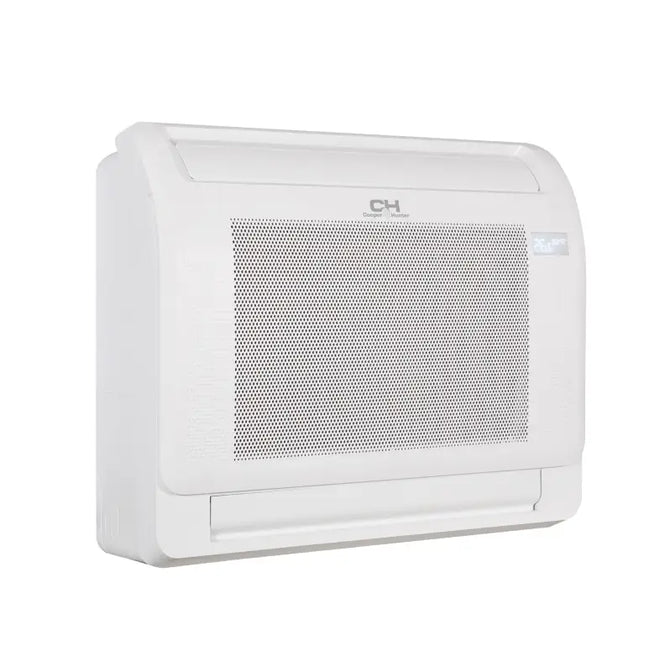
| 250 – 400 sq. ft. | 9,000 – 12,000 | Large bedroom, small living room | Single-zone 12k Cooper & Hunter |
| 400 – 700 sq. ft. | 12,000 – 18,000 | Living room, master suite, studio apt. | Single-zone 18k or dual-zone |
| 700 – 1,000 sq. ft. | 18,000 – 24,000 | Open-concept living/kitchen, 1-bed condo | Single-zone 24k or multi-zone |
| 1,000 – 1,600 sq. ft. | 24,000 – 30,000 | Full floor of average home, small house | Multi-zone (2-3 heads) |
| 1,600 – 1,900 sq. ft. | 30,000 – 36,000 | Medium single-story home | Multi-zone (3-4 heads) |
| 1,900 – 2,200 sq. ft. | 36,000 – 42,000 | Standard 2-story home | Multi-zone (4-5 heads) |
| 2,200 – 2,700 sq. ft. | 42,000 – 48,000 | Large family home | Multi-zone (5 heads) or dual outdoor |
| 2,700 – 3,000+ sq. ft. | 54,000 – 60,000 | Large home, small commercial | Multi-zone with dual condensers |
Advanced Adjustment Factors
Beyond the basics, these secondary factors can push your BTU requirement by ±20%. Professional installers use Manual J software to account for all of them.
Insulation & Envelope Quality
Your home's R-value (insulation effectiveness) directly affects heat loss/gain. A 1970s home with R-11 wall insulation loses roughly 2.5x more heat than a modern R-21 build. If your home is:
- Pre-1980 / uninsulated: Add 15-25% BTU
- 1980-2000 / moderate insulation: Use baseline
- 2000-present / code-compliant: Use baseline
- Passive house / R-30+ envelope: Subtract 10-15% BTU
Window Area & Orientation
Glass transfers heat 10x faster than insulated walls. If windows exceed 15% of floor area, add 10% BTU. For rooms with large south- or west-facing windows in summer-dominant climates, add another 10%.
Air Infiltration & Drafts
Older homes with weathered door seals and recessed lighting penetrations can have 3-5 air changes per hour. Newer tight builds average 1-2 ACH. If you can feel drafts around windows or doors, add 10% BTU for the infiltration load.
Internal Heat Sources
- Each occupant beyond 2: +600 BTU (seated activity)
- Kitchen with cooktop: +4,000 BTU
- Server/gaming PC: +1,500 BTU
- Large-screen TV on 4+ hrs/day: +400 BTU
- South-facing sunroom: +30% on top of normal calculation
Climate Zone Adjustments (IECC 2026)
The U.S. is divided into 8 climate zones under the International Energy Conservation Code. Your zone dramatically affects heating and cooling loads.
| IECC Zone | Representative Cities | Cooling Adjust | Heating Adjust | Key Recommendation |
|---|---|---|---|---|
| Zone 1-2 (Hot) | Miami, Houston, Phoenix | +20% | −15% | Prioritize SEER2; heating rarely critical |
| Zone 3 (Warm-Mixed) | Atlanta, Dallas, Los Angeles | +10% | Baseline | Balanced system; standard C&H or OLMO |
| Zone 4 (Mixed) | Washington DC, Nashville, Kansas City | Baseline | +10% | Standard inverter; consider Hyper Heat |
| Zone 5 (Cool) | Chicago, Denver, Boston | −5% | +15% | Hyper Heat strongly recommended |
| Zone 6 (Cold) | Minneapolis, Burlington, Anchorage (coast) | −10% | +20% | Hyper Heat mandatory, rated to −13°F |
| Zone 7-8 (Very Cold) | International Falls MN, Fairbanks AK | −15% | +30% | C&H Hyper Heat + backup resistance heat |
Single-Zone vs. Multi-Zone — Which Do You Need?
Sizing is not just about BTU — it's also about system architecture. One big head or many small ones?
The math: One outdoor condenser paired with one indoor head, sized for one space (or one large open-concept area).
Advantages: Lower cost, simpler installation, maximum efficiency per zone, fewer failure points.
Ideal for: Bedroom additions, garage conversions, sunrooms, studios, single-story condos under 800 sq. ft.
$ Value LeaderThe math: One outdoor condenser serves 2-5 indoor heads. Each head has its own thermostat and can run independently.
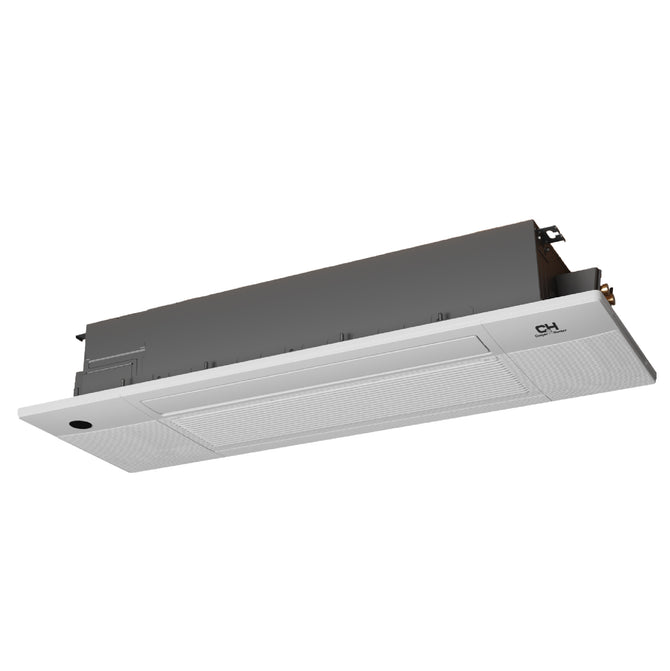
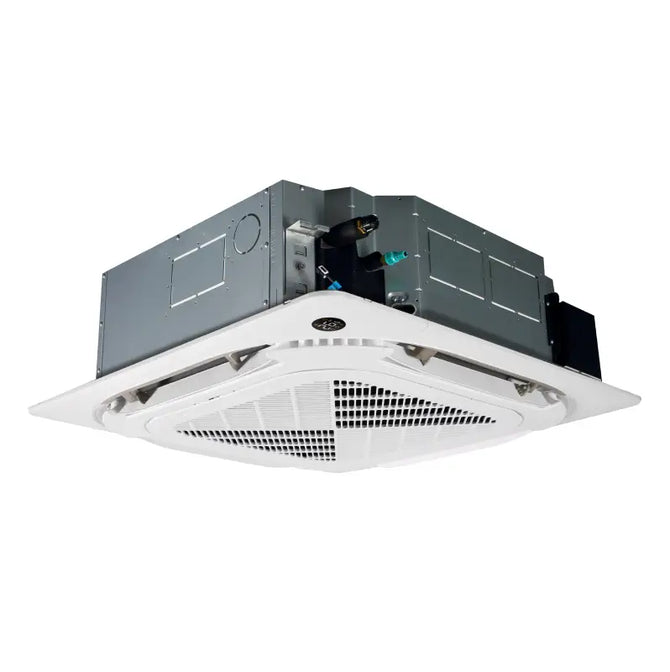
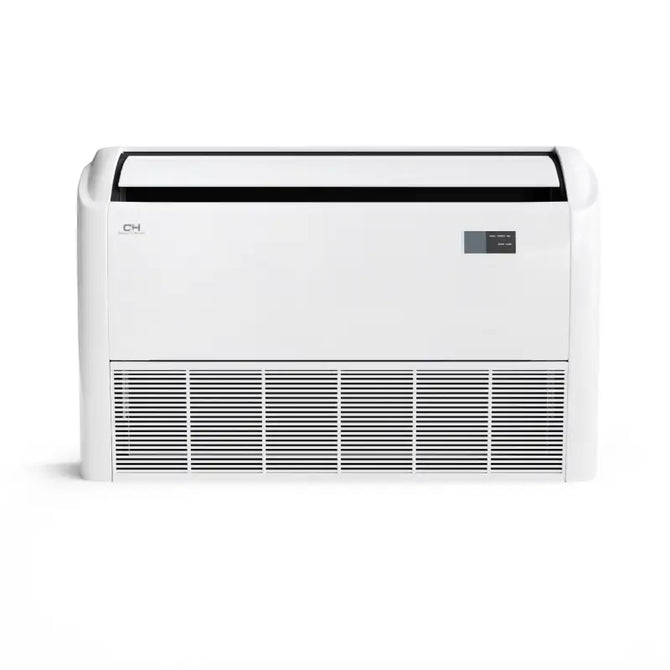
Advantages: Independent temperature per room, one outdoor unit, flexible head styles (wall, ceiling cassette, floor console).
Ideal for: Whole-home retrofits, homes without ducts, additions, multi-bedroom homes where family members have different preferences.
$$ PremiumThe Multi-Zone Sizing Trap
Multi-zone outdoor condensers have a combined capacity. A 36,000 BTU condenser can support head combinations up to about 48,000 BTU total (typical 130% oversubscription allowance) — but only if all rooms never run at peak load simultaneously. If you oversubscribe, every head delivers less than its rated capacity when the system is maxed out.
Brand Recommendations by BTU Size
Not every brand excels at every size. Here's how our three core brands line up by application and BTU range.
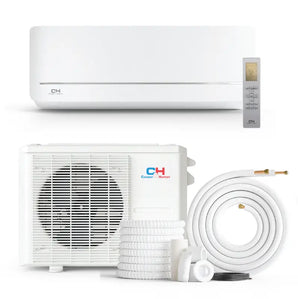
Best BTU range: 9k through 60k. C&H covers the entire spectrum with Tier-1 build quality.
Why we recommend: Twin-rotary compressors, GoldFin coil coating, 180° sine wave inverters, and the Hyper Heat series for cold climates. Engineered to hold rated BTU down to 5°F.
Pick this when: You want it installed once and forgotten for 15-20 years, regardless of climate.
$$ Premium ValueBest BTU range: 9k through 36k. Sweet spot is 12k and 18k single-zone applications.
Why we recommend: High-efficiency inverter technology without the premium price. Core cooling and heating reliability with modest feature sets.
Pick this when: You're sizing for moderate climates (Zones 2-5), want reliability, and don't need sub-zero heating performance.
$ Value LeaderBest BTU range: 9k through 24k. Excellent in single-zone bedroom and living-room applications.
Why we recommend: Straightforward design, easy to service, low parts cost. Favored by installers for properties where simplicity matters more than advanced features.
Pick this when: Rental properties, flips, ADUs, or budget-conscious primary-home projects where the basics done well is exactly what you need.
$ EconomyBest BTU range: 9k through 36k, sized up 20-30% vs. standard calculation for Zone 5-7 heating loads.
Why we recommend: Enhanced vapor injection compressor maintains rated capacity down to 5°F and delivers heat to −13°F. Often qualifies for IRA 25C tax credit.
Pick this when: Northern tier states, Canadian border regions, mountain climates, or anywhere winter low dips below 10°F.
$$ Cold ClimateReal-World Sizing Scenarios
Theory is clean. Reality is messy. Here are four common scenarios worked out end-to-end.
Space: 15 × 18 = 270 sq. ft., 9 ft. ceiling, 2 occupants, moderate windows.
Math: 270 × 20 = 5,400 BTU base
+15% ceiling = 6,210
+600 × 0 extra occupants = 6,210
+10% Zone 3 cooling = 6,830 BTU
→ Round up to 9,000 BTU
Pick: OLMO 9k single-zone or BRAVO 9k for rentals.
Space: 30 × 25 = 750 sq. ft., 10 ft. ceiling, kitchen with cooktop, west-facing windows, 4 occupants.
Math: 750 × 20 = 15,000 BTU base
+15% ceiling = 17,250
+4,000 kitchen = 21,250
+1,200 extra occupants = 22,450
+10% west sun = 24,695
+15% Zone 5 heating need = ~28,000 BTU
→ Round to 30,000 BTU
Pick: C&H Hyper Heat 30k (cold climate).
Space: 1,800 sq. ft., 3 bedrooms + living + kitchen + office = 5 zones.
Math: Total load ≈ 36,000 BTU after all adjustments for Zone 4.
Architecture: C&H 36k multi-zone outdoor + 5 indoor heads: 9k bedroom × 3, 12k living, 9k office. Total head BTU = 48k (oversubscribed 133% — fine because all rooms rarely peak together).
Pick: C&H 36k 5-zone Hyper system.
Space: 20 × 20 = 400 sq. ft., 9 ft. ceiling, uninsulated garage, occupant + 2 treadmills.
Math: 400 × 20 = 8,000 BTU base
+15% ceiling = 9,200
+25% poor insulation = 11,500
+2,000 exercise equipment heat = 13,500
+15% Zone 5 heating = ~16,000 BTU
→ Round to 18,000 BTU
Pick: C&H Hyper Heat 18k — handles the thermal chaos and cold winters.
Installation Efficiency Tips — Preserve Your Sizing Math
Proper sizing can be undermined by poor installation. Protect your investment with these best practices:
- Mount the indoor head high on the wall — at least 7 ft. from floor, with 6+ inches of ceiling clearance for proper airflow.
- Avoid placement above heat sources — don't install above a TV, fireplace, or large electronics. The thermostat sensor will misread room temperature.
- Keep the condensate drain sloped continuously downward — any uphill run causes backup and water damage.
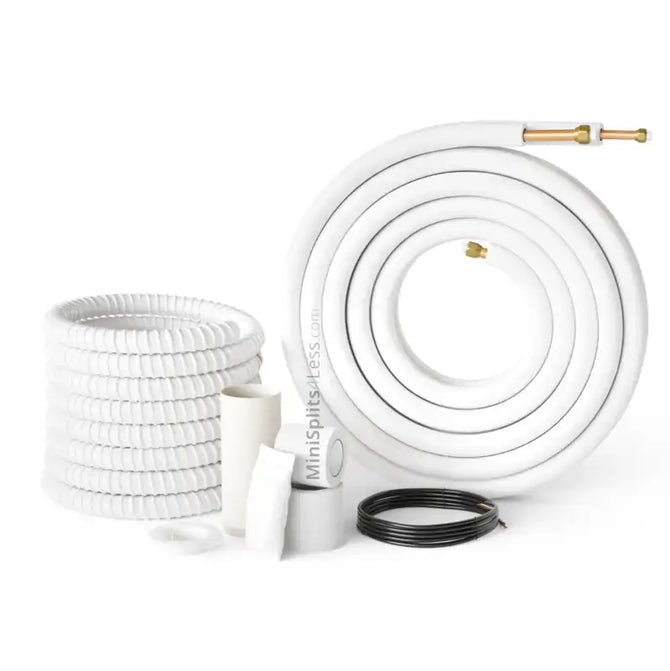
- Insulate the refrigerant line set properly — 1/2" closed-cell foam, fully sealed at every joint. Uninsulated lines lose up to 15% capacity.
- Use the shortest line set possible — every additional foot beyond 25 ft. slightly degrades capacity. Long runs (50+ ft.) require refrigerant top-off.
- Place the outdoor unit in shade when possible — direct sun on the condenser reduces cooling efficiency by 5-10%.
- Clean filters every 2-4 weeks — clogged filters can cut capacity by 20% and damage the evaporator coil.
Frequently Asked Questions
What size mini split do I need for a 500 sq. ft. room?
A 500 sq. ft. room with 8 ft. ceilings and average conditions typically needs a 12,000 BTU mini split. If you have vaulted ceilings, large south-facing windows, or live in a hot climate (Zones 1-2), bump up to 14,000-18,000 BTU. For very cold climates, a C&H 12k Hyper Heat covers both cooling and heating needs efficiently.
Is it better to oversize or undersize a mini split?
Neither is good, but undersizing is less damaging. Oversizing causes short-cycling, poor dehumidification, and premature failure. Slight undersizing means the inverter runs at higher capacity longer — which is actually efficient. Modern Cooper & Hunter inverters can boost to 120% rated capacity briefly to handle peak loads. If forced to choose, size slightly down, not up.
How many BTU per square foot do I need?
The baseline is 20 BTU per square foot for moderate climates with 8 ft. ceilings and average insulation. Hot climates push this to 22-24 BTU/sq.ft. Very cold climates for heating load can require 25-30 BTU/sq.ft. Well-insulated passive-house builds may only need 15 BTU/sq.ft.
Can one mini split cool my whole house?
Only if you have an open floor plan. A single head treats the air in its line of sight — it cannot push conditioned air around corners, up stairs, or into closed rooms. For most multi-room homes, a multi-zone system with one head per room is the right architecture. One C&H 36k outdoor condenser can serve 4-5 indoor heads.
Do I need a Hyper Heat model for cold climates?
If your winter temperatures regularly drop below 15°F, yes. Standard mini splits lose 40-60% of their rated BTU capacity at 5°F. Cooper & Hunter Hyper Heat models use enhanced vapor injection compressors that hold 100% rated capacity down to 5°F and deliver usable heat down to −13°F. For Zones 5-8, Hyper Heat is not optional — it's the minimum standard.
How does ceiling height affect BTU sizing?
Standard BTU calculations assume 8 ft. ceilings. For each additional 2 ft., add 15% to your BTU requirement. A 10 ft. ceiling adds 15%, a 12 ft. cathedral ceiling adds 30%. The reason: you're conditioning air volume, not floor area. Higher ceilings also mean heated air stratifies toward the top in winter, so heating loads scale even more aggressively than cooling loads.
How do I calculate BTU for a multi-zone system?
Calculate each room separately, round each to a standard head size (9k, 12k, 18k, 24k), then sum them. Select an outdoor condenser with 75-100% of the total indoor head BTU. A common setup: four 9k heads + one 12k head = 48k total; pair with a 36k outdoor condenser (130% oversubscription is allowed because not every zone peaks simultaneously).
Do I need a professional Manual J load calculation?
For single-zone installations in common spaces, our simplified calculation gets you within ±10% of a Manual J — close enough to select the right standard size. For whole-home multi-zone systems, new construction, or homes with unusual envelope features (cathedral ceilings, extensive glazing, mixed insulation zones), a professional Manual J from an ACCA-certified contractor is worth $300-500 and prevents expensive mistakes.
Glossary of BTU Sizing Terms
- BTU (British Thermal Unit): Energy required to raise one pound of water by 1°F. HVAC capacity is always measured in BTU per hour (BTU/h).
- Ton of Cooling: 12,000 BTU/h. A "2-ton" system is 24,000 BTU/h.
- Manual J: ACCA-certified protocol for calculating HVAC loads based on room-by-room heat gain/loss analysis. The professional standard.
- SEER2: Seasonal Energy Efficiency Ratio (2023 standard). Measures cooling efficiency under real-world conditions. Higher is better.
- HSPF2: Heating Seasonal Performance Factor (2023 standard). Measures heat-pump heating efficiency.
- Sensible Load: BTU required to change air temperature.
- Latent Load: BTU required to remove humidity. Ignored by oversized systems.
- IECC Climate Zone: U.S. map dividing the country into 8 zones by heating/cooling degree days.
- Short-Cycling: When a unit turns on, cools briefly, and shuts off — usually from oversizing. Causes wear and poor dehumidification.
- Turn-Down Ratio: How low a modulating inverter can ramp. 10-15% minimum output is premium; 40% is budget.
- Hyper Heat: Cold-climate mini split technology using enhanced vapor injection, rated for heating at sub-zero outdoor temperatures.