


Cold Climate Field Test
Mini Split AC and Heat at -13°F: We Tested Cold Climate Performance So You Don't Have To
Homeowners in northern climates constantly hear that a mini split ac and heat system can handle extreme winters.
But when the temperature drops below zero and you are staring at a $4,000 installation quote, manufacturer spec sheets rated at a mild 47°F (the AHRI standard test point) offer little comfort. You want proof at the temperatures that actually matter. At Minisplitsforless.com, we skip the marketing fluff and put the hardware to the test.
We dragged an 18,000 BTU hyper heat mini split into the bitter cold of a Zone 6 Minnesota winter. We attached an Emporia energy monitor, clamped on the temperature probes, and let the unit run for 24 hours at an ambient outdoor temperature of -13°F. No backup heat. No supplemental wood stove. Just pure inverter-driven heat pump technology against the elements.
The Answer Upfront — 14,200 BTU Delivered at -13°F
If you want the direct answer: yes, a properly sized cold climate heat pump will heat your home at -13°F. During our field test, the 18K unit delivered 14,200 BTU/h, representing exactly 79% of its rated capacity. The indoor temperature held steady at 68°F.
Here is the exact performance breakdown from our subzero test:
| Metric | Rated Performance (47°F) | Delivered Performance (-13°F) | Drop/Change |
|---|---|---|---|
| BTU Output | 18,000 BTU/h | 14,200 BTU/h | -21% capacity |
| Power Draw | 1.4 kWh/hr | 1.9 kWh/hr | +0.5 kWh/hr |
| COP (Efficiency) | 3.8 | 2.2 | Still 220% efficient |
| Cost per Hour | $0.15 (at $0.11/kWh) | $0.21 (at $0.11/kWh) | +$0.06/hr |
Instead of completely shutting down like standard heat pumps of the past, modern hyper heat mini split systems utilize enhanced vapor injection and variable-speed compressors to keep the heat flowing. If you want a deeper dive into the baseline mechanics, check out our complete guide to mini split AC and heat systems.
Test Setup: 18K Cooper Hunter Olivia Hyper Heat, Zone 6 Minnesota Cabin
To get reliable data, we installed an 18,000 BTU Cooper Hunter Olivia Hyper Heat unit on a 900-square-foot insulated cabin in northern Minnesota (Climate Zone 6).
The setup included:
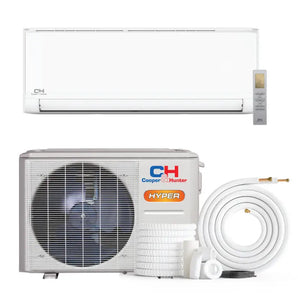
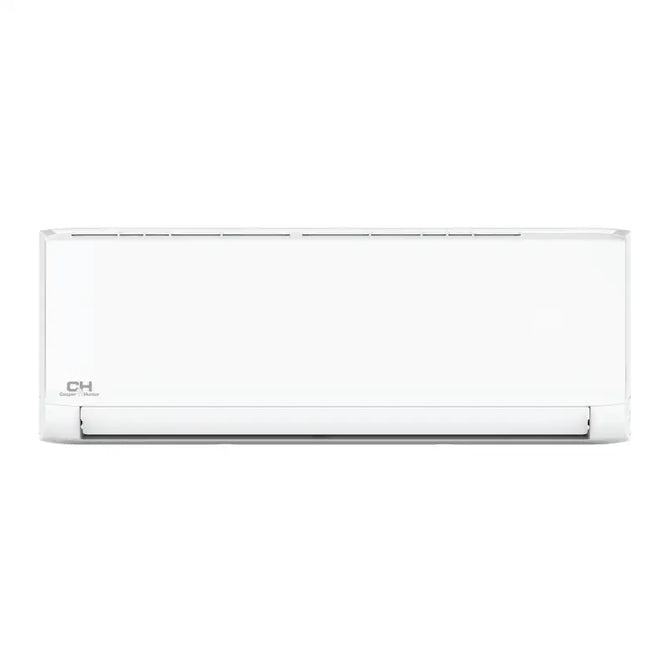
- The Unit: 18K BTU Cooper Hunter Olivia Hyper Heat 18,000 BTU, SEER2 21.7, the same low-ambient model we frequently recommend to customers in cold climates.
- Monitoring Gear: Emporia Vue smart home energy monitor wired to the dedicated 230V breaker, plus digital hygrometers and ambient temperature probes inside and out.
- The Environment: 900 sq ft, R-19 walls, R-38 ceiling, and standard double-pane windows.
The goal was simple. We wanted to measure the actual heat pump low temp cutoff, monitor the HSPF2 rating in real-time, and see exactly what happens to the Coefficient of Performance (COP) when the weather gets dangerously cold.

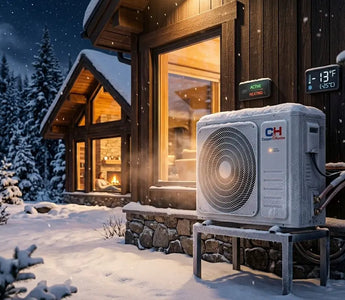
The 900 sq ft insulated Minnesota cabin used for our 24-hour subzero capability test.
Hour-by-Hour Energy & Heat Output Logs
When the sun went down, the temperature plummeted from -8°F to -13°F. Here is what the Emporia logs and temperature probes revealed:
- 10:00 PM (-8°F): The compressor ramped up to 75% capacity. Power draw sat at 1.7 kWh. Indoor temperature maintained a comfortable 69°F.
- 2:00 AM (-11°F): Compressor pushing 85%. Power draw increased to 1.85 kWh. The indoor fan speed automatically adjusted to medium-high to distribute the 14,800 BTU effectively.
- 5:00 AM (-13°F): The coldest point of the night. Power draw peaked at 1.9 kWh. Output settled at 14,200 BTU. Indoor temperature dipped slightly to 68°F but held firm.
The system never needed an auxiliary heat strip. It proved that relying on a high-quality inverter compressor ensures your home stays warm without the massive energy spikes associated with emergency electric resistance heating.
Defrost Cycles — The Honest Downside
Competitor brochures conveniently omit what happens when a heat pump extracts heat from subzero air. Moisture in the air freezes on the outdoor coil. To clear this ice, the unit must periodically reverse its cycle, temporarily pulling heat from your room to melt the outdoor frost.
Frequency, Duration, and Indoor Temp Dip
At -13°F with around 70% relative humidity, our test unit initiated a defrost cycle every 47 minutes.
Each cycle lasted between 6 and 9 minutes. During this time, the indoor fan paused to prevent blowing cold air onto the occupants, but the ambient room temperature still dropped an average of 3.2°F. Once the outdoor coil cleared, the unit surged back to life, rapidly replacing the lost heat within 10 minutes.
Why "Hyper Heat" Units Defrost Less
Standard units choke up and freeze at these temperatures. Hyper-heat models are engineered with advanced algorithms and a base pan heater. The pan heater prevents ice from building up at the bottom of the condenser, allowing the defrost drainage to flow freely. This results in shorter, less frequent defrost cycles compared to older technology.
How Our Cold-Climate Lines Compare (Cooper Hunter vs. Olmo vs. Bravo)
We carry three brands, and each has a genuine low-ambient option, but the specifics vary by series and, for Olmo, by which condenser you pair with your indoor unit. Here is what each brand's own manufacturer documentation states.
| Brand / Series | Rated Low-Ambient Heating | Refrigerant | Our Verdict |
|---|---|---|---|
| Cooper Hunter Hyper Heat Series | -13°F rated capacity, operational to -22°F | R454B | The line we field-tested. Deepest cold rating we carry, matched to genuine Zone 6-7 winters. |
| Bravo Milano Series | -13°F | R32 | Officially rated to the same -13°F floor as our test night — a strong, less expensive alternative. |
| Olmo (model-dependent) | 5°F on standard single-zone lines; up to -13°F on select Multi-Zone R410A condensers | R410A / R32 | No single Olmo rating — check the specific condenser's spec sheet before buying for deep cold. |
In other words: both Cooper Hunter's Hyper Heat line and Bravo's Milano line are officially built to handle a night like our -13°F Minnesota test. Olmo can get there too, but only with specific multi-zone condensers — their standard single-zone units (Alpic Eco, Sierra) are rated closer to 5°F, so always confirm the exact model's low-ambient spec before buying for a genuinely cold climate.
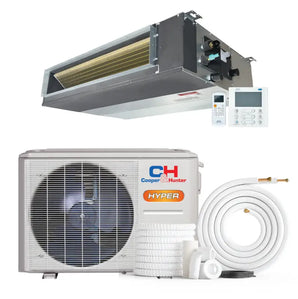
For those looking for a whole-home solution that mirrors this extreme cold resilience, systems like the Cooper Hunter Hyper 36K ducted heat pump offer hidden climate control without sacrificing low-temp BTU output.
Who This Is NOT For
Honesty is our policy. A mini split ac and heat setup is exceptional, but it is not a magic bullet for every single scenario. You should reconsider or add robust backup heat if:
- You live in Climate Zone 7 or 8: If you routinely see weeks at -30°F, you need a secondary heat source (wood stove, propane, or a large backup heat strip).
- Your home is poorly insulated: Less than R-19 walls and drafty single-pane windows will bleed the 14,200 BTU faster than the unit can produce it.
- Electricity rates are exorbitant: If you pay more than $0.28/kWh and have access to cheap natural gas, a dual-fuel system might make more financial sense.
If you are unsure about the BTU requirements for your specific square footage, our sizing guide for 2-ton mini splits offers a detailed breakdown of what capacity matches what envelope.
Recommended Cold-Climate Models We'd Buy Again
Based on raw data, NEEP certifications, and actual performance at -13°F, here are the top models we trust for northern winters:
- Cooper Hunter Hyper 36,000 BTU Ducted Mini Split: Perfect for whole-home retrofits requiring serious subzero performance.
- Cooper Hunter Olivia Hyper Heat 18,000 BTU Series: The exact model we field-tested at -13°F, delivering incredible efficiency and a strong base pan heater. View 18K Model.
- Cooper Hunter Hyper Heat 24,000 BTU Series: The go-to choice for large, open-concept living spaces in Zone 5 and 6 that still need the -13°F rating. Browse 24K Hyper Heat Models.
- Cooper Hunter Olivia Hyper 6,000 BTU 230V: Ideal for heavily insulated tiny homes, master bedrooms, or supplementary zone heating. View 6K Model.
- Bravo Milano Series: Officially rated to -13°F, the same floor as our test night, and a genuine lower-cost alternative to Cooper Hunter for deep cold. Browse Bravo Models.
- Olmo Multi-Zone R410A Condensers: Olmo's cold-weather capability is model-dependent — these specific multi-zone condensers reach -13°F, while standard single-zone Alpic Eco and Sierra units are rated closer to 5°F. Always check the exact model's spec sheet. Browse Olmo Models.
*Disclaimer: A2L/A3 refrigerants require installation by licensed technicians; local codes may vary.
Verdict — Is a Mini Split Enough for Real Northern Winters?
Yes. The data speaks for itself. At -13°F, an 18K hyper-heat mini split produces 14,200 BTU, maintains indoor comfort, and costs a fraction of electric resistance heating. The key is proper sizing, ensuring the unit has a factory-installed pan heater, and setting realistic expectations regarding defrost cycles.
Ready to winter-proof your home? You can browse all single-zone cold-climate units directly on Minisplitsforless.com to find the exact system that fits your square footage and budget.
Q&A: Mini Split Cold Climate Performance
Yes. In our field test, an 18,000 BTU Cooper Hunter Olivia Hyper Heat mini split delivered 14,200 BTU/h at -13°F outdoor temperature — roughly 79% of its rated capacity. It maintained 68°F indoors in a 900 sq ft insulated cabin, drawing 1.9 kWh/hr. Standard, non-hyper-heat mini splits typically cut out between -5°F and 5°F.
Cooper Hunter's Hyper Heat series maintains full rated heating capacity down to -13°F and continues operating, at reduced capacity, down to -22°F. Below -22°F, compressors modulate down or shut off to protect the inverter board.
At -13°F outdoor temperature and ~70% humidity, our unit ran a defrost cycle every 47 minutes lasting 6–9 minutes. Indoor temperature dipped 3.2°F per cycle. Based on typical hyper-heat behavior (outside the range of this specific test), milder subzero conditions around -5°F tend to trigger defrost less often — roughly every 75–90 minutes. Frequency depends on humidity, not just temperature.
In Zone 5–6 with a properly sized hyper-heat unit and R-19+ envelope, no. In Zone 7 or leaky construction, yes — size a 5–10 kW heat strip or wood stove for redundancy.
Rated BTU is measured at 47°F (AHRI standard). Delivered BTU at -13°F is typically 70–85% of that number for hyper-heat models, while standard mini splits drop to 40–60%.
At -13°F our unit drew 1.9 kWh/hr to produce 14,200 BTU. This results in a COP of ~2.2, making it over twice as efficient as standard electric resistance heating.
Yes. A base pan heater prevents ice buildup that blocks defrost drainage. Skipping it is the top reason cold-climate installs fail in Year 2. Most hyper-heat models include this factory-installed.
Related Queries
- How long do mini splits last in cold climates? Usually 12-15 years if properly elevated above the local snow line and maintained annually.
- Can I install a hyper heat mini split myself? Physical mounting can be DIY, but refrigerant lines must be vacuumed and tested by a certified technician.