


High Capacity Cooling
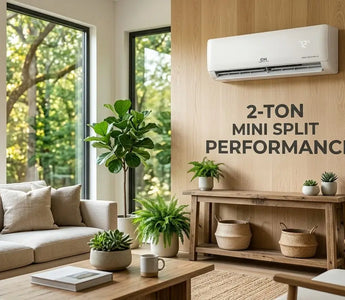
2 Ton Mini Splits Explained: Do You Really Need 24,000 BTUs?
Let's talk about cooling big spaces. If you're finishing a sprawling basement or building an open-concept living area, you need equipment that can actually keep up. For spaces that push past standard single-room sizes, the 2 ton mini split is usually the go-to workhorse.
But trying to research this stuff? It’s a headache. You usually have to wade through a swamp of HVAC jargon just to figure out what you need. Let’s skip the engineering manual and break down exactly what a 2-ton system is, what it does, and whether you actually need one.
The Tonnage Thing (Yes, it's just 24,000 BTUs)
Before you buy anything, let's clear up the biggest source of confusion I see every day: tons versus BTUs.
Is a 2 ton mini split the same as a 24,000 BTU unit?
Yep. Exactly the same. In the HVAC world, one ton of cooling capacity equals 12,000 BTUs. So, a 2-ton mini split is just a 24,000 BTU ductless system.
(Fun fact: "Tons" has nothing to do with how heavy the outdoor compressor is. It goes back to the 1800s. One ton of cooling is the amount of heat it takes to melt a literal ton of ice over 24 hours. Thankfully, today we just use BTUs).
So, when you see a 24000 btu mini split online, it’s a 2-ton system. Knowing that makes shopping a whole lot easier.
How Much Space Can It Actually Cool?
Don't guess on sizing. Guessing means you end up sweating in July, or paying double on your electric bill.
Generally speaking, a 2 ton (24,000 BTU) mini split handles open spaces between 800 and 1,050 square feet. But that’s just a baseline — for an exact number, have an HVAC technician run a Manual J load calculation on your specific space before you buy.
A couple of years ago, I was installing a 2-tonner in a renovated Chicago loft. It had 14-foot ceilings, single-pane industrial windows, and old brick walls with zero insulation. The owner figured 24,000 BTUs would be massive overkill for an 800-square-foot footprint. He didn't realize we weren't just cooling the floor—we were cooling all that dead air up to the rafters, while fighting the sun beating through the glass. Without that 2-ton capacity, he would've been roasting.
Here’s where a 2 ton mini split ac usually makes sense:
- Big open-plan kitchen and living room setups
- Large basement remodels
- 3-car detached garages
- Master suites where you want serious cooling
Want to see the exact math for your room layout? Check out this guide on the precise square footage for 24,000 BTU systems.

The Variables That Ruin "Rules of Thumb"
Square footage doesn't tell the whole story. Your true HVAC size depends on your thermal load. A 24k btu heat pump performs very differently depending on:
- Your Insulation: Got an older Ohio home with settling R-19 fiberglass batts? Your 2-ton unit might top out at 750 square feet. Building a new addition with R-30 closed-cell spray foam? You might easily stretch that coverage to 1,200 square feet.
- Ceiling Height: Rooms with vaulted ceilings swallow conditioned air.
- The Sun: South and west-facing rooms in places like Florida or Arizona absorb massive solar heat in the afternoon.
- Kitchens: Ovens and refrigerators pump out heat. You have to account for it.
The Best 2 Ton Form Factors
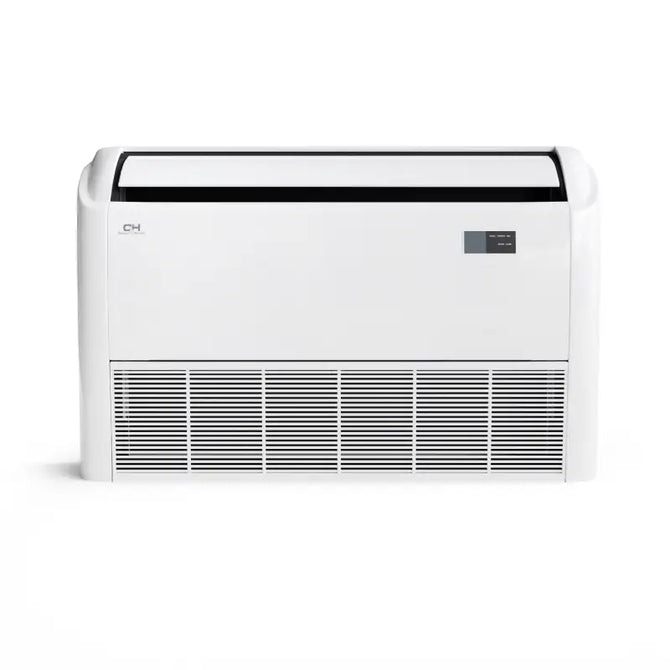
You don't have to stick a big plastic rectangle on your wall if you don't want to. Today’s market has a few different ways to get a 2 ton ductless mini split into your house.
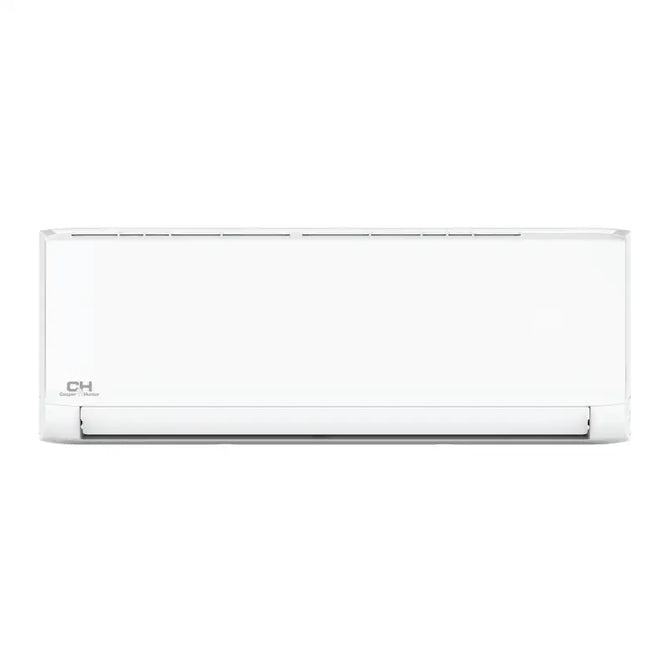
1. Wall-Mounted (The Standard Workhorse)
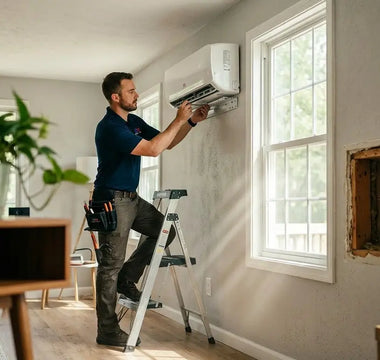
This is what most people picture. Installed high on an exterior wall, these units are cost-effective and get the job done.
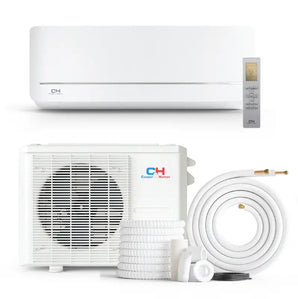
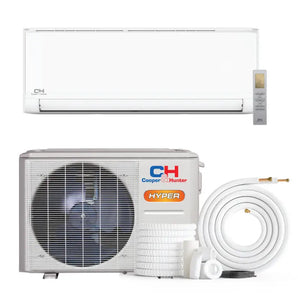
My pick: The 24,000 BTU Cooper&Hunter Wall-Mounted Unit. It has variable speed inverter tech, so it ramps power up and down smoothly without spiking your electric bill.
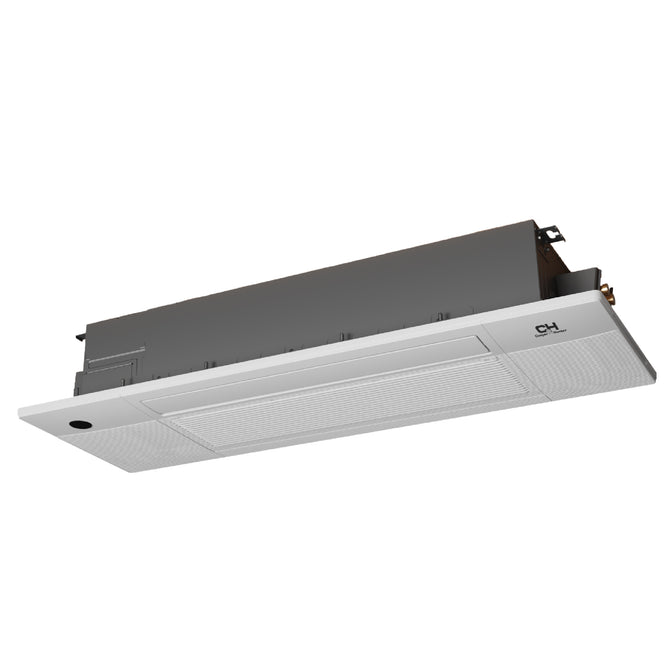
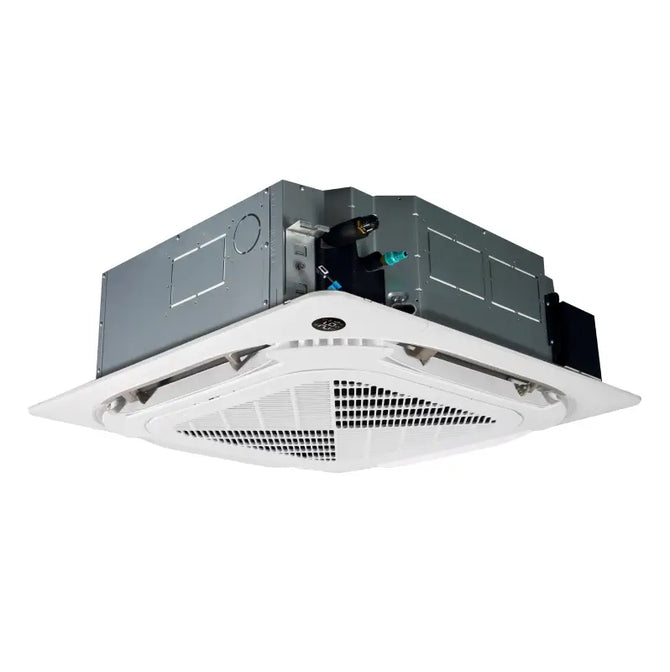
2. Ceiling Cassettes (Out of the Way)
Don't want to ruin your wall space? Recess a ceiling cassette between your joists. Only the grille shows. They blow air in four directions, which is fantastic for killing hot spots in wide-open rooms.
Check out: The 2 Ton Ceiling Cassette Configuration.
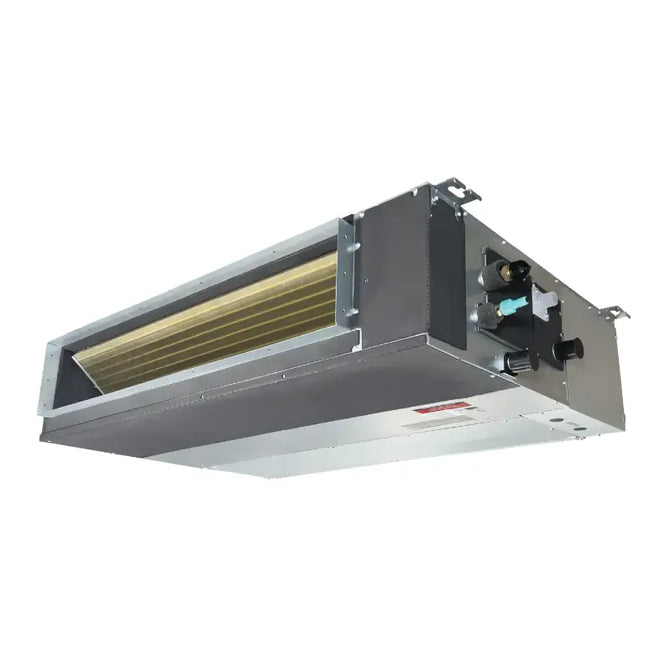
3. Concealed Duct (The "Invisible" Route)
If you hate the look of mini splits entirely, put a concealed unit in the attic or crawlspace. It uses short duct runs to push air through regular floor or ceiling grilles.
The hardware: The 24,000 BTU Concealed Duct System. Harder to install, but it looks amazing (because you can't see it).
Quick Comparison
| Type | How it Looks | Install Difficulty | Where Air Goes |
|---|---|---|---|
| Wall-Mounted | Right there on the wall | Easy | Straight out and down |
| Ceiling Cassette | Flush in the ceiling | Medium | 4 directions |
| Concealed Duct | Hidden | Hard | Wherever you put the grilles |
Electrical Requirements (Don't Skip This)
I've seen DIYers try to rig high-capacity systems to standard outlets. Don't do it.
What power supply does a 2 ton mini split require?
You need a dedicated 208/230V electrical circuit. Running 24,000 BTUs takes serious voltage to spin up that inverter compressor.
Before you buy a unit, have an electrician verify your main breaker panel can handle a new double-pole breaker. While these units actually run on surprisingly low amps once they get going (usually 10-15 amps), you absolutely need that 230V backbone to handle the startup torque.

Quick FAQ
If it's an 800 sq ft open-concept cabin? Sure. If it's a house with actual hallways and closed bedroom doors? No. You'll freeze the living room while the bedrooms stay hot. Look into multi-zone systems instead.
Yes. You can't just plug these into the wall. They need a hardwired 208/230V connection running straight back to a double-pole breaker on your main panel.
Usually between 10 and 15 running amps. Most installers will throw it on a dedicated 20-amp double-pole breaker to handle the initial surge when the compressor kicks on.
Final Word
Getting a 2 ton mini split is a big move. Do the math on your square footage, check your insulation, and for the love of god, don't oversize the unit just to be safe. Figure out your electrical situation first, decide if you want the unit on your wall or in your ceiling, and get it installed right.
Disclaimer: Refrigerants like A2L require professional installation by certified HVAC technicians to ensure safety and system longevity; local building codes and municipal norms may vary.