


System Sizing Masterclass
3-Ton Mini Split Sizing Guide: BTUs, Zoning & Avoiding an Oversized System
Last week, I got called out to a beautifully renovated property. The homeowner was furious. Their brand-new 3-ton mini split was making the open-concept living area feel like a freezing, damp cave, while the guest bedroom felt like an absolute sauna.
The problem? The contractor just eyeballed the size. No math. Just a quick glance and a "Yeah, a 3-ton will do it."
Honestly, it drives me crazy when I see this. Sizing an HVAC system is everything. With the industry’s 2026 shift toward stricter SEER2 efficiency mandates and those new A2L refrigerants, you simply cannot afford to guess. Precision sizing is the difference between a whisper-quiet, comfortable home and a noisy, clammy nightmare that spikes your electric bill.
Let's cut through the marketing fluff. Here is what a 3 ton mini split actually does, when you should use one, and—more importantly—when you should avoid it.
What Are We Even Talking About? (Tons vs. BTUs)
Funny story about the HVAC world: "tonnage" has absolutely nothing to do with how heavy the equipment is.
Before modern AC existed, buildings were cooled using literal blocks of ice. One "ton" of cooling capacity is just the amount of heat it takes to melt a 2,000-pound block of ice in 24 hours. In modern numbers, one ton equals exactly 12,000 British Thermal Units per hour (BTU/h).
So, a 3 ton ductless ac is designed to move 36,000 BTUs of heat per hour. It yanks heat out of your house in July and pumps heat indoors in January. That is a massive amount of thermal power, placing a 3-ton unit firmly in the heavy-duty residential or light commercial category.
But keep in mind, a 36000 btu mini split doesn't just blast at full speed all day. Modern systems use variable-speed compressors. They might ramp down to 10,000 BTU when you're just watching TV on a mild afternoon, or rev up past 40,000 BTU during a brutal heatwave.
Stop Using "Rules of Thumb" for Square Footage
Clients ask me every day: "Will a 3-ton unit cool my 1,500-square-foot house?"
My answer is always the same: Maybe.
People love relying on the outdated "20 BTUs per square foot" rule. Let me be blunt—that rule is garbage today. Modern homes completely defy simple math. Square footage is only a flat, two-dimensional measurement. True capacity matching requires a Manual J load calculation, which looks at the actual 3D volume of the air and your building's thermal envelope.
If you want the nerdy details on the math, check out our mini split BTU calculation guide.
Just look at the variables that completely wreck standard sizing rules:
🏗️ Ceilings
A living room with 12-foot vaulted ceilings has 50% more air volume than a room with standard 8-foot ceilings.
🪟 Windows
Floor-to-ceiling, south-facing windows? Those act like magnifying glasses. You'll need way more cooling power.
🧱 Insulation
I recently worked on a spray-foam insulated home that only needed 36,000 BTUs for 2,500 square feet. But an uninsulated 1950s workshop I did a month earlier? It needed a 3-ton unit for barely 900 square feet.
Yes. I see it happen all the time. Plenty of folks are ripping out their aging, leaky ductwork and replacing it with a 3-ton multi-zone ductless setup. By distributing 36,000 BTUs across three or four targeted rooms, you ditch the duct losses and get precise control in each zone.
The Heating vs. Cooling Trap
Here is where a lot of DIYers get burned. A mini split ac and heat system has different capacities depending on the season.
Air conditioners are rated at a standard 95°F outside. Heat pumps are typically rated for heating at 47°F. As the outdoor temperature drops toward freezing, squeezing heat out of the air becomes physically harder for the compressor.
A standard system rated for 36,000 BTU at 47°F might only spit out 22,000 BTU when it hits 15°F outside. If your house needs 35,000 BTUs on the coldest night of the year, a standard 3-ton unit is going to leave you shivering under a blanket.
The fix? Low-ambient heating tech. Brands like Mitsubishi, Cooper&Hunter, and Gree make hyper-heating models that physically inject flash gas into the compressor. They can deliver 100% of their rated 36,000 BTU heating capacity even in a blizzard. Take a look at how inverter technology in mini splits pulls this off.

Setting Up Your Zones
The absolute coolest thing about ductless systems is how flexible they are. You can configure a 3 ton mini split condenser to fit your exact layout.
🥇 Single Zone (1-to-1)
One massive 36,000 BTU outdoor unit paired with one 36,000 BTU indoor head. Perfect for commercial server rooms or massive open-concept basements. But please, don't put this in a standard living room. It'll blow your hair back.
🥈 Dual Zone (1-to-2)
Splitting the capacity. A common move is putting an 18,000 BTU head in the main living space and another 18,000 BTU head in a master suite. If that sounds like your setup, look at these 36,000 BTU dual-zone mini split options.
🏅 Quad Zone (1-to-4)
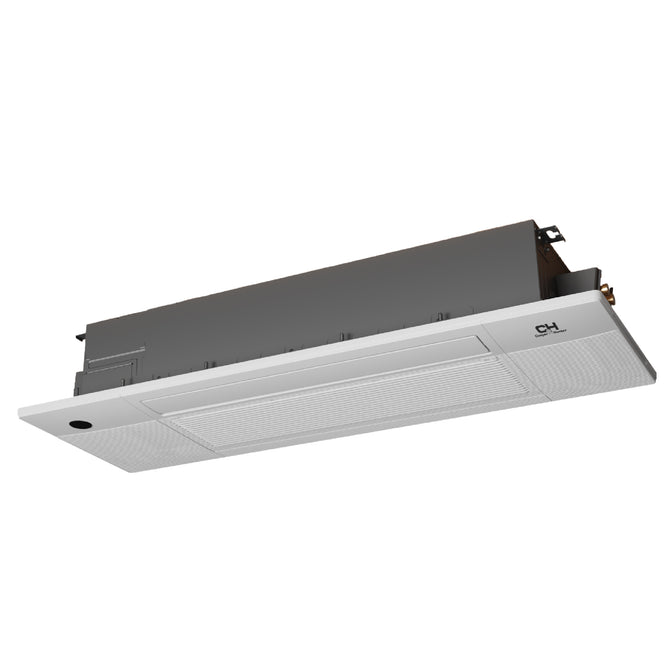
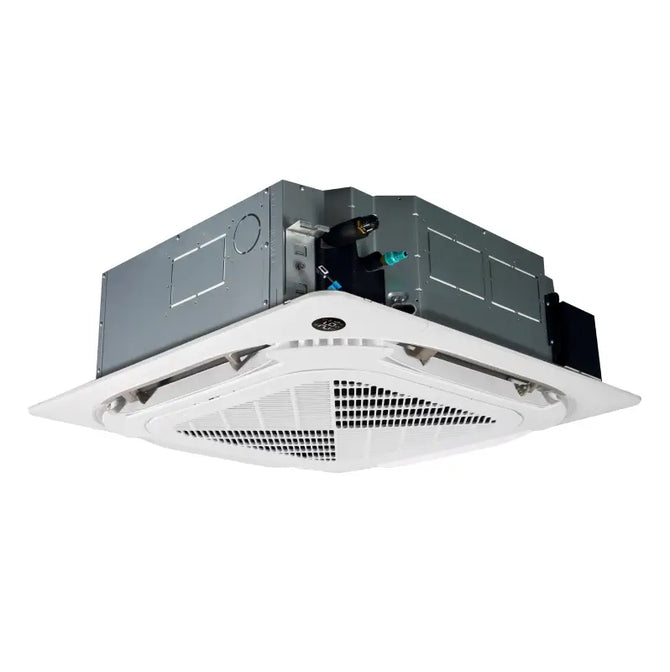
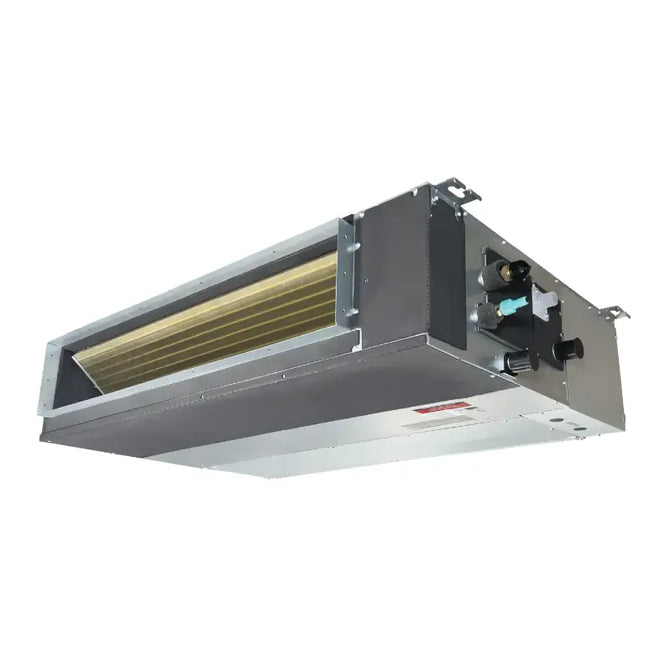
This is the thermostat-war ender. Distribute the 36,000 BTUs across four 9,000 BTU heads. Everyone gets their own remote. If you hate the look of wall units, you can even use a 3 ton concealed duct mini split to hide the short ducts in the ceiling.
Bigger is NOT Better. Period.
I can't stress this enough: do not buy a massive system "just to be safe."
If you slap a 36,000 BTU system into a room that only needs 20,000 BTUs, you cause "short cycling." The oversized unit blasts a ton of freezing air, hits the target temperature in ten minutes, and shuts off.
Because it ran for such a short time, the indoor coil didn't have time to pull humidity out of the air. The room gets cold, but it feels damp and clammy. Plus, slamming a heavy-duty compressor on and off every ten minutes destroys the electrical components and wrecks your utility bills.
If your load calculation says you only need 28,000 BTUs, don't upsize. Grab a properly matched 30,000 BTU mini split alternative instead. It will run longer, quieter cycles, and keep your humidity perfectly in check.
The Bottom Line
Before you drop money on a 3-ton system, do the math.
Measure your space. Look at your insulation. Figure out your worst winter temperatures. Once you confirm that a 36,000 BTU thermal load is actually what your house needs, then you can start picking out fancy ceiling cassettes or sleek wall units. A 3-ton system has serious raw power, but it’s completely useless if you install it in the wrong place.
Disclaimer: Those new A2L and older A3 refrigerants require handling by certified technicians. Don't risk your warranty—check your local codes.
Quick Answers to Common Questions
Not anymore. Modern inverter outdoor condensers usually run between 55 and 60 decibels. You can literally stand next to one and have a normal conversation without raising your voice.
Most 36,000 BTU systems need a dedicated 208/230V double-pole breaker. Usually, you are looking at a 25 to 35-amp circuit, but always check the specific manufacturer sticker on the side of the unit before you pull wire.
Almost always, yes. Unless your living room is built like a glass greenhouse with zero insulation, 36,000 BTUs will overpower a single room in minutes. Don't do it.