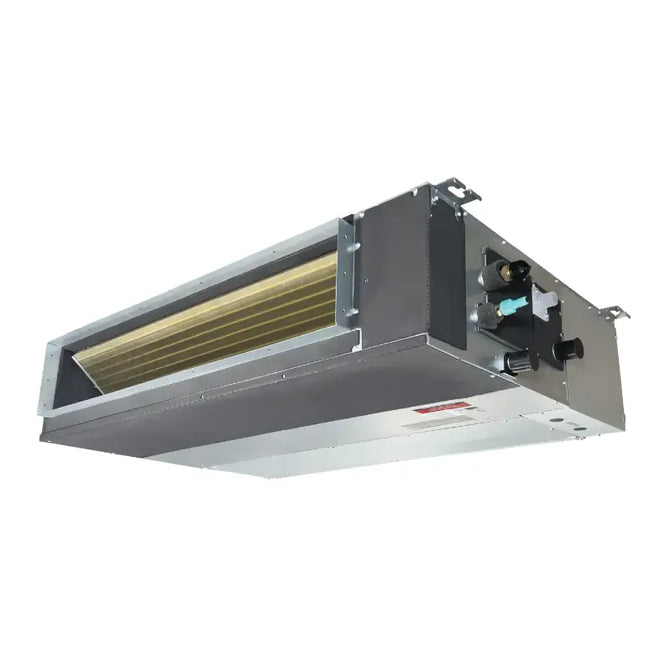
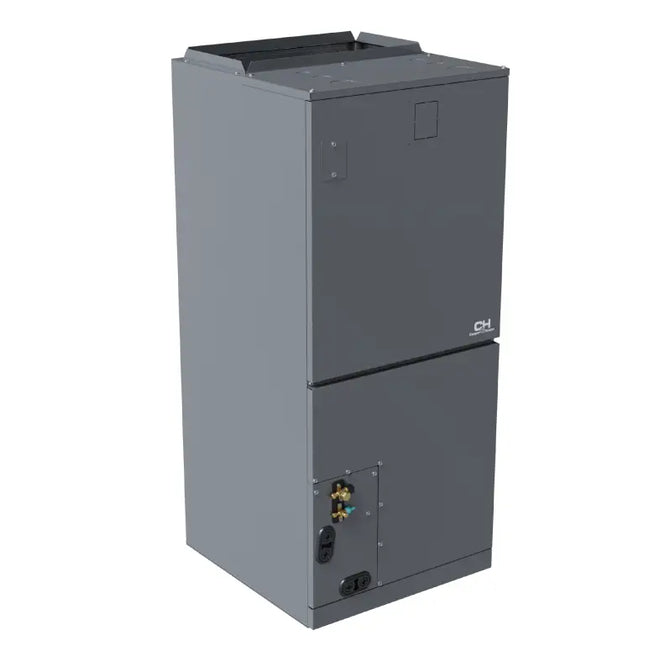



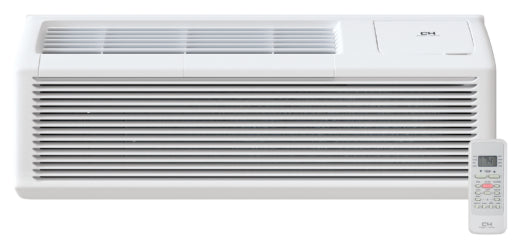
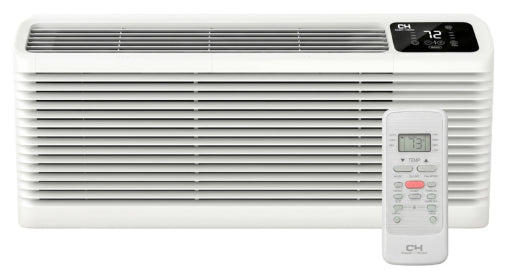
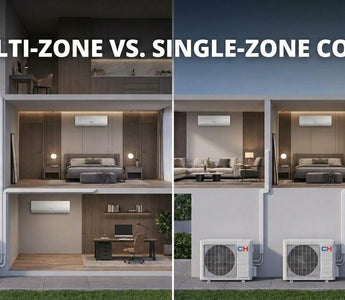
Real 2026 Numbers
Multi Zone Mini Split Setup Costs: 1 Condenser vs 3 Single Units
The ultimate debate for homeowners planning a whole-house ductless upgrade always comes down to budget versus aesthetics: should you buy one multi-zone condenser to run your entire home, or install several individual single-zone systems? We checked current live pricing on both paths, and the honest answer is: it's close enough that your decision should be driven by aesthetics, redundancy, and how you actually use the rooms — not by hardware cost.
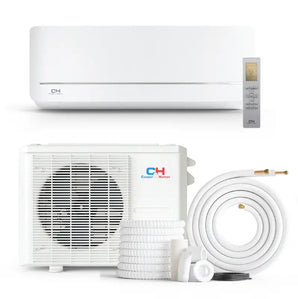
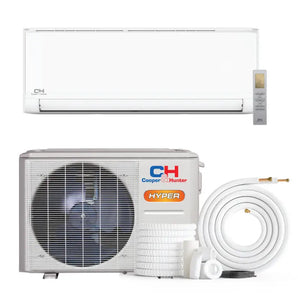
Three 9,000 BTU single-zone units (115V, with a standard installation kit) currently run about $2,301 in hardware. A comparable 28,000 BTU tri-zone condenser lists at $2,788 bare, or roughly $3,100–$3,300 with a 3-zone kit added. Once you add electrical and labor — which is where the real difference lives — 115V single-zone heads need little to no new dedicated circuit, while 230V single-zone heads need three separate $450–$700 circuit drops. Depending on which voltage you choose for Configuration A, the fully installed totals for both configurations land within roughly $100–$400 of each other. Below, we walk through both the 115V and 230V paths for Configuration A side-by-side with Configuration B, plus the hidden performance traps of each setup.
Pricing note: hardware prices on both configurations move with live stock, refrigerant type, and kit length — the specific SKUs priced here were confirmed at the time of this review, but several were showing low stock or sold-out status. Re-check your exact cart total before finalizing a budget.
The Answer in Dollars: A 3-Room Setup, Priced Three Ways
To give you an uncompromising look at the economics, we priced a standard three-bedroom cooling solution (totaling roughly 27,000 to 30,000 BTUs of indoor capacity) three different ways: single-zone on 115V, single-zone on 230V, and one centralized tri-zone condenser.
| Expense Category | Config A1: 3x Single-Zone (9K, 115V) | Config A2: 3x Single-Zone (9K, 230V) | Config B: 1x Tri-Zone (28K) |
|---|---|---|---|
| Equipment Cost | ~$2,301 (3x 115V units w/ 16ft kit, confirmed live price) | ~$2,900–$3,300 (3x 230V units w/ kit — verify live price for your exact SKU) | ~$3,200 ($2,788 base + est. 3-zone kit) |
| Electrical Panel & Circuits | $0–$900 (many 115V units run on a standard existing circuit; a dedicated 115V circuit, if added, costs less than a 230V drop) | $1,500 (3x 230V circuits @ $500/ea) | $550 (1x 230V circuit) |
| Finish Materials | $345 (3x pads, 3x disconnects) | $345 (3x pads, 3x disconnects) | $115 (1x pad, 1x disconnect) |
| HVAC Installation Labor | $2,100 (3 separate vacuum/charge cycles) | $2,100 (3 separate vacuum/charge cycles) | $1,500 (1 centralized exterior install) |
| Estimated Total Installed Cost | ~$4,746–$5,646 | ~$6,845–$7,245 | ~$5,365 |
The picture changes significantly depending on which voltage you choose for the single-zone route. On 115V, three single-zone units can land at or below the tri-zone condenser's total installed cost. On 230V, the three dedicated circuits and higher per-unit equipment cost typically push single-zone above the tri-zone total. Either way, the gap is nowhere near the dramatic "$1,840 hardware win" figure that circulates in older comparisons — at current pricing, hardware alone doesn't decide this for you anymore.
Configuration A — Three Single-Zone Mini Splits
Buying three separate systems—typically a mix of 9,000 and 12,000 BTU units—is the brute-force approach to home cooling. When you load your cart with three independent single-zone boxes, you are purchasing three compressors, three remote controls, and three separate line set kits.

Your voltage choice does most of the work here. Sticking with 115V units keeps the electrical side simple — many run on a standard household circuit with no dedicated 230V line required — and current pricing on 115V 9K units is genuinely competitive. Choosing 230V heads (common for higher-SEER or larger-capacity single-zone units) brings back the classic three-circuit electrical penalty. If you take advantage of bulk savings on multi-unit orders, you can trim either path further.
The primary advantage here is total mechanical isolation. If one compressor fails in the middle of a July heatwave, only one room gets hot. The other two systems keep running perfectly. The downside? Your home's exterior will look like an industrial server farm. You will have three bulky metal boxes sitting along your foundation or hanging from wall brackets, accompanied by three sets of copper pipes running up your siding.
Configuration B — One 28,000 BTU Tri-Zone Condenser
The premium architectural approach is a consolidated 28,000 BTU tri-zone system. You're paying for the advanced inverter technology required to modulate refrigerant flow to multiple indoor air handlers simultaneously.
Configuration B keeps your exterior pristine. You pour one concrete pad, mount one electrical disconnect switch, and run your line sets cleanly into a single multi-port header. Homeowners Associations (HOAs) heavily favor this setup, and it preserves your property's curb appeal. At current pricing, this route sits squarely between the 115V and 230V single-zone paths on total installed cost — the real selling point is the simpler install and cleaner exterior, not a guaranteed cost win.
The Line-Item Ledger: Where the Real Costs Live
Why does voltage matter so much more than the old "hardware discount" story? The devil is entirely in the electrical and mechanical labor.
Electrical — 3 Circuits, 1 Circuit, or None
The National Electrical Code (NEC) dictates that 230V ductless mini splits require dedicated branch circuits. A licensed electrician will typically charge between $450 and $700 per 230V circuit drop, depending on the distance from your main panel to the exterior wall. If you buy three 230V single-zone units, you are paying for three breakers, three runs of Romex wire, and three weatherproof disconnect boxes. Worse, if your electrical panel only has space for one new double-pole breaker, accommodating three systems will force a subpanel upgrade—an instant $1,200 to $2,400 penalty.
This is exactly why voltage is the single biggest lever in this whole comparison: 9,000–12,000 BTU single-zone heads — including Cooper Hunter's own MIA series — also ship in 115V configurations that plug into a standard household circuit, no dedicated 230V line required in many cases. Choosing 115V for some or all three zones can eliminate most or all of the $1,500 electrical line item modeled for the 230V path. Always check the exact voltage of the SKU you're pricing before budgeting this line item — it's worth more to your total than the equipment price itself.
Line Sets, Penetrations, and Lineset Covers
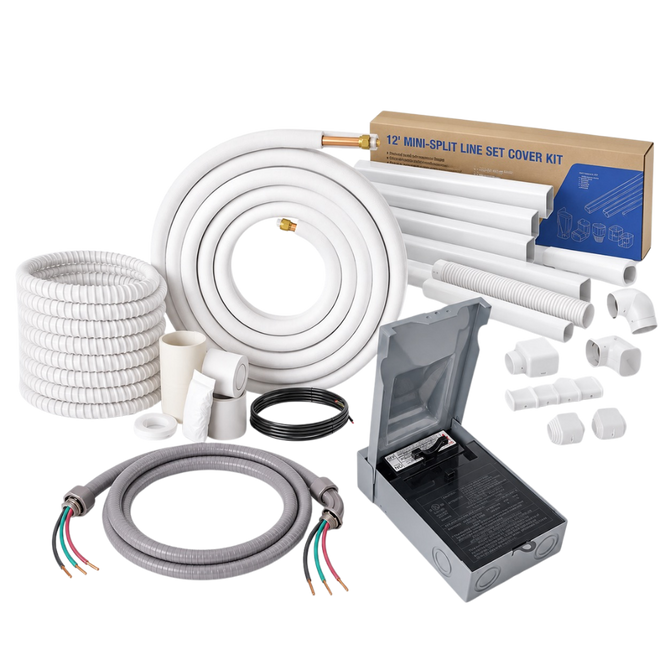
Protecting your copper line sets from UV damage and weed whackers requires decorative PVC covers. A standard 12-foot line set cover kit runs about $62. Three outdoor units require three separate line set runs, three wall penetrations through your siding and insulation, and three sets of covers. A multi-zone system allows the installer to bundle the copper lines together in a single, wider chase, requiring only one hole drilled through your exterior wall.
Labor Hours: A Real Quote
A Tampa-based HVAC contractor recently broke down the labor delta for us. Mounting an indoor head takes roughly the same amount of time regardless of the system or voltage. But outside? Evacuating the copper lines with a vacuum pump, checking for moisture, releasing the refrigerant charge, and commissioning the system takes about 90 minutes per compressor. Three compressors mean 4.5 hours of exterior technical work, whereas a multi-zone condenser requires the technician to perform the vacuum and commissioning sequence exactly once. This labor cost applies regardless of which voltage you pick for Configuration A.
The Efficiency Trap: Turndown Ratio and Short-Cycling
Here is the engineering reality that generic guides gloss over: multi-zone systems lose efficiency when zones run independently.
Every modern mini split utilizes a variable-speed inverter compressor. It ramps up and down to match the cooling load. However, a massive 28,000 BTU compressor has a "minimum modulation threshold"—the lowest speed it can run without stalling. If it's a mild 72°F night and you only turn on the 9,000 BTU head in your master bedroom, the giant 28,000 BTU outdoor unit cannot throttle down low enough to match that tiny demand.
The result? The system short-cycles. It blasts the bedroom with freezing air, overshoots the target temperature, shuts off abruptly, and then turns back on 10 minutes later. This short-cycling destroys your real-world SEER2 rating, fails to dehumidify the room properly, and wears out the compressor prematurely. Single-zone units never suffer from this, regardless of voltage; a 9,000 BTU compressor driving a 9,000 BTU head will throttle down to a whisper, running continuously and efficiently pulling moisture out of the air.
Failure Modes & Redundancy — Who This Is NOT For
If you live in an extreme climate (like the deep south or the desert southwest), relying on a multi-zone condenser introduces a single point of failure. If the central motherboard fries after a power surge, or the compressor seizes, you lose cooling in every connected room simultaneously.
For property investors, landlords, and Airbnb operators, we almost exclusively recommend single-zone units. If a guest damages a remote or a unit requires a warranty part, you do not have to refund the entire house's stay—only that specific room is affected.
Decision Matrix: Pick Your Configuration in 60 Seconds
- Choose Three Single-Zone Units (115V) If: You want the lowest realistic total cost, you have plenty of exterior space, you demand maximum redundancy against mechanical failure, and you primarily use one room at a time.
- Choose Three Single-Zone Units (230V) If: You specifically need the higher SEER2 or capacity that 230V heads often offer, and cost is secondary to redundancy and per-room control.
- Choose One Multi-Zone Condenser If: You live in a strict HOA, you are cooling an open-concept living space where multiple heads will run simultaneously, exterior aesthetics are paramount, or your electrical panel is nearly full. (If you only need two rooms cooled, read our dual-zone cost breakdown for a tighter budget comparison).
How to Price a 3-Zone Mini Split System Both Ways
If you want to run the exact numbers for your own home, follow this 7-step blueprint to ensure you aren't leaving money on the table.
-
Step 1 — Measure and assign BTU per room
Record the square footage, ceiling height, window count, and sun exposure for each of the three rooms. Apply roughly 25 BTU per square foot as a baseline, adding 10% for west-facing glass or vaulted ceilings. A 350 sq ft primary bedroom needs 9,000 BTUs; a 500 sq ft living room requires 12,000 BTUs. Write the three numbers down (9K/9K/12K is a standard layout). Do not artificially upsize; check our BTU sizing calculation guide to avoid oversized systems that fail to dehumidify. -
Step 2 — Build Cart A: three single-zone systems, and check the voltage
Add three complete single-zone systems to your cart—including the condenser, indoor head, and installation kits. Before you record the subtotal, confirm whether the SKUs you picked are 115V or 230V; this decision affects your electrical line item far more than it affects the equipment price. Add freight for three separate pallets, and remember longer runs require extension linesets, which add $85–$160 per zone and mandate extra refrigerant. -
Step 3 — Build Cart B: one tri-zone condenser
Add a single 28,000 BTU 3-zone system configured as 9K/9K/12K, ensuring the installation kits and multi-port headers are included — check the live price with a kit added, since the base listing often excludes it. Verify the maximum lineset lengths; tri-zone systems usually cap the combined run at 180–230 ft. Record your subtotal—this is a single pallet delivery. -
Step 4 — Quantify the electrical delta
Photograph your electrical panel and count the open breaker slots. Configuration A requires three dedicated 230V circuits only if you selected 230V-rated heads; many 115V heads need no new dedicated circuit at all. Configuration B requires one 230V circuit regardless. At roughly $450–$700 per new 230V circuit drop from a licensed electrician, document the electrical penalty (or lack of one) before comparing the final totals. -
Step 5 — Add installation labor and finish materials
Price out three condenser pads versus one. Add decorative PVC cover kits (roughly $62 per 12 ft run). Factor in three separate wall penetrations and three vacuum commissioning cycles by the HVAC tech — this cost applies regardless of voltage. Single-zone labor runs $600–$900 per unit; a tri-zone install usually totals $1,400–$2,200 since the exterior condenser work is centralized. -
Step 6 — Stress-test part-load performance
Be honest about how you use your home. If two out of the three rooms are guest spaces rarely used, the multi-zone condenser will spend its life short-cycling. In that scenario, the separate single-zone systems will drastically outperform the multi-zone unit in real-world efficiency, independent of which voltage you chose. -
Step 7 — Select configuration and lock pricing
Commit to a column, verify current stock status and price (hardware pricing on both configurations moves with stock and promotions), and lock in your price. Freight lead times widen rapidly as summer approaches, so timing your purchase before the first regional heat wave is highly advised. Check whether your state's HEEHRA rebate program is live and whether your chosen units clear the current efficiency floor — the federal 25C tax credit that used to apply here expired for equipment installed in 2026.
Build Your 3-Zone System — In-Stock Configurations
Ready to configure your setup? You can browse all multi-zone systems to find the exact BTU combination that matches your floor plan. Below are the most popular configurations for 2026 residential installations:
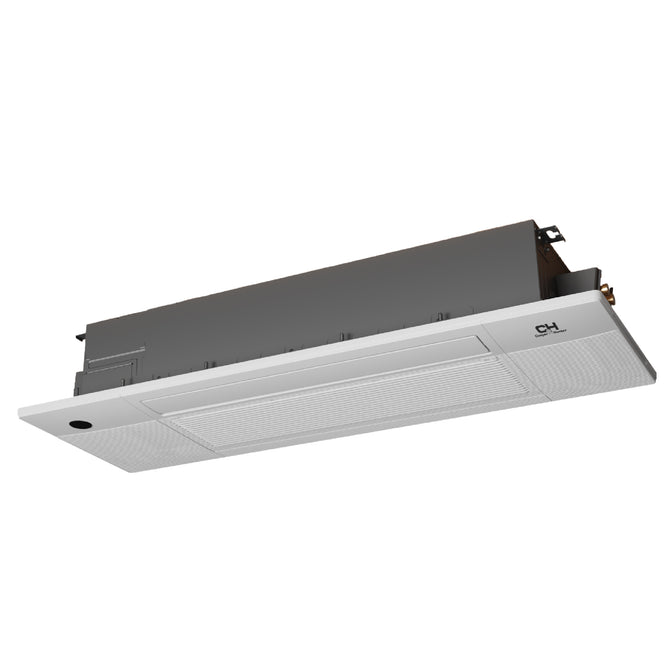
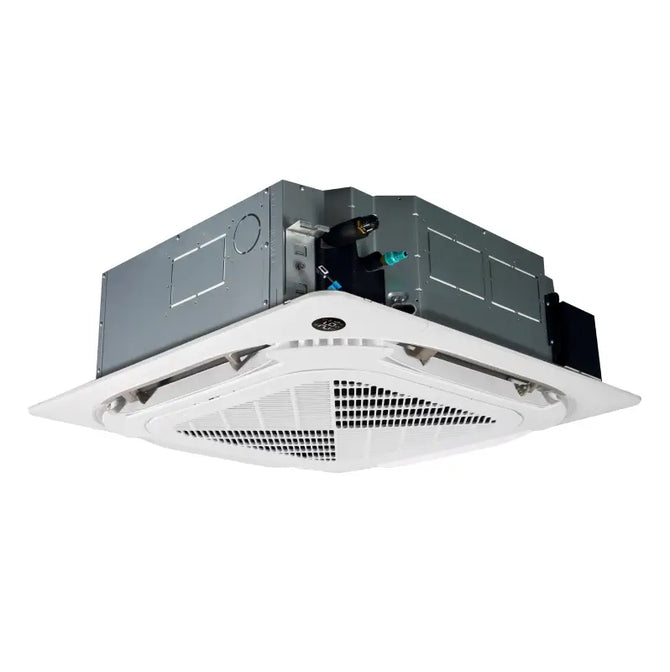
- 28,000 BTU 3-Zone (9K/9K/12K) Ceiling Cassette, 24.6 SEER2
- 28,000 BTU 3-Zone (9K/9K/12K) Wall-Mount Ductless, WiFi-Ready
- Bravo 30,000 BTU 3-Zone (9K/9K/9K) Ceiling Cassette
- 36,000 BTU 3-Zone (9K/12K/18K) Ceiling Cassette, 22.5 SEER
- Three Single-Zone Cooper Hunter MIA 9K, 115V Units (The Budget Baseline)
Frequently Asked Questions
It depends almost entirely on voltage. At current live pricing, three 9,000 BTU 115V single-zone systems run about $2,301 in hardware and can need little to no new electrical work, landing around $4,700–$5,600 installed. Three 230V single-zone systems cost more upfront and add roughly $1,500 in dedicated circuits, landing closer to $6,800–$7,200 installed. A 28,000 BTU tri-zone condenser lands in between, at roughly $5,365 installed. Always verify current live pricing and your chosen SKUs' voltage before deciding.
A single multi-zone condenser supports two to five indoor heads depending on capacity. A 28,000 BTU condenser typically drives three heads (9K+9K+12K); a 48,000 BTU unit drives four to five. Total indoor BTU may be oversubscribed up to roughly 130% of condenser capacity.
Single point of failure and part-load inefficiency. One compressor failure disables every zone. Additionally, a 28K condenser serving one active 9K head operates below its minimum modulation threshold, causing short-cycling that erodes real-world SEER2 and shortens compressor life.
Yes. Single-zone units can modulate their compressor speed to exactly match the cooling load of one room, running slowly and continuously to pull out humidity. Multi-zone units often oversize a single room's demand, shutting off too quickly before moisture is removed.
- What is the maximum line set length for a multi-zone system?
- Do I need a subpanel to install three mini splits?
- Are ceiling cassettes more expensive to install than wall mounts?
Choosing between one multi-zone condenser and multiple single-zone units isn't a simple hardware price comparison — and as this review shows, both hardware pricing and your voltage choice move the answer more than any fixed "gap" figure. By factoring in electrical runs, HOA regulations, and part-load efficiency, you can select the climate solution that protects both your budget and your home's long-term comfort.
"A2L refrigerants like R-32 and R-454B require installation by licensed technicians; local codes may vary."