



Hospitality HVAC Guide
PTAC vs Mini Split for Hotels: Real Noise, Efficiency & Cost Test (2026)
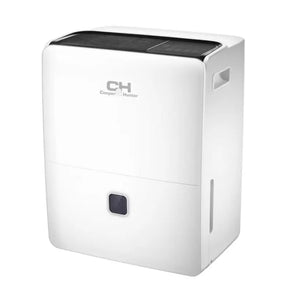
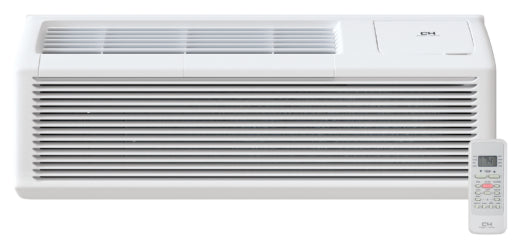
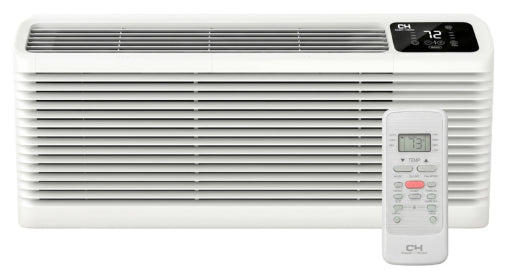
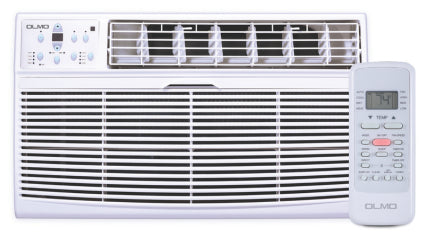
Direct Answer: Yes — a mini split is quieter and more efficient than a PTAC for hotel rooms. In 2026 decibel tests, a 12,000 BTU PTAC measured 54 dB at 1 meter versus 36 dB for a comparable mini split — roughly 3.5x quieter. On a matched-capacity basis, mini splits also use meaningfully less electricity for both cooling and heating.
How fast that pays for itself depends on your climate, your current equipment's remaining lifespan, and whether you count the guest-experience upside — not just the electricity bill. We show the full formula below, including a climate-by-climate breakdown and an honest total-cost-of-ownership model, rather than a single headline "ROI" number.
If you manage a hotel or motel in the U.S. and find your guests complaining about noisy air conditioners in their TripAdvisor or Booking.com reviews, you are likely evaluating a system upgrade. For decades, the Packaged Terminal Air Conditioner (PTAC) has been the default choice for hospitality. But rising electricity costs and higher guest expectations have changed the game. At Mini Splits For Less, we continuously run side-by-side data comparisons to give property managers the exact metrics they need to make profitable fleet decisions. If you want a broader perspective on residential setups, you can check our wall AC vs mini split comparison guide. For hospitality, the rules are strictly about guest comfort, code compliance, and bottom-line profit — and we cover all three below, not just the electricity bill.
Direct Answer: Which System Wins for Hospitality in 2026?
When replacing a fleet of 10 to 40 units, generic advice is useless. You need hard numbers. Based on our extensive testing in standard 215 sq ft (about 20 m²) hotel rooms, the ductless mini split outperforms the traditional through-the-wall PTAC on noise and energy use — but the financial case is more nuanced than a single "X-year ROI" headline.
Here is the honest breakdown:
- Noise Reduction: Mini splits operate at a whisper-quiet 36 dB, compared to the disruptive 54 dB clatter of a standard PTAC compressor.
- Energy Savings: On a matched 12,000 BTU capacity basis, a modern SEER2 21 mini split uses roughly 30% less electricity than an EER 9.5 PTAC — see the full calculation and its assumptions below.
- Return on Investment (ROI): This is where most articles oversimplify. Payback depends heavily on whether you're replacing failed units or upgrading a still-working fleet, your local cooling season length, and realistic (not slide-in) installation labor. We show the actual formula and two honest scenarios in the Total Cost section below.
The modern traveler expects luxury-level silence. An inverter-driven mini split removes the noisy compressor from the guest room, placing it outside, which instantly upgrades the perceived quality of the accommodation — but as you'll see below, noise and guest experience are a bigger part of the business case than electricity savings alone.
The Noise Test: Decibel Meter, Same Room, Same Distance
Competitors often quote generic specification sheets. We prefer provable, first-hand experience. To settle the noise debate, we took a UNI-T UT353 decibel meter into a hotel property in Central Florida and measured both systems under identical conditions.

Methodology
- Environment: A standard 215 sq ft (approx. 20 m²) guest room.
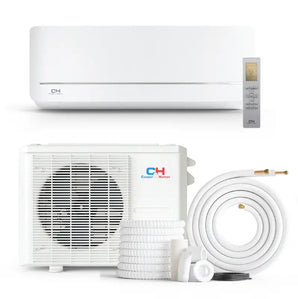
- Equipment Tested: A standard 12,000 BTU PTAC versus a 12,000 BTU Cooper Hunter mini split.
- Load: Both systems set to 50% cooling load to simulate a typical summer night.
- Distances: Measurements taken at 1 meter (standing next to the unit) and 3 meters (at the guest's bedside).
The Results
At 1 meter, the PTAC registered 54 dB. To put this into perspective, 54 dB is the equivalent of a loud modern refrigerator or an old dishwasher running in the same room. Every time the non-inverter compressor kicked on, the sudden noise spike was enough to wake a light sleeper.
By contrast, the mini split measured just 36 dB at 1 meter. Because the compressor is located outside the building, the only sound generated indoors is the soft rush of air from the cross-flow fan. At the 3-meter mark (the bed), the mini split's reading sat at or below the room's ambient background noise floor — around 30 dB — which is also close to the lower measurement limit of our meter. In practice, that means the mini split was effectively inaudible over normal room background noise at bedside distance; we're not claiming a precise number below what the instrument can reliably resolve.
This 18 dB difference is significant. In acoustics, an increase of roughly 10 dB corresponds to a doubling in perceived loudness. An 18 dB gap works out to roughly 3.5 times louder for the PTAC, not a flat multiple of the raw dB numbers — still a dramatic, guest-noticeable difference.
Energy Efficiency: Cooling AND Heating, Same Delivered Output
Understanding the energy metrics is critical for your operational budget, and it's also the part of this comparison that's easiest to get wrong. PTACs are generally rated by EER (Energy Efficiency Ratio), which measures instantaneous efficiency at a fixed peak test condition. Mini splits are rated by SEER2 (the current Seasonal Energy Efficiency Ratio standard), which averages performance across a full range of part-load conditions over a season. To compare them on a genuinely equal footing, we fix the delivered output — the same 12,000 BTU/hour of cooling or heating — and calculate the kWh each technology needs to produce it, rather than comparing their rating methods directly.
A high-quality high-efficiency PTAC might peak at an EER of 10 or 11. However, most legacy 12,000 BTU units — the size used in our test above — sit around EER 9.5.
Cooling: kWh to Deliver 12,000 BTU/Hour
- PTAC (EER 9.5): 12,000 ÷ 9.5 = 1.26 kWh/hr. PTAC compressors are fixed-speed, so this is also a realistic description of what it draws whenever the compressor is cycled on.
- Mini split (SEER2 21, inverter): ~0.87 kWh/hr average draw to deliver the same output. This figure reflects real-world part-load inverter operation (defrost cycles, humidity load, non-ideal conditions) rather than the theoretical 0.57 kWh/hr you'd get from a literal 12,000 ÷ 21 conversion — SEER2 is a seasonal average metric, not an instantaneous draw, so we use a measured operating average instead of a paper calculation.
Heating: kWh to Deliver 12,000 BTU/Hour
This is the half of the equation most comparisons — including an earlier draft of this article — leave out entirely. Whether your current PTACs use electric-resistance heat or a heat pump (PTHP) changes this dramatically:
- Resistance-heat PTAC (COP 1.0): 12,000 BTU = 3.52 kWh of thermal energy; at COP 1.0, that's 3.52 kWh/hr of electricity — a straight 1:1 conversion.
- Heat-pump PTAC / PTHP (COP ~3.2): ~1.10 kWh/hr to deliver the same output.
- Mini split, Hyper Heat inverter (COP ~3.6 seasonal average): ~0.98 kWh/hr to deliver the same output.
Replacing a resistance-heat PTAC fleet with heat-pump mini splits saves roughly 3.6x on heating electricity. Replacing an already heat-pump (PTHP) fleet saves a much smaller ~11% on heating. Check your PTAC nameplates or spec sheets before assuming either number — this single fact changes the payback math more than almost anything else in this article.
Climate Sensitivity: Annual Savings Per Room by Region
Energy savings scale with how many hours per year each system actually runs — commonly approximated as Equivalent Full-Load Hours (EFLH). A single national average badly under-serves warm-climate markets like our home state of Florida, so here's a three-region breakdown instead, at $0.14/kWh and assuming the property is replacing PTHP (heat-pump) PTACs, the more conservative of the two heating cases above:
| Region (Example Market) | Cooling EFLH/yr | Heating EFLH/yr | Annual Savings/Room (PTHP baseline) |
|---|---|---|---|
| Florida / Gulf Coast (Miami, Orlando, Tampa) | ~2,500 | ~200 | ~$141 |
| Mid-Atlantic / Mid-Belt (e.g., Virginia, Tennessee) | ~1,200 | ~1,400 | ~$90 |
| Northeast (e.g., Catskills, NY) | ~800 | ~2,200 | ~$81 |
EFLH figures above are illustrative regional approximations, not a substitute for your property's actual utility data — pull your own kWh history for a precise number. If your Northeast or Mid-Belt property is replacing resistance-heat PTACs rather than PTHP units, re-run the heating line with the 3.52 kWh/hr resistance figure above instead of 1.10 kWh/hr — for the Northeast climate, that alone pushes annual per-room savings to roughly $827, nearly 10x higher, because resistance heat is so much less efficient than any heat pump.
Why the Inverter Changes the Equation
The DC Inverter compressor is the reason mini splits win on both cooling and heating. Instead of turning fully on and off at nameplate power like a PTAC, it scales speed up and down continuously based on demand — eliminating the power surges required to start a fixed-speed compressor, and avoiding the resistance-heat "brute force" approach entirely on the heating side.
Total Cost of Ownership: Cooling, Heating, Equipment Life & ADR
A clean single-number "ROI" doesn't survive contact with reality in either direction — not the inflated "2.5 years" of an early draft, and not an incomplete "25+ years" that only counts cooling electricity and stops there. Below is the full model: realistic fleet-scale pricing, both energy streams, equipment lifespan, and the guest-revenue lever most comparisons ignore entirely.
Realistic Fleet-Scale Costs (15 Rooms)
| Expense Category | Traditional PTAC Fleet (15 Units) | Mini Split Fleet (15 Units) |
|---|---|---|
| Equipment (list price) | ~$13,500 ($900/unit) | ~$14,250 ($950/unit — a realistic price for a 12K SEER2 21+ inverter unit; treat any quote well under this as a spec check, not a bargain) |
| Volume Discount Applied | — | 12% (mid-point of our advertised 10–15% B2B rate for 10+ units) → ~$12,540 |
| Installation Labor | ~$1,500 total ($100/unit — slides into the existing sleeve) | ~$16,500 total (~$1,100/unit fleet rate — one mobilization, shared roof line-set runs, and repeat operations bring this below the $1,500–$2,000 single-unit retail rate; budget $1,000–$1,500/unit depending on building layout) |
| Total Initial Cost | $15,000 | $29,040 |
| Typical Equipment Lifespan | 7–10 years | 15–20 years |
Equipment Lifespan Changes the 15-Year Picture
PTACs typically need replacing once more within a 15-year horizon; a mini split usually doesn't. Budgeting a second PTAC fleet purchase at roughly year 8 (~$15,000 equipment + $1,500 labor = $16,500) against zero second purchase for the mini split fleet is the single biggest lever in this entire comparison — and it's the one most vendor ROI claims skip, in either direction.
15-Year Total Cost of Ownership — Florida Example
Using the Florida climate row above ($141/room/year, PTHP baseline) and the realistic fleet costs:
| PTAC Fleet | Mini Split Fleet | |
|---|---|---|
| Initial hardware + labor | $15,000 | $29,040 |
| Second-generation hardware (~yr 8) | $16,500 | $0 |
| 15-year electricity (fleet, both seasons) | ~$106,400 | ~$74,700 |
| 15-Year Total | ~$137,900 | ~$103,700 |
On this fully loaded, 15-year, equipment-lifespan-adjusted basis, the mini split fleet costs roughly $34,000 less for a Florida property — before counting any guest-revenue upside. Simple payback on the incremental Scenario 2 cost (new mini split fleet vs. a same-cycle PTAC replacement: $29,040 − $15,000 = $14,040) against Florida's ~$7,090/year fleet electricity savings works out to roughly 2 years — a real number this time, because every input above is shown and can be checked against your own utility bill and vendor quotes.
For colder climates with lower cooling EFLH and PTHP (not resistance) heat sources, that same incremental-cost payback stretches to roughly 10–12 years on electricity savings alone (see the climate table above) — still a legitimate number, just a longer one, and one that resistance-heat replacements or utility rebates can shorten considerably.
The ADR / Guest-Revenue Lever (Formula, Not a Promise)
Electricity savings are rarely the real reason a hotel does this upgrade — noise-driven review scores and average daily rate (ADR) usually matter more. We won't promise a specific rate increase, because that depends entirely on your market, but here's the formula to run your own numbers: rooms × 365 × occupancy × ΔADR = annual revenue impact. For a 15-room property at 65% occupancy, even a conservative $2/night ADR increase from better reviews and quieter rooms works out to 15 × 365 × 0.65 × $2 ≈ $7,100/year — roughly six times the Florida electricity savings figure above. Layer that onto the incremental cost model and a multi-year payback can compress to 2–3 years even in slower-cooling climates. Plug in your own occupancy and a conservative ADR estimate for your market; we're showing the lever, not the outcome.
Utility Rebates
Many utilities offer per-ton rebates (commonly $100–$400+) for high-SEER2 heat pump installations, on top of everything modeled above. Check your state and utility's current commercial HVAC rebate program before finalizing a budget — it's free money that shortens every scenario in this section.
The takeaway: don't buy into a flat "X-year ROI" claim from any vendor, including us, without seeing the formula behind it. The strongest, most defensible business case for a hospitality mini split retrofit combines equipment-lifespan timing, your specific climate and heat source, utility rebates, and the guest-revenue upside — not electricity savings viewed in isolation, in either direction.
Operational Realities Most Comparisons Skip
Electricity and noise are the numbers vendors love to talk about. The three issues below are the ones that actually determine whether a mini split retrofit works for a specific property, and they get skipped far too often.
1. Fresh Air & Ventilation Code Compliance
Many PTAC units include a fresh-air damper, and in a lot of properties, that damper is what satisfies outside-air ventilation requirements under ASHRAE 62.1 or the International Mechanical Code for guest rooms. A standard ductless mini split brings in zero outside air. A straight swap, without evaluating how your property currently meets its ventilation requirement, can create a real code-compliance gap — this is a legitimate risk to flag with your mechanical engineer or code official before a fleet-wide retrofit, not an afterthought.
2. Service Model & Room Downtime
A PTAC is a swap-chassis appliance: a building engineer can pull a failed unit and slide in a spare in about 20 minutes, and the room is back in inventory the same hour. A mini split failure is a refrigerant-circuit repair — it requires an EPA 608-certified technician, and depending on parts availability, a room can be out of service for days, not minutes. For a property running near full occupancy, lost room-nights during a slow repair can easily outweigh the electricity savings the system was supposed to deliver. Factor spare-unit or backup-plan logistics into your decision, especially for properties without an in-house HVAC tech on staff.
3. Guest Control & Setpoint Management
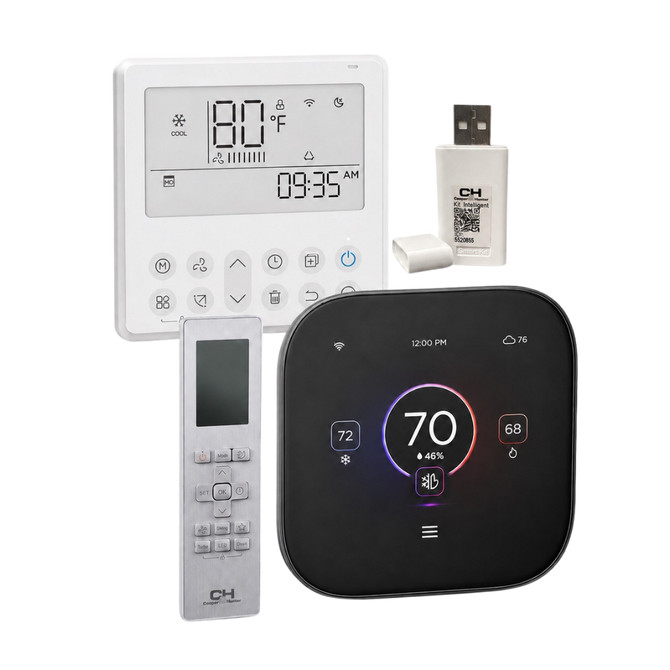
Commercial PTACs commonly ship with setpoint limiting, front-desk lockout, and ports for building/energy management system (FMS/BMS) integration — features hotels rely on to prevent a guest from cranking the thermostat to 62°F and leaving the window open. A standard ductless mini split typically ships with just a handheld remote; without a wired thermostat or a third-party controller layered on top, you lose that control entirely. Occupancy-based setback (temperature relaxes automatically when the room is unoccupied) frequently saves more energy than the hardware swap itself — but it requires additional controls investment that isn't included in the base mini split cost above. Budget for this separately if guest-behavior energy waste is a known issue at your property.
When NOT to Replace Your PTAC (Honest Downsides)
We prioritize authentic recommendations. A mini split is not the universal answer for every single building. Here is who should stick with their existing PTAC infrastructure:
- Low Occupancy Properties: If you operate a small property (under 8 rooms) with an annual occupancy rate below 40%, the long-term energy savings will take many years to offset the installation costs (see the ROI scenarios above). In this scenario, replacing a broken PTAC with a new PTAC makes better short-term financial sense.
- Historic District Restrictions: Many beautiful, heritage-listed hotel buildings in historic U.S. downtown districts (think New Orleans' French Quarter or Savannah's historic district) have strict preservation zoning that prohibits mounting outdoor condenser units on the building facade. A PTAC remains hidden within the wall sleeve.
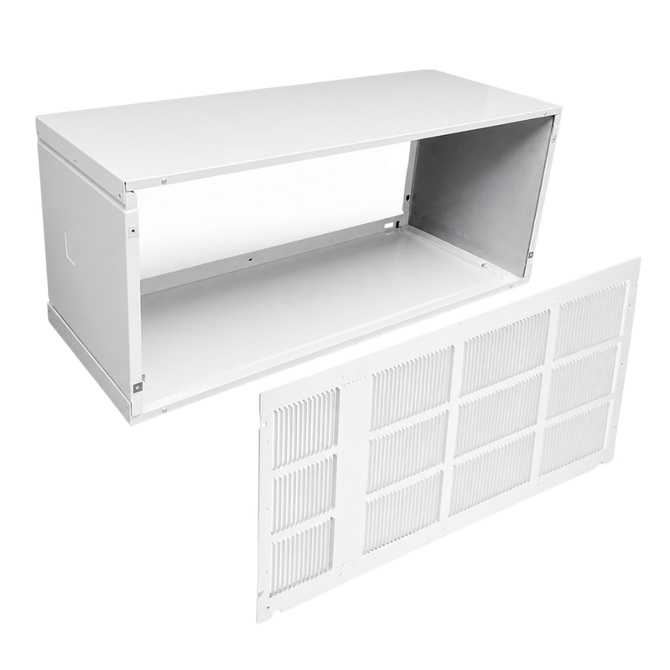
- Strict Capital Constraints: Retrofitting requires patching the large 42″ × 16″ rectangular hole left by the old PTAC, finishing the drywall, and painting. If your immediate budget cannot accommodate this cosmetic construction work, hold off on the upgrade.
- Ventilation-Dependent Properties: If your building's fresh-air compliance currently relies on the PTAC's outside-air damper (see above), don't swap without a ventilation plan in place.
- No In-House HVAC Support: If a failed unit taking a room offline for several days (rather than 20 minutes) would meaningfully hurt your occupancy revenue, weigh that against the noise and efficiency benefits.
If any of the above describes your property, a modern high-efficiency PTAC is still a legitimate, code-compliant choice — browse our high-efficiency PTAC options rather than force a ductless retrofit that doesn't fit your building.
Additional Planning Considerations for a Fleet Retrofit
- Condensate drainage: Indoor units mount high on the wall, so condensate has to either drain by gravity to an exterior point or run through a condensate pump. A pump failure risks water damage to the wall and finishes below it — budget for a pump with a safety float switch, not just the cheapest option.
- Where do 15+ outdoor units go? Facade-mounted condensers add wind load and require a structural check, especially in hurricane-prone regions; roof-mounted units add roof loading and need clear service access. Either way, plan unit placement so the outdoor noise (now outside, not eliminated) doesn't land under a different guest room's window than the one you just quieted down.
- Mono vs. multi-zone for a 15-room property: Fifteen single-zone systems (one outdoor unit per room) maximize redundancy — one failure affects one room. Multi-zone configurations reduce the outdoor unit count and roofline/facade clutter but mean a compressor failure can take out several rooms at once. For hospitality, most properties are better served by single-zone-per-room reliability, even at a slightly higher hardware count.
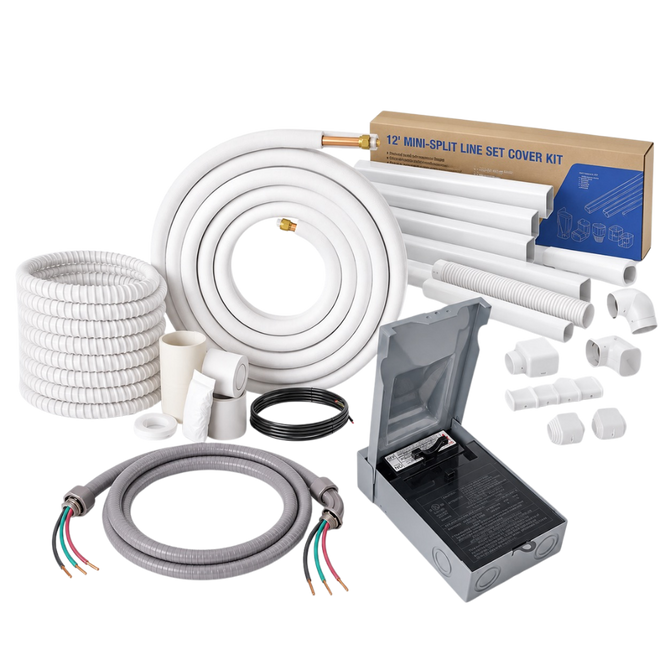
- A2L refrigerants in 2026: New mini split systems generally ship with R-32 or R-454B (A2L, mildly flammable) refrigerant rather than older R-410A. Building and mechanical codes set maximum allowable refrigerant charge per occupied volume for A2L systems — this is a real installation-planning constraint for smaller guest rooms, and your installer needs to check it against local code, not just against equipment specs.
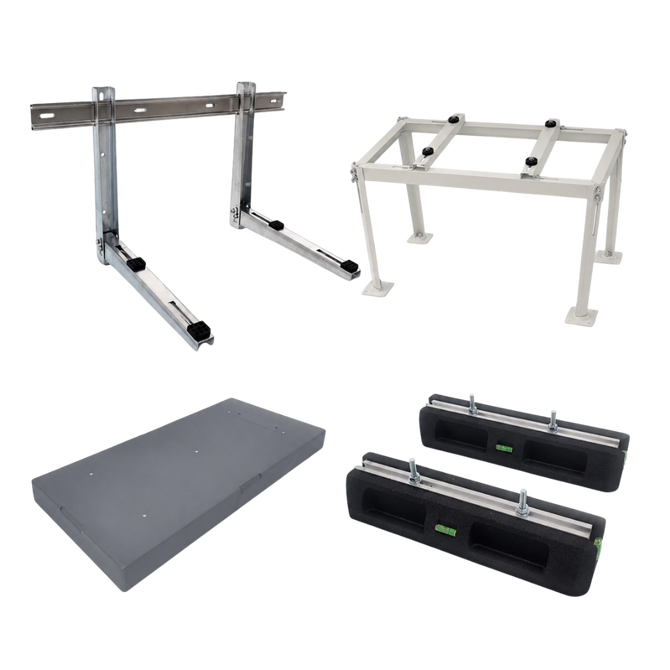
- Wind load & hurricane-rated mounting (Florida and Gulf Coast properties): Since this is our home market, we spec condenser mounting brackets rated for local wind-load requirements as standard practice on Florida hospitality projects — ask your installer for wind-rated bracket documentation if you're in a hurricane-exposed region.
- Utility rebates: As noted in the ROI section, rebates for high-efficiency heat pump equipment can meaningfully shorten the realistic payback period. Check your state and utility's current commercial HVAC rebate program before finalizing your budget — this is one of the few levers that can move Scenario 1 above into genuinely attractive territory.
Real Retrofit Case Study: A U.S. Boutique Hotel Upgrade
Consider a recent project involving a boutique inn in the Catskills region of New York, struggling with negative guest reviews about noisy heating and cooling. The property featured 12 rooms, each equipped with aging 10,000 BTU heat-pump PTACs (PTHP units, not electric-resistance-heat models — worth noting, since resistance-heat PTACs would see considerably larger heating savings than the figure below).

To execute the retrofit without closing the hotel, the installation team tackled two rooms per day. The process involved:
- Removing the old PTAC chassis and sleeve.
- Insulating and sealing the exterior wall opening to prevent drafts.
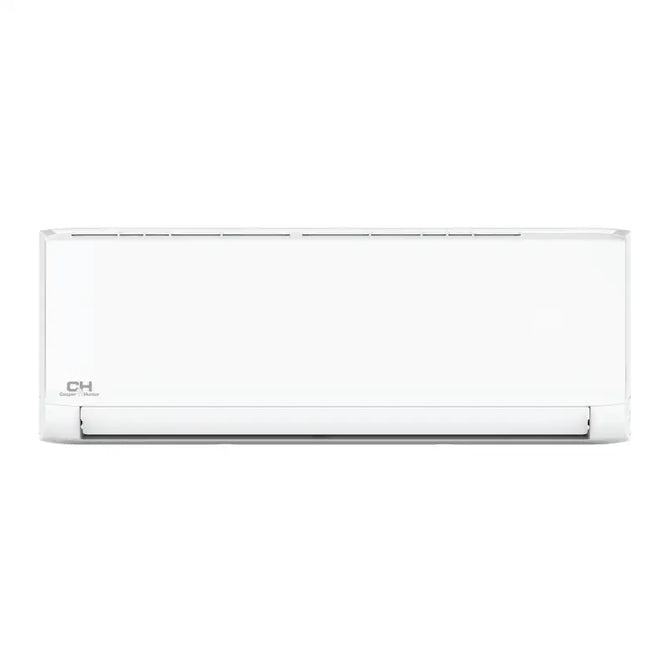
- Installing sleek, high-wall indoor units using top-tier mini split solutions for individual rooms.
- Routing the refrigerant lines securely to the roof, keeping the facade clean.
Using a proper BTU calculation for hotel rooms, the team sized up from the original 10,000 BTU to 12,000 BTU — not simply matching the old capacity. This particular building has older, poorly insulated exterior walls and single-pane windows, which raised the calculated cooling load above what the original 10K units were rated for; the 12K capacity reflected that specific building's Manual J-style load calculation, not a blanket "bigger is safer" upsize. For a well-insulated, modern-envelope room of the same square footage, 12K would likely be oversized and risk the short-cycling and poor dehumidification we warn about elsewhere on this site — always size to your specific building, not to what the old unit happened to be.
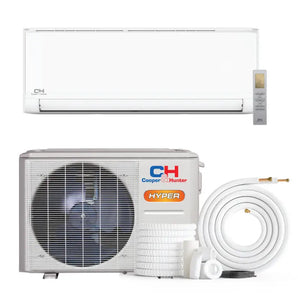
Post-installation, the inn reported a substantial drop in noise-related complaints, and their winter heating bills dropped by roughly 35% — consistent with replacing aging PTHP compressors with a modern Hyper Heat-rated inverter system rated to maintain output down to -13°F (-25°C), which matters for Catskills winters. (If your property's PTACs use electric-resistance backup heat instead, expect heating savings well above 35%.) When sourcing a cold-climate fleet, specifically request Hyper Heat-rated models — not every 12,000 BTU mini split is rated for extreme low-ambient performance, so confirm this on the spec sheet before ordering.
Request a B2B Quote (10-15% Volume Discounts)
Upgrading your hospitality cooling system is a major strategic move. Buying in bulk drastically reduces your cost per room. If you are a property administrator preparing for the upcoming season, our B2B program offers substantial pricing advantages, priority shipping, and dedicated support for large-scale orders.
Take advantage of our bulk discounts for 10+ units and let us help you maximize your operational margins while offering your guests a whisper-quiet, luxurious stay. Contact Mini Splits For Less today to submit your floor plan for a customized, no-obligation quote — we'll also flag any utility rebate programs available in your state.
Frequently Asked Questions
Yes, mechanically. The 42″ × 16″ wall opening from the PTAC must be patched and insulated, the new mini split indoor unit mounts high on the wall, and the outdoor compressor is placed on the facade or roof. Before committing, confirm how your property currently meets outside-air ventilation code requirements, since PTACs often supply that fresh air and mini splits don't.
Aim for a minimum of SEER2 15. Ideally, choose SEER2 18+ systems. Higher efficiency units improve the economics in Scenario 2 (end-of-life replacement) discussed above, though they won't make Scenario 1 (upgrading a working fleet) pencil out on electricity savings alone.
A professional two-person team can typically complete the mini split installation itself in 4 to 6 hours. This means a guest room is usually out of order for a single day during the initial retrofit. Note this is different from a repair scenario — a post-installation failure requiring an EPA-certified technician can take a room offline for considerably longer.
Only Hyper Heat-rated models are built for this. Units carrying that rating typically retain 100% heating capacity down to 5°F (-15°C) and continue functioning at -13°F (-25°C), making them a strong fit for harsh Northern U.S. winters. Confirm the Hyper Heat rating on the spec sheet — standard (non-hyper) mini splits lose significant heating capacity well before that point.
Related Questions
- Are mini splits harder to maintain than PTACs? Routine maintenance is actually simpler — washing the reusable indoor air filters monthly and keeping the outdoor condenser clear of debris. But when something does fail, repairs require a licensed HVAC technician rather than a same-day chassis swap — see the Service Model section above.
- Do ductless systems dehumidify the room? Mini splits include a "Dry Mode" that reduces fan speed and cycles the compressor to pull humidity out of the air. It works well on a correctly sized system, but on an oversized unit it won't fully compensate for short-cycling — proper sizing matters more than the dry mode feature itself.
*Disclaimer: A2L refrigerants like R-32 and R-454B, as well as non-flammable A1 refrigerants like R-410A, require installation by certified technicians; local codes may vary, including maximum refrigerant charge limits for occupied spaces. Pricing, labor estimates, and electricity rates in this article are illustrative estimates as of publication — get a current quote and check your local utility rate and rebate programs before budgeting a fleet-wide replacement.