
The Definitive Mini Split Master Class for 2026
You are standing at a pivotal moment in home ownership. It is not merely about temperature control; it is about lifestyle design. We provide a transparent examination of thermodynamics, manufacturing realities, and the ROI of the "Ductless Revolution."
Efficiency (SEER2) is important, but Durability is Paramount. A high-efficiency unit that breaks in year 4 is not efficient; it is a financial disaster. Focus on "Investment Grade" engineering like Cooper & Hunter, OLMO, and BRAVO for long-term ROI.
Introduction: The Renaissance of Home Comfort

You are standing at a pivotal moment in home ownership. It is not merely about temperature control; it is about lifestyle design. If you are reading this guide, you have likely realized that the old way of cooling—loud window units that block your view, or inefficient central ducted systems that lose 30% of their energy in the attic—is obsolete.
We operate on a philosophy of "Investment Grade" economics. An HVAC system is not a disposable appliance; it is a permanent infrastructure upgrade. We believe in engineering pedigree, examining the thickness of copper and quality of capacitors. This guide strips away marketing gloss to examine thermodynamics, manufacturing realities, and the cold hard math of ROI.
The "Refrigerant Reality" — R-410A vs. The New Standard

The industry is currently in a major transition from R-410A (Puron) to newer low-GWP refrigerants like R-454B and R-32. Understanding this shift is critical for your 2026 purchase.
- Lowest Entry Cost: As manufacturers clear R-410A stock, upfront equipment costs are at historic lows compared to the newer, more expensive low-GWP units.
- Mature Manufacturing: These systems are fully optimized. Years of real-world use mean predictable performance and no early-generation surprises.
The Executive Summary (The 2026 Power Matrix)
If you don't have time for the full engineering breakdown, this is your roadmap based on build quality and "Investment Grade" economics.
| Category | Top Pick | The "Insider" Why | Verdict |
|---|---|---|---|
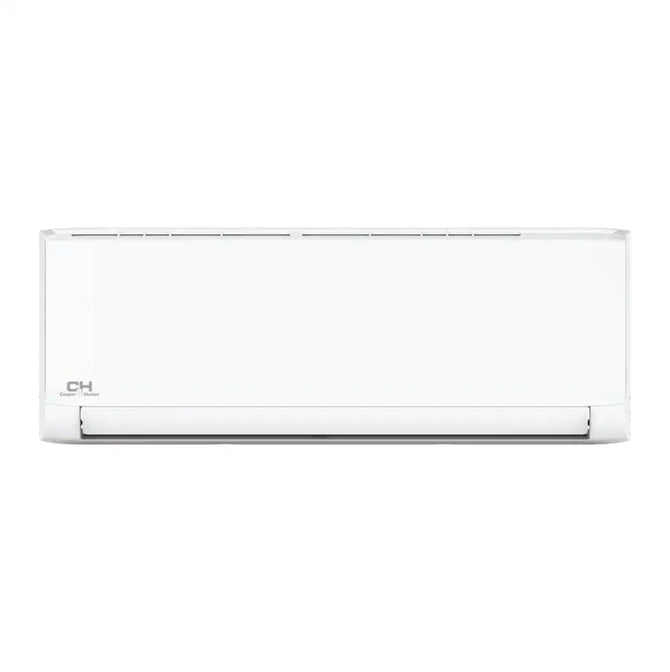
| Best Overall (Pro Choice) | Cooper & Hunter | The "Sweet Spot." Tier-1 build quality (heavy chassis) with accessible pricing. Engineered for longevity and extreme climates. | $$ Premium Value |
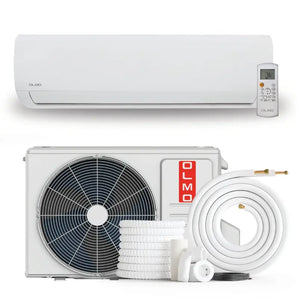
| Value & Reliability | OLMO | The reliable workhorse. Excellent performance-to-cost ratio without unnecessary bells and whistles. | $ Value Leader |
| Contractor Choice | BRAVO | Favored by installers for its straightforward design and ease of maintenance. Robust and no-nonsense. | $ Economy |
Decoding the Hieroglyphics (SEER2, HSPF2 & Inverters)
Marketing brochures can be dense. As of 2023, the DOE mandated SEER2. This testing protocol increases external static pressure to mimic real-world ductwork and environmental resistance.
The Heartbeat: DC Inverter Technology
Conventional AC units operated on a simple On/Off basis. Modern 180-degree Sine Wave DC inverters (found in Cooper & Hunter, OLMO and BRAVO) modulate power like a dimmer switch. This results in less vibration, whisper-quiet operation, and significantly longer bearing life compared to standard "Square Wave" technology.
In-Depth Brand Analysis
The "Heavy Metal" Difference: These units physically weigh more due to thicker copper coils and robust compressors. Includes GoldFin anti-corrosive coating standard.
Verdict: The best overall balance of performance, durability, and price. They aren't just for the cold; they are over-engineered for all climates.
$$ Premium ValueThe Proposition: OLMO provides high-efficiency technology without the premium price tag. Designed for homeowners who prioritize core cooling/heating function and long-term reliability.
Verdict: A smart choice for secondary spaces, guest houses, or budget-conscious renovations where quality cannot be sacrificed.
$ Value LeaderThe Proposition: Known for simplicity and ease of service. BRAVO units are straightforward machines that do exactly what they are designed to do: condition air efficiently.
Verdict: Ideally suited for rental properties, flips, and multi-unit projects where low maintenance and initial cost are key drivers.
$ EconomyThe Economic Analysis — Total Cost of Ownership
The mistake most homeowners make is focusing on the Acquisition Cost rather than the Total Cost of Ownership (TCO).
The Formula: (Unit Cost + Installation + Repairs over 10 Years) - (Resale Value Increase) = Real Cost.
Investing in a premium brand like Cooper & Hunter lowers the "Repairs" variable significantly compared to generic units that use inferior capacitors.
The Strategy: Cooper & Hunter has engineered specific lines (Hyper Heat) to meet these tiers. You must verify the specific model number against the AHRI Directory.
Specialized Solutions (The "Blue Ocean" Gaps)
Standard units fit living rooms, but what about the edge cases?
The Need: Absolute silence.
The Solution: Premium Inverters (C&H) ramp down to 20 decibels—quieter than a whisper. Lesser units may have audible relay switching.
The Need: Aesthetics.
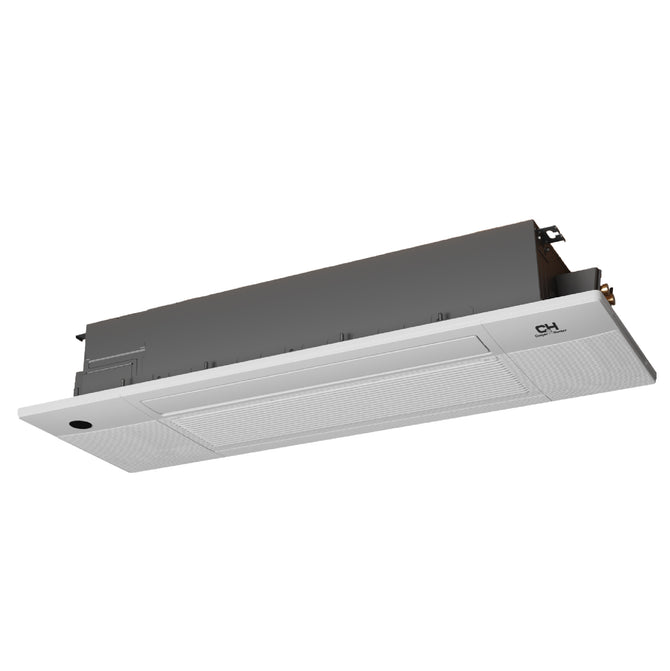
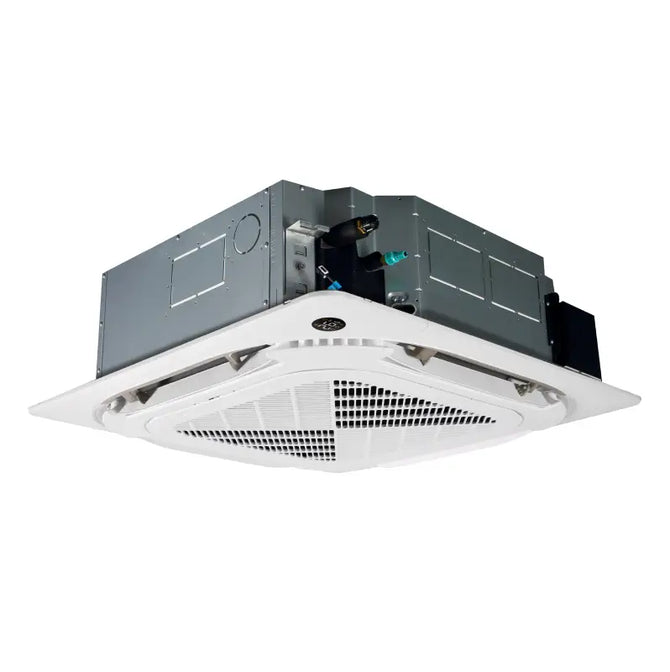
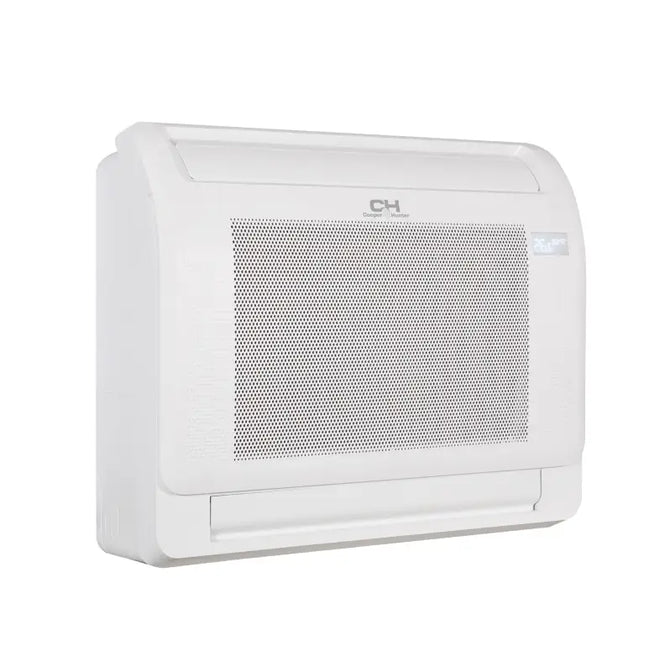
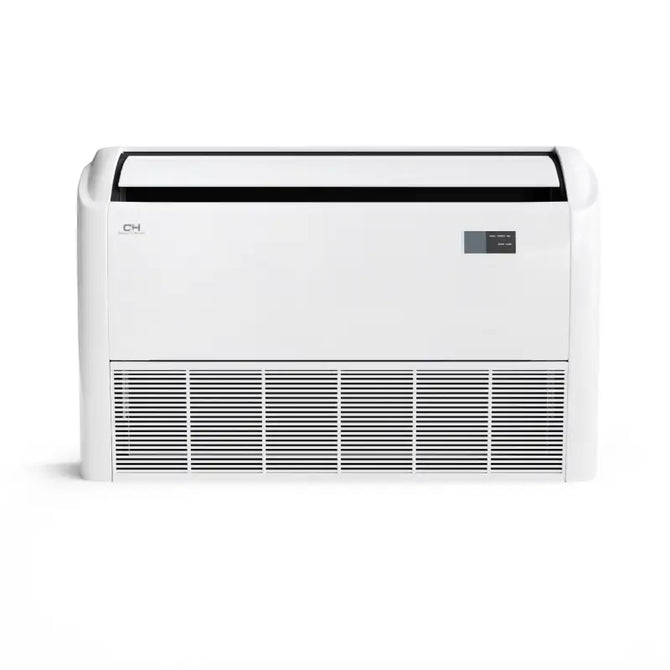
The Solution: Ceiling Cassettes fit between joists, or Floor Consoles mount low like radiators. Avoid the "white box" on the wall entirely.
The Need: Fighting heat load & dust.
The Solution: Size up (18k/24k BTU for 400sqft) to fight engine heat. Requires coated circuit boards (GoldFin) to resist moisture and dust.
The Direct-to-Consumer Advantage
Why buy from us? We position ourselves to provide professional-grade equipment without the traditional retail markup.
- Curated Inventory: We don't sell everything. We have moved away from brands with high warranty return rates. We double down on Cooper & Hunter, OLMO, and BRAVO because data shows the highest satisfaction.
- Strategic Stock: We offer value-driven opportunities on R-410A systems for those seeking the lowest entry cost.
- Technical Backing: We help you size correctly, preventing the #1 cause of failure.
Technical Overview — The Internal Components
The Compressor: Twin-Rotary
Premium C&H units use Twin-Rotary compressors where two rotors spin in opposition. This cancels out vibration, leading to smoother, quieter operation and less wear on internal shafts compared to single-rotary budget units.
The Electronic Expansion Valve (EEV)
Conventional systems utilized standard capillary tubes. Modern high-end splits use an EEV—a motorized needle valve controlled by a computer. It controls refrigerant flow with microscopic precision, essential for meeting tax credit efficiency standards.
Turn Down Ratio
A superior unit can ramp down to 10% or 15% capacity, "cruising" along using barely more electricity than a lightbulb. Budget units often cut off at 40%, leading to short-cycling and temperature swings.
The Professional Installation Standard
To ensure the longevity of your investment and the validity of your warranty, professional installation is non-negotiable. Manufacturers like Cooper & Hunter require a licensed HVAC professional to handle the installation, particularly the refrigerant lines and electrical connections.
Frequently Asked Questions
Should I buy an R-410A mini split in 2026?
If you are looking for the lowest upfront cost, yes. R-410A units are currently excellent value as clearance items. However, be aware that refrigerant costs for future repairs may increase as the industry transitions to new standards.
What is the difference between SEER and SEER2?
SEER2 is the updated standard that accounts for external static pressure (duct/filter resistance). Consequently, a unit's SEER2 rating is typically lower numerically than its old SEER rating (e.g., 22 SEER ≈ 20 SEER2).
What is the best overall brand for reliability?
Cooper & Hunter (Sophia/Hyper Series) is rated as the "Professional's Choice." It offers Tier-1 build quality—including heavy-duty compressors and GoldFin anti-corrosive coatings—at a competitive price point.
Does Cooper & Hunter qualify for tax credits?
Many models in the Hyper Heat lineup do. However, you must verify the specific match of Outdoor Unit + Indoor Unit on the AHRI directory to confirm SEER2, EER2, and HSPF2 numbers meet IRS requirements for your region.
Can I heat my whole house with mini splits?
Yes. It is often more efficient than a gas furnace. However, you need a unit that maintains capacity at low temperatures (like the C&H Hyper Heat) to ensure performance when it drops below freezing.
Glossary of Terms (For the True Geeks)
- AHRI: Air-Conditioning, Heating, and Refrigeration Institute. The body that verifies if claims are true.
- BTU: The amount of heat required to raise the temperature of one pound of water by one degree Fahrenheit.
- GoldFin: Anti-corrosive coating applied to condenser coils to prevent rust (Key feature of C&H).
- HSPF2: Heating Seasonal Performance Factor (New Standard). Measures heating efficiency.
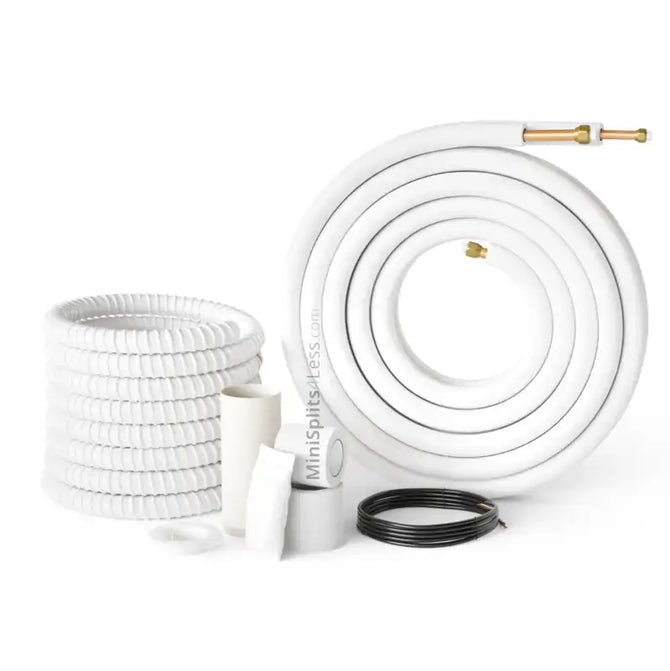
- Line Set: The copper pipes connecting the indoor and outdoor units.
- Short Cycling: When an AC turns on/off too frequently, causing wear. Usually caused by oversizing.