



Maximum Capacity Climate Control
5 Ton Mini Split Systems: 60,000 BTU Whole-House Buying Guide
If you need to heat and cool a massive residential space quickly, skip the guesswork. 60,000 BTUs is where standard residential meets light-commercial power. Here is the unfiltered truth about running a true 5-ton system.
The Definitive 5-Ton System for 2026
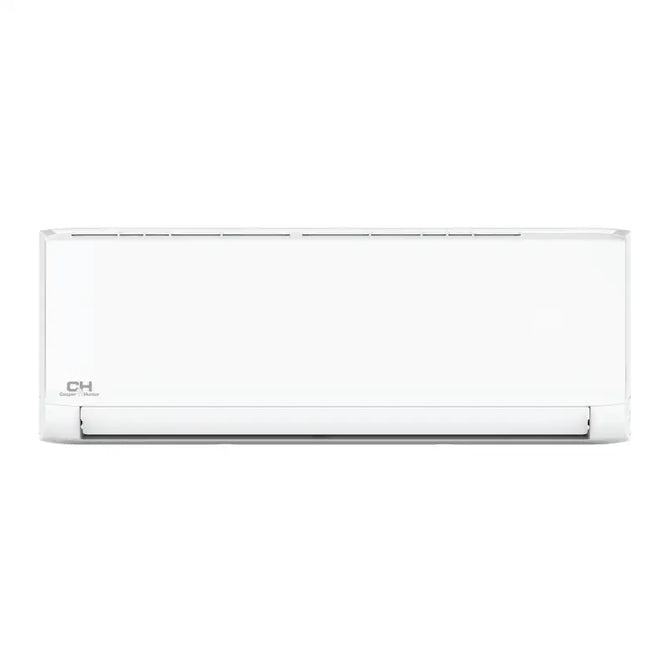
The definitive 5-ton mini split for a standard 2,500 sq ft home in 2026 is the Cooper & Hunter 60,000 BTU Multi-Zone System, starting at exactly $4,299 at Minisplitsforless.com. You get a variable-speed inverter compressor, independent temperature control for up to five separate rooms, and enough raw heating power to hold a steady 70°F indoors even when the outside temperature plummets.
Why 60,000 BTUs is an Engineering Feat
Moving 60,000 British Thermal Units of heat energy per hour is no small task. To achieve this, a 5-ton compressor operates at high frequencies, requiring advanced twin-rotary inverter technology to prevent immense electrical spikes. It’s the equivalent of having the cooling power of twenty window AC units seamlessly coordinated by a single outdoor brain.

How much area does a true 5-ton (60,000 BTU) system actually cover? In moderate climates (Zone 4), you are looking at 2,400 to 3,000 sq ft. If you live in colder regions with heavy winter heat loads, that drops to 2,000–2,500 sq ft.
Most online buying guides try to sell you equipment based entirely on arbitrary square-footage charts. We don't operate like that. I still remember freezing my hands off wiring up my first 5-ton penta-zone system a few years ago. Since then, the team at Minisplitsforless has analyzed hundreds of heavy-duty heat pump installations on actual homes. This guide is built on those real numbers: upfront equipment invoices, actual monthly kWh consumption, and the specific setups that make sense for a true 60k BTU configuration.
The Bottom Line: Costs, Specs, and the 60k Fork in the Road
A 5-ton (60,000 BTU) ductless system is going to cost you between $3,900 and $6,500 for the equipment alone in 2026. A basic Cooper & Hunter 60k single-zone floor/ceiling unit starts around $4,299, while highly customized multi-zone configurations easily push $5,800–$6,400. If you are hiring a professional (which you should for the final electrical and vacuuming), budget an extra $1,500–$3,000 for labor.
When you buy at this capacity, you immediately hit a fork in the road: do you buy one massive indoor unit (single-zone) or split that 60,000 BTU outdoor compressor across multiple indoor heads (multi-zone)?
Best for: Garages, Workshops, Barndominiums, Showrooms
If your space is entirely open, a single 60k BTU floor/ceiling unit is your cheapest and most effective play.
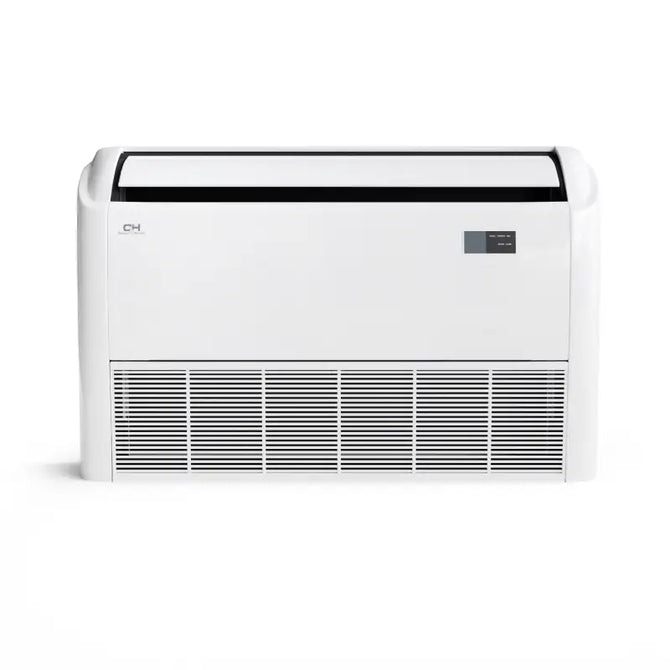
The Reality: A single 60,000 BTU indoor air handler is physically massive and sounds like commercial equipment. It moves up to 1,200 Cubic Feet of Air per Minute (CFM). Never put this in a residential hallway.
- Lowest equipment cost
- Fastest installation (only one line set to run)
- Massive air throw (up to 40 feet)
Multi-Zone Configurations We Spec the Most (48k–60k BTU)
To help you visualize your options, we pulled the most requested configurations for large residential properties we’ve worked on this year. Notice how the price, efficiency, and electrical requirements shift depending on the indoor unit style — and note that only the first option below is a true 60,000 BTU / 5-ton system. The other three are 48,000–60,000 BTU (4 to 5 ton) multi-zone setups that come up just as often for large homes, so we're including them for a complete picture.
*We have expanded this table with crucial specs for high-capacity buyers: Dedicated Amp requirements and Maximum Coverage.
| System Configuration | Where We Install It | Efficiency & Power | Field Notes & Data |
|---|---|---|---|
|
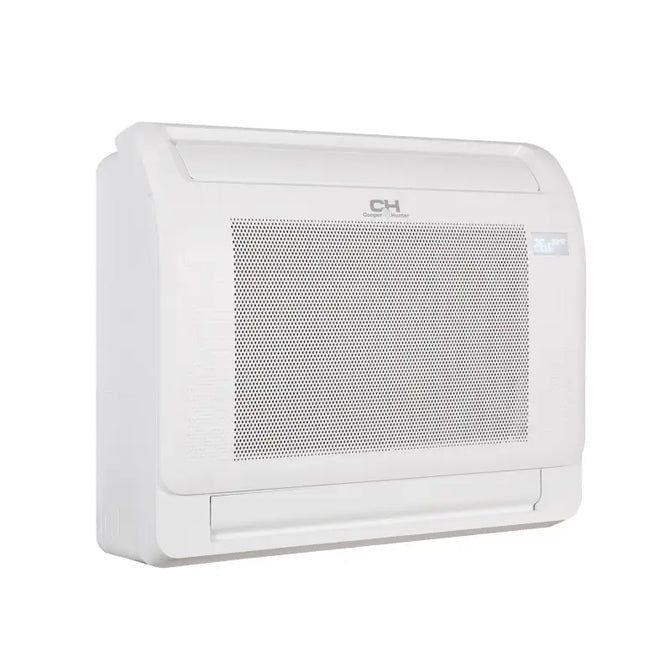
Single Zone — True 5 Ton 60,000 BTU Cooper & Hunter Floor/Ceiling |
Open warehouses, massive garages, commercial showrooms |
18.0 SEER2 Req: 50 Amp Breaker |
$4,299 It's loud, moves a ton of air, and is strictly for wide-open commercial-style spaces. Do not install in a standard house. |
|
Quad-Zone — True 5 Ton 60,000 BTU Olivia Quad-Zone (12k+12k+12k+24k, 4 Heads) |
Traditional 4-bedroom homes requiring max individual control |
21.3 SEER2 Req: 40 Amp Breaker |
~$5,850 A genuine 60,000 BTU / 5-ton outdoor unit split across 4 indoor heads. Takes longer to install but completely eliminates hot/cold spots. |
|
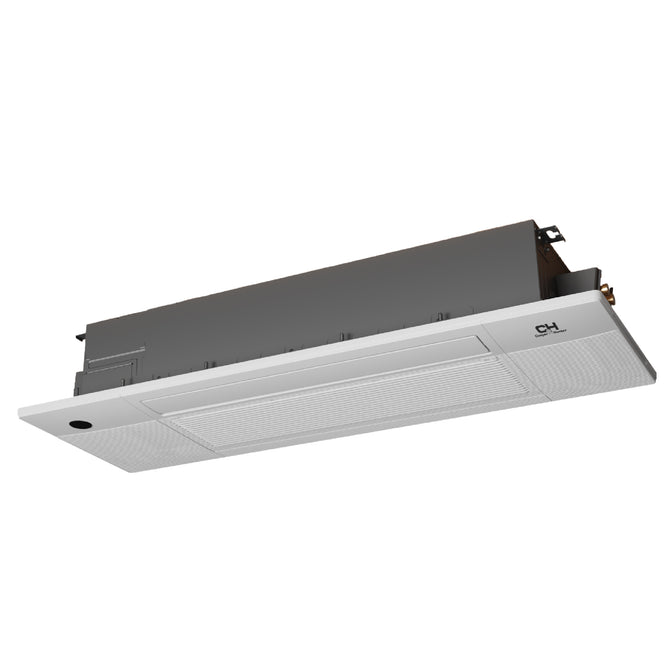
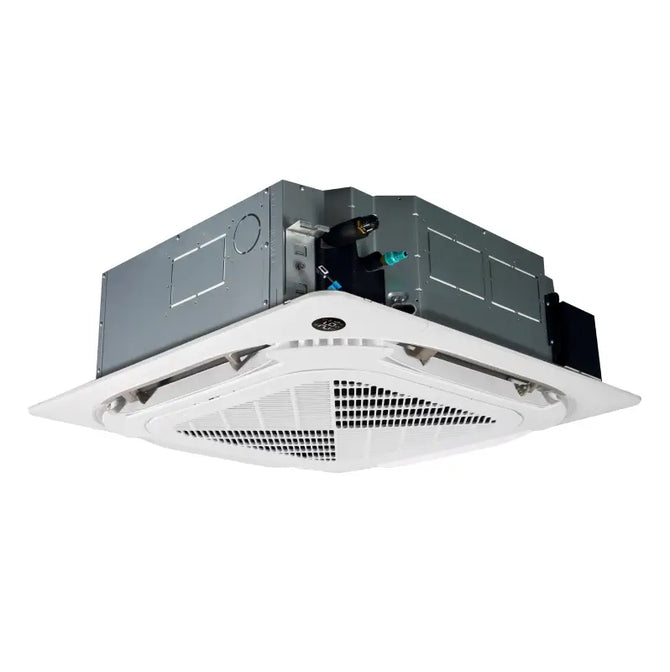
Penta-Zone — 4 Ton 48,000 BTU Sophia Penta-Zone (9k+9k+9k+9k+12k, 5 Heads, Concealed/Cassette) |
High-end homes that want the "invisible" ductless look |
21.5 SEER2 Req: 40 Amp Breaker |
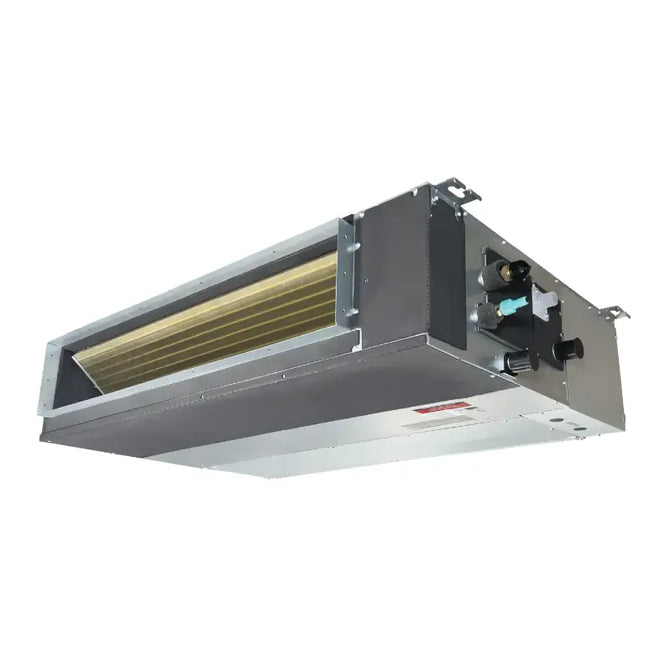
~$5,120 Note: this is a 4-ton (48,000 BTU) system split across 5 zones, not a full 5-ton. Requires ceiling space to hide the short-run ducts or cassettes, but aesthetically superior to wall units. |
|
Dual-Zone — 4 Ton 48,000 BTU Hyper Heat Dual-Zone (12k + 36k, 2 Heads) |
Extreme cold climates (-25°F) with a large main floor + master |
21.5 SEER2 Req: 40 Amp Breaker |
~$4,600 Also a 4-ton system (48,000 BTU), not a full 5-ton — but the beast mode option for Northern climates where you absolutely cannot lose heating capacity during deep freezes. |

(A quick note on single-zones: As mentioned, a single 60,000 BTU indoor air handler is physically massive. If you install one in a standard residential hallway, the short-cycling will destroy the compressor within three years. Don't do it.)
Stop Oversizing: Do You Actually Need 60,000 BTUs?
The absolute biggest mistake I see homeowners make is buying too much capacity because they think "more BTUs equals better comfort." It doesn't.
Using a proper BTU calculation guide (Simplified Manual J), modern, well-insulated homes require roughly 20 BTUs per square foot. By that math:
- 2,000 sq ft home: ~40,000 BTUs (3.5 Tons)
- 2,500 sq ft home: ~50,000 BTUs (4 to 4.5 Tons)
- 3,000 sq ft home: ~60,000 BTUs (5 Tons)
However, building physics matters. If you live in an older home with drafty single-pane windows, terrible attic insulation, or massive vaulted ceilings, your 2,500 sq ft house will absolutely require a full 5-ton system to keep up during peak summer afternoons or freezing winter nights. Be brutally honest about your home's thermal envelope before dropping money on a 60k unit.
My Winter Energy Bill: 6 Months Running a 5-Zone System
People always ask if a 5-ton mini split is actually more efficient than a central heat pump. Yes. A 5-ton inverter mini split with a 21+ SEER2 rating routinely consumes 25–40% less energy than a standard 14 SEER central unit.
We don't just parrot lab statistics; we track real electrical consumption. We recently monitored a 5-zone Cooper & Hunter system installed in a 2,800 sq ft home in a climate that perfectly mirrors the US Midwest (Zone 5/6)—specifically, Eastern Europe (Moldova). This region is infamous for brutal, sub-zero winters and thick, humid 95°F summers.
Here is the actual billing breakdown after replacing a dying 10 SEER central AC and an incredibly expensive propane furnace:
| Month / Season | Avg Outside Temp | Old System Bill | 5-Ton Inverter Bill | Actual Savings |
|---|---|---|---|---|
| July (Cooling) | 88°F (High Hum.) | $198 | Saved $112 (36%) | |
| August (Cooling) | 92°F (Peak) | $215 | Saved $130 (37%) | |
| October (Mixed) | 55°F | $85 | Saved $95 (52%) | |
| December (Heating) | 22°F |
|
$210 (Electric) | Saved $210 (50%) |
| January (Heating) | 12°F |
|
$245 (Electric) | Saved $235 (49%) |
The hero here is the variable-speed inverter compressor. Instead of blasting at 100% power and shutting off violently (like your old AC), it constantly sips electricity at 30-40% capacity to maintain the exact temperature setpoint.
What Actually Shows Up on the Freight Pallet (And How to Not Ruin It)
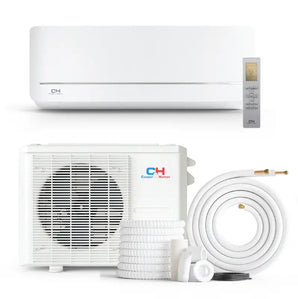
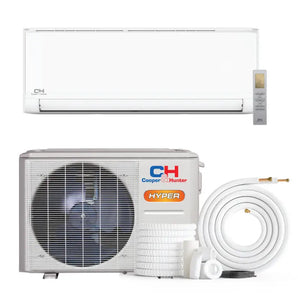
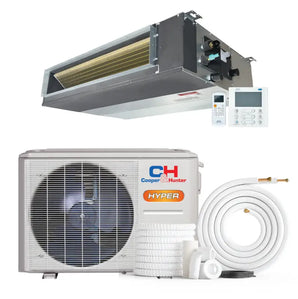
You cannot just plug a 5-ton heat pump into a standard wall outlet. This is heavy-duty equipment. When you order a 60,000 BTU multi-zone kit from our store, it arrives on a wooden freight pallet via a liftgate truck. Here is exactly what you are unpacking:
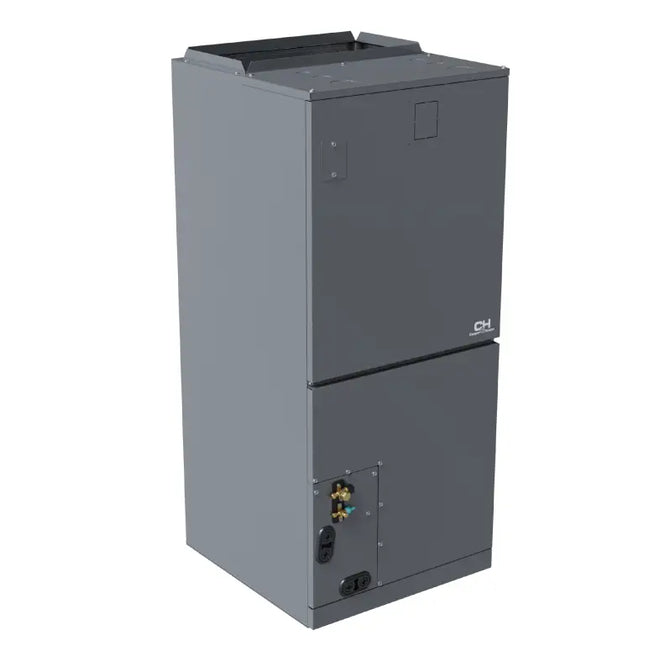
Brace yourself, this unit weighs around 250+ lbs. Have a friend (or two) ready to help you move it. It houses the massive twin-rotary compressor and the main circuit board that routes power to all your indoor heads.
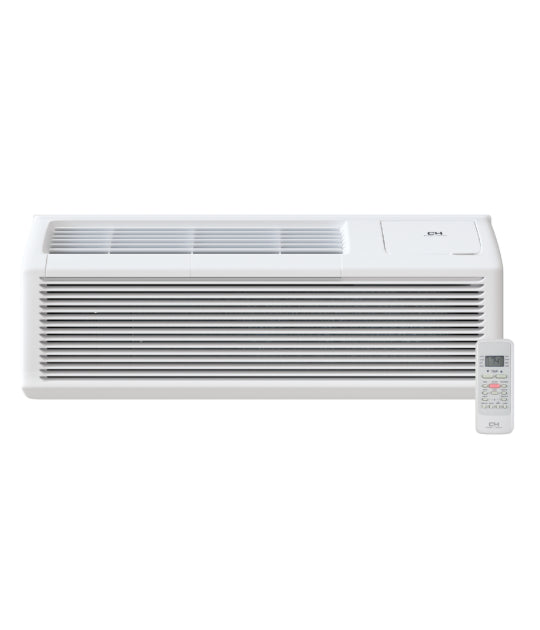
Depending on how you configured your package (e.g., 5-head or 4-head multi-zone), these will be boxed separately with their respective remote controls and mounting brackets.
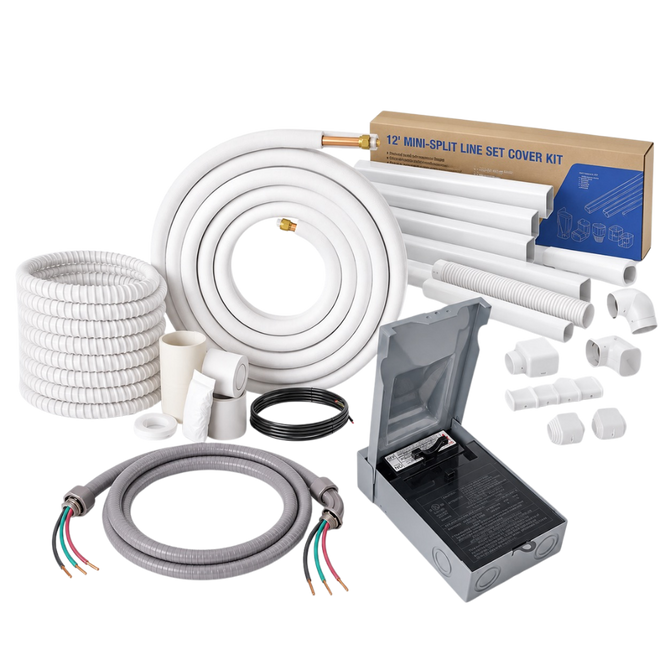
You will receive heavily insulated copper lines (usually 16 to 25 ft per indoor unit) that connect the indoor heads to the outdoor compressor, along with the communication wire and condensation drainage tubes.

The Electrical Reality: A 5-ton condenser requires a dedicated 208/230V circuit. You will absolutely need a 40A or 50A double-pole breaker and an outdoor disconnect box mounted near the condenser.
Can you DIY this? Yes and No.
You can mount the indoor units on your walls and run the copper lines through the attic yourself—which saves thousands in labor. However, federal law (EPA 608) requires a licensed HVAC technician to pressure test the lines, vacuum the system, and release the R-410A or R-32 refrigerant.
Do not skip this step to save $300. A poor vacuum job will leave moisture in the lines, which mixes with the refrigerant to create an acid that will destroy a $4,000 compressor in a matter of months. Plus, DIY electrical on a 50-Amp circuit is a massive fire hazard if you aren't trained.
Dealbreakers: Who Should Hard-Pass on a 5-Ton System
We refuse to sell you equipment you don't need. You should completely avoid a 5-ton system if:
- Your home is under 2,200 sq ft and well-insulated. A 60k BTU unit will short-cycle. It will cool the room in 3 minutes, shut off, and completely fail to remove humidity, leaving your living room feeling like a cold, damp swamp. Read our honest 3-ton (36,000 BTU) guide for homes under 1,800 sq ft instead.
- You have an open-concept layout of 1,500 sq ft. A single 2-ton or 3-ton unit will circulate the air beautifully without the massive overkill of a 5-ton beast.
- Your total budget is under $3,800. Quality 5-ton equipment is a serious investment. If you find a 60k multi-zone system brand new for $2,000 on some random marketplace, it is built with cheap, non-inverter parts that will die during the first hard winter freeze.
Ready to Map Out Your House?
A 5-ton (60,000 BTU) mini split system is the ultimate climate control solution for sprawling 2,500+ sq ft homes, offering unmatched zoning flexibility and massive drops in utility bills. If you want a proven, durable setup, the Cooper & Hunter Multi-Zone series gives you premium features—like Wi-Fi control and Gold Fin anti-corrosion coating—without the brutal markup of legacy brands.
If you are ready to spec out your exact setup, reach out directly to our sizing experts at Minisplitsforless.com. We'll help you map out the precise BTU requirements for every room in your house so you buy exactly what you need.
The Detailed 5-Ton Pre-Purchase FAQ
You can do 80% of the work (mounting the units, running the copper lines). But a licensed HVAC technician must handle the final electrical connections, pressure testing, vacuuming, and refrigerant release to comply with EPA laws and actually validate your manufacturer warranty.
You need a 208/230V single-phase electrical supply. Depending on the exact model and compressor, you will need a dedicated 40-Amp or 50-Amp double-pole breaker and an outdoor disconnect box. Your electrician will need to run appropriate gauge wire (often 8 AWG or 6 AWG depending on run length) from the main panel to the disconnect.
Standard 5-ton models lose efficiency below freezing. However, if you upgrade to the Hyper Heat 5-ton models, they feature enhanced inverter compressors that provide 100% heating capacity down to -15°C (5°F) and continue operating reliably even at -25°C (-13°F). For northern climates, Hyper Heat is mandatory.
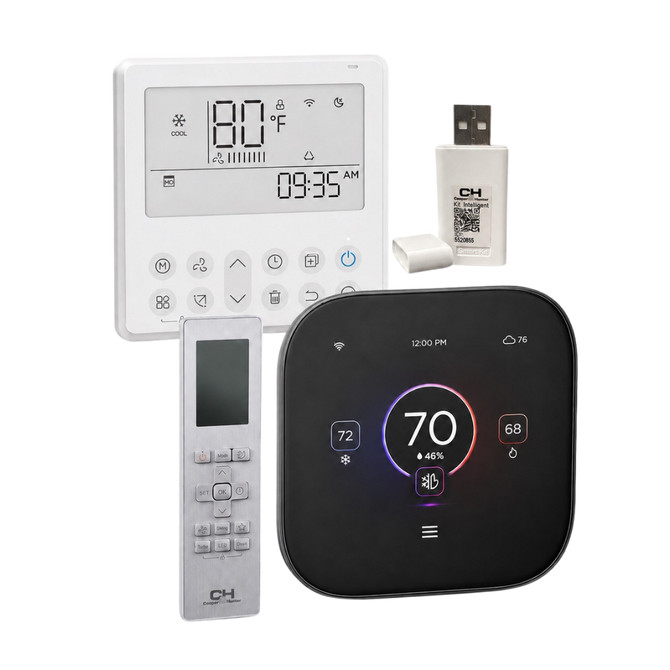
No. Each indoor unit (air handler) comes with its own remote control and built-in temperature sensor, acting as its own independent thermostat for that specific room. Many modern 5-ton systems also include Wi-Fi adapters, allowing you to control every zone from your smartphone.
A true 5-ton compressor typically supports a total combined line set length of 262 feet across all zones, with a maximum length of about 82 feet for any single indoor run. If you exceed standard pre-charged lengths, your HVAC technician will need to weigh in additional refrigerant during installation.
The outdoor compressor operates around 62–65 decibels—similar to normal conversation level, which is much quieter than older central ACs. The indoor units are remarkably quiet, typically operating between 25 and 45 decibels depending on the fan speed, making them whisper-quiet for bedrooms.
Because these units constantly circulate air, you should pop the front covers off the indoor heads and wash the reusable mesh filters in your sink every 3 to 4 weeks. Clogged filters on a massive 5-ton system will cause the coils to freeze over, significantly reducing efficiency and potentially damaging the equipment.
(Disclaimer: A2L refrigerants like R-32, as well as non-flammable A1 refrigerants like R-410A, require installation by certified technicians; always check your local building codes before ordering. Prices and SEER2 ratings reflect estimated averages for 2026 and may vary.)