


Buyer's Guide • Cooling Systems
Wall AC Unit vs. Mini Split: Which Cooling System Actually Wins?
You measured the room. You felt the summer heat pouring through that south-facing wall. And now you're looking at two totally different product categories online — one listed at $499, the other at $2,800 — while the product descriptions do almost nothing to tell you which one actually makes sense for your home.
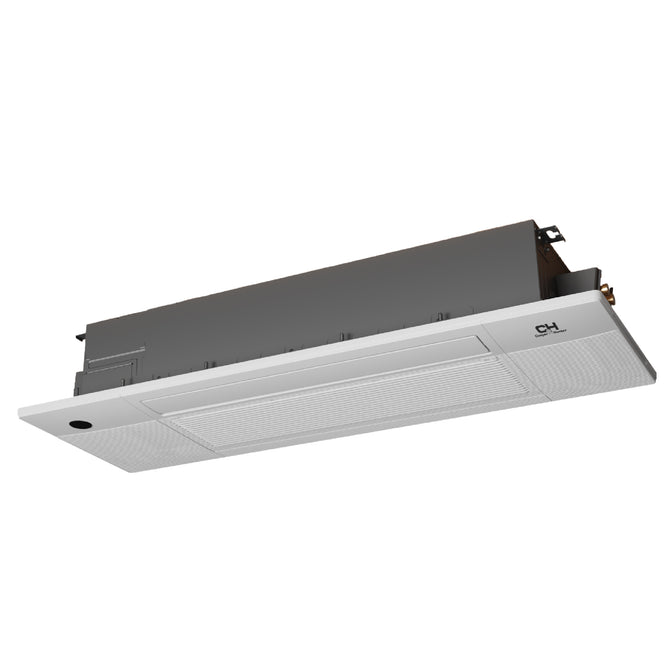
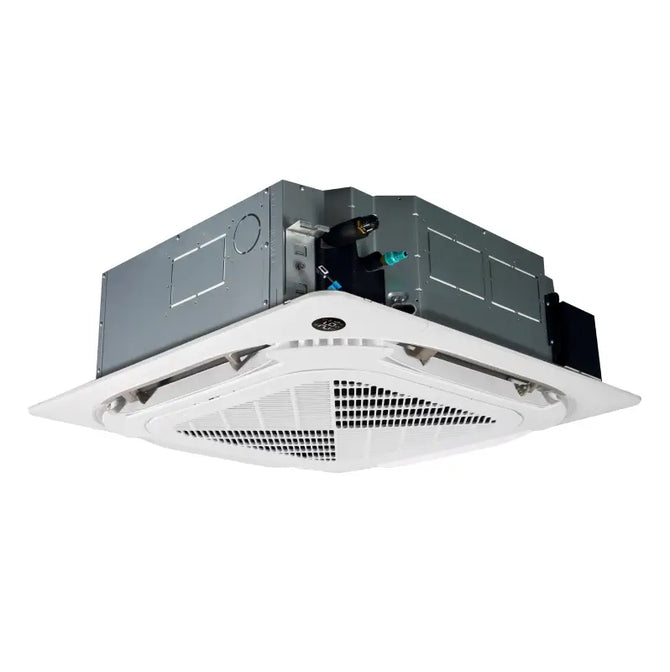
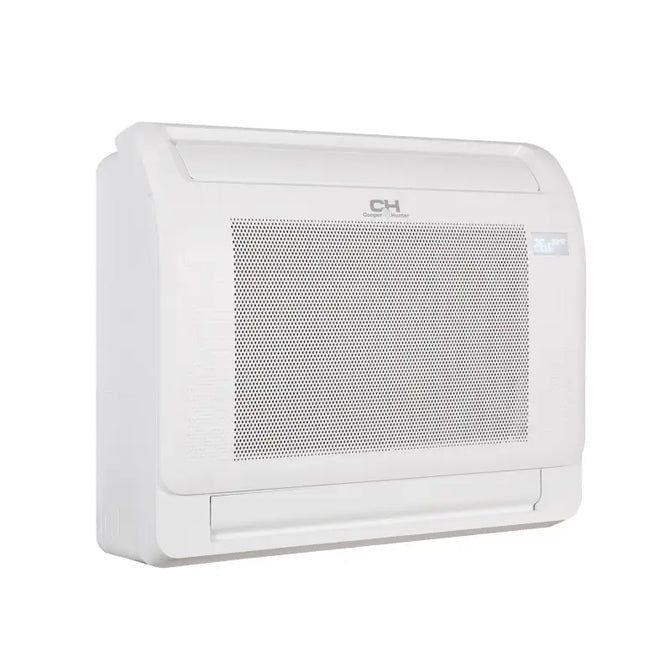
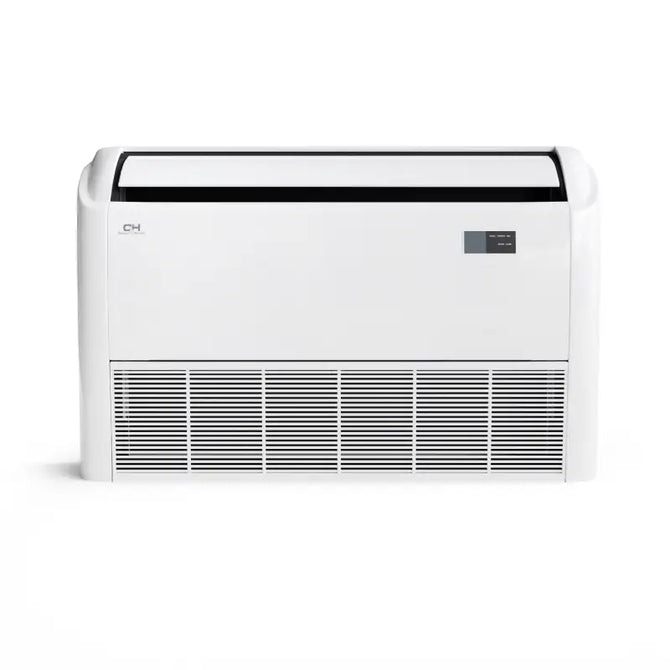
The phrase "wall AC unit" is one of the most confusing labels in the residential cooling market. It gets used as a catch-all for four very different products.

Here’s the plain truth: each product in the "wall AC" category comes with its own cost range, efficiency limit, and installation demands. Before you can make a smart buying decision, you need to know exactly what you're putting side by side. So let’s clear it up.
The Terminology Problem — What "Wall AC" Really Means
Walk into a home improvement store and ask for a "wall air conditioner." You could easily leave with the wrong thing. Retailers toss these terms around like they mean the same product, but they absolutely do not.
Here’s the disambiguation matrix most retailers never bother to show you:
| Category | How It Installs | Avg. Upfront Cost | Efficiency (EER2/SEER2) | Heating Capable? |
|---|---|---|---|---|
| Window-Wall Hybrid | Slides into a window sleeve or a DIY wall sleeve kit | $250–$650 | 8–10 EER2 | No (cooling only) |
| Through-the-Wall (TTW) | Slides into a dedicated wall sleeve cut into the exterior wall | $450–$1,200 | 9–12 EER2 | Some models (resistance heat only) |
| PTAC (Packaged Terminal AC) | Hotel-style chassis; self-contained unit in a pre-built sleeve | $700–$1,800 | 8–11 EER2 | Yes (electric strip or heat pump versions) |
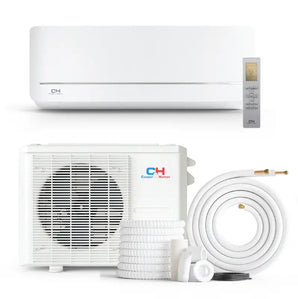
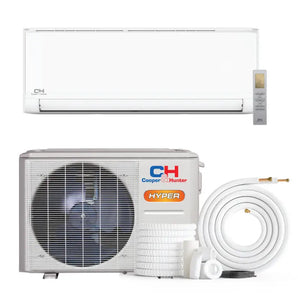
| Mini Split Wall-Mounted Head | Indoor air handler mounts on wall; outdoor compressor connected by a refrigerant lineset | $1,800–$4,500 installed | 18–33 SEER2 | Yes (true heat pump; hyper-heat models down to -13°F) |
The first three categories — window-wall hybrids, through-the-wall units, and PTACs — are what most people mean when they say "wall AC unit." They’re self-contained, single-cabinet machines. The fourth — the ductless mini split — uses a completely different setup, with a split-system design that separates the compressor from the indoor air handler.
Why does that matter? Simple. You can’t honestly compare a $500 through-the-wall unit to a $3,000 mini split without admitting you’re comparing a bicycle to a motorcycle. Both will get you moving. Only one will take you much farther.
Head-to-Head: Wall AC Unit vs. Ductless Mini Split
Now that we’ve defined the products correctly, let’s compare them side by side across the three things that actually shape real-world value.
Upfront Cost & Installation Reality
A through-the-wall AC unit in the $500–$1,200 range looks like the obvious low-cost pick. And sometimes it is. If the wall sleeve is already there, installation might be a weekend DIY job. If it isn’t, though, you’re cutting a 16" × 26" opening through an exterior wall — and that means saw work, insulation, framing changes, and often a dedicated 240V circuit if the unit is above 14,000 BTU. Add $200–$500 in labor for a handyman or HVAC tech, and that $600 unit can quickly land near $1,100.
A single-zone ductless mini split system usually costs $1,800–$4,500 installed, depending on BTU size, brand, and labor rates in your area. Installation involves a 3-inch core-drilled hole through the exterior wall — much less invasive than cutting a full sleeve opening — plus mounting the indoor head, placing the outdoor condenser, and connecting the refrigerant lineset. In most places, a licensed HVAC technician is required for lineset connection and refrigerant charging, and honestly, that makes sense.
Wall ACs take Round 1 on sticker price. Mini splits take it on installation disruption — a 3-inch drilled hole versus a full wall sleeve cutout is simply less invasive.
Energy Efficiency — SEER2, EER2, and the Inverter Advantage
This is where the comparison really starts to separate.
A standard through-the-wall AC unit runs at 9–12 EER2. It uses a single-speed compressor: full blast or nothing. Once the room reaches setpoint, the compressor shuts off. Then the temperature drifts 3–5°F, and the unit kicks back on. That stop-start cycle wastes energy, makes more noise, and puts more wear on the compressor over time.
A ductless mini split uses an inverter-driven variable-speed compressor. Instead of shutting on and off constantly, it adjusts output continuously — maybe running at 30% power to hold temperature instead of blasting at 100% to recover after overshooting. And the efficiency numbers show it:
- Entry-level mini splits: 18–20 SEER2
- Mid-tier mini splits: 22–25 SEER2
- Premium hyper-heat units: 28–33 SEER2
In real terms, a 12,000 BTU mini split at 20 SEER2 uses about 850 watts at nominal load. A similar through-the-wall unit at 10 EER2 uses about 1,200 watts. Run each one 8 hours a day at the national average electric rate of $0.17/kWh:
- Wall AC: 1.2 kWh × 8 hrs × $0.17 = $1.63/day
- Mini Split: 0.85 kWh × 8 hrs × $0.17 = $1.15/day
Over a 150-day cooling season, that works out to $244 vs. $173 — a $71 yearly savings from just one unit. Stretch that over 10 years, then factor in electricity rates rising by an average of 2–3% each year, and the numbers stop being easy to dismiss.
The inverter advantage also brings temperature precision: mini splits can hold setpoint within ±0.5°F, while a cycling wall AC usually swings ±3–5°F. If you sleep lightly or notice small comfort changes, you’ll feel that difference right away.
Lifespan, Warranty & Replacement Economics
A properly maintained through-the-wall AC unit typically lasts 8–10 years. Better brands may push to 12. After that, you replace it — and deal with installation costs all over again.
A ductless mini split, with annual service like filter cleaning, coil inspection, and condensate drain flushing, often lasts 15–20 years. Some Japanese-built units in commercial settings keep running for 25+ years. And that’s not by accident. A quality inverter mini split compressor doesn’t take the same mechanical beating that comes from constant on/off cycling.
This lifespan gap is probably the most overlooked fact in the whole wall AC vs. mini split debate.
The 10-Year Total Cost of Ownership Verdict
Sticker prices by themselves are a shallow way to compare equipment. What matters for any long-term home improvement is Total Cost of Ownership (TCO) — the full financial picture over a set number of years.
Here’s a proprietary TCO model based on 2025–2026 national averages:
| Cost Factor | Through-the-Wall AC | Ductless Mini Split |
|---|---|---|
| Unit purchase price | $700 | $1,200 (outdoor + indoor units) |
| Installation cost | $400 | $1,800 |
| Total Year-1 Cost | $1,100 | $3,000 |
| Annual electricity (150-day season) | $244 | $173 |
| Annual maintenance | $30 (filter only) | $80 (pro service) |
| Year 8–10 replacement (unit + labor) | $1,450 (includes inflation & disposal) | $0 (still running) |
| 10-Year Total Pre-Tax Cost | $5,290 | $5,530 |
| Federal 25C Tax Credit | $0 | Up to −$2,000 |
| Net 10-Year TCO | $5,290 | $3,530 |
That advantage — up to $1,760 in favor of the mini split after the federal tax credit — doesn't even include rising electricity prices or the fact that the mini split is still comfortably within its working lifespan at year 10, while the wall AC probably needs to be replaced.
The federal 25C tax credit eligibility applies to ENERGY STAR-certified heat pump mini splits and can cut your net Year-1 cost by as much as $2,000. Standard wall AC units — cooling-only and low-efficiency — don’t qualify. That policy difference changes the value equation in a big way for anyone with taxable income.
Climate Zone Recommendations — Where Each System Wins
The Department of Energy breaks the continental U.S. into climate zones 1 through 7. Where you live should have a major impact on which system you buy.
| DOE Climate Zone | States/Regions | Wall AC Viability | Mini Split Recommendation |
|---|---|---|---|
| Zone 1 (Hot-Humid) | South Florida, Hawaii | Adequate for secondary spaces | Preferred for primary rooms |
| Zone 2 (Hot-Dry / Hot-Humid) | Arizona (Hot-Dry), Texas & Gulf Coast (Hot-Humid) | Adequate for garages, rentals | Strongly preferred |
| Zone 3 (Warm-Mixed) | SoCal coast, Georgia, NC | Marginal — moderate winters limit heating value | Preferred (moderate heat pump efficiency) |
| Zone 4 (Mixed-Humid) | Mid-Atlantic, Tennessee, Kansas | Not recommended — cold snaps require supplemental heat | Ideal — inverter heat pump handles all seasons |
| Zone 5 (Cool) | Midwest, New England, Pacific NW | Poor — struggles below 40°F outdoor temp | Essential — hyper-heat mini splits rated for -13°F operation required |
| Zone 6 (Cold) | Northern Minnesota, Montana, upstate NY | Unsuitable | Hyper-heat units only |
| Zone 7 (Very Cold) | Alaska interior, northern ND | Unsuitable | Select hyper-heat models (Mitsubishi Hyper Heat, Bosch Climate 5000) |
The math here is pretty direct: if you're in Zone 1 or 2 and need cooling-only for a garage workshop, rental unit, or seasonal bonus room, a through-the-wall AC is a reasonable choice. For almost every other use case — especially anywhere that sees temperatures below 55°F — a mini split isn’t some fancy upgrade. It’s the only option that truly works year-round.
Installation, Permits & Structural Considerations
Both systems need a penetration through an exterior wall. That’s where the similarity stops.
Through-the-wall AC installation requires:
- A rough opening of approximately 16" × 26" (varies by unit)
- A wall sleeve (often sold separately, $50–$150)
- Framing headers above and below the opening
- A dedicated 115V or 240V circuit depending on BTU rating
- Exterior trim kit and weather sealing
Mini split installation requires:
- A 2.5–3 inch core drill hole for the lineset, drain, and electrical conduit
- Outdoor pad or wall-bracket mounting for the condenser
- Refrigerant lineset connection (EPA 608 certification required for traditional units; pre-charged DIY kits eliminate this barrier)
- Dedicated 240V circuit for most units above 9,000 BTU
Before buying either system, you need to calculate the correct BTU load for your room using square footage, ceiling height, window exposure, and local climate. Miss the sizing and you pay for it. Too small, and the unit runs nonstop without ever really reaching setpoint. Too large, and you get short-cycling, humidity issues, and faster compressor wear.
Permit requirements vary by location. In many U.S. counties, adding a new electrical circuit means pulling a permit. Refrigerant work always requires EPA certification. Some municipalities also require a mechanical permit for any new HVAC installation, no matter the type. Check with your local building department before you commit.
The Verdict — Which System for Which Buyer
Different buyers really do have different right answers. Here’s the decision tree:
Choose a through-the-wall AC unit if:
- ✅ You're a landlord equipping a rental unit with a 3–5 year horizon
- ✅ You need cooling-only for a garage, workshop, or seasonal room in Zone 1–2
- ✅ Your budget ceiling is absolute at $1,500 all-in
- ✅ You're replacing an existing sleeve-mount unit and the sleeve is already installed
- ✅ You need a simple, self-contained solution with zero ongoing service complexity
Choose a single-zone ductless mini split system if:
- ✅ This is your primary bedroom, living room, home office, or ADU
- ✅ You're in climate zones 3–7 and need year-round climate control
- ✅ You're planning to own the property for 7+ years
- ✅ You want to qualify for federal 25C tax credits and state HEEHRA rebates (where available)
- ✅ Comfort precision, dehumidification, and quiet operation matter to you
- ✅ You're converting a garage, sunroom, or basement into conditioned living space
Frequently Asked Questions
Do mini splits cool better than wall AC units in large rooms?
Are wall AC units cheaper to run than mini splits?
Can I install a mini split myself like a wall AC?
What's the lifespan difference between a wall AC and a mini split?
Related questions:
The Bottom Line
The sticker price tells you where a system begins. The TCO tells you where it finishes. And for most U.S. homeowners with a 7+ year ownership horizon, the math is very clear: a ductless mini split costs less over time, performs better on every measurable metric, and adds real year-round function that no wall AC unit can match.
Wall ACs aren’t bad products. Not at all. They’re built for specific, limited jobs — short-term rentals, supplemental cooling in hot-dry climates, and budget-tight situations where simplicity really does matter. If that’s your use case, a good through-the-wall unit can absolutely get the job done.
But if you’re conditioning a space you actually care about, in a home you plan to stay in, in any climate where temperatures drop below 55°F — a mini split isn’t the premium option. It’s the practical one.
Upgrade to Year-Round Comfort
Explore single-zone ductless mini split systems sized from 6,000 to 36,000 BTU, with SEER2 ratings up to 33 and options for professional installation.
Shop Single-Zone SystemsDisclaimer: Refrigerant lineset work on traditional mini split systems requires EPA 608 certification. DIY pre-charged systems are subject to separate regulatory guidelines. Permit and installation requirements vary by jurisdiction — always verify with your local building authority before beginning any HVAC project.