


Mini split heat pump systems for Alaska homes — cut heating oil costs
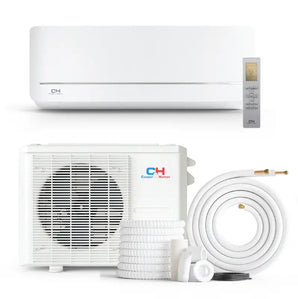
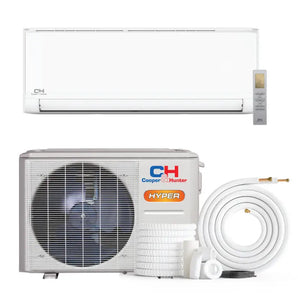
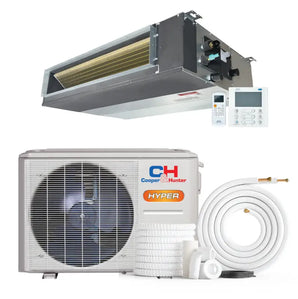
Alaska homeowners pay $4–6 per gallon for heating oil — one of the highest heating costs in the nation. A cold-climate hyper-heat mini split replaces 40–60% of that oil use with electricity, operating efficiently to -13°F full output. Cooper & Hunter and OLMO hyper-heat models are purpose-built for Alaska's Zone 7 and Zone 8 conditions. Ships via freight to Alaska — contact us for a shipping quote.
Updated
Why Alaska homes need a hyper-heat mini split — and how it cuts heating oil costs
Alaska's primary HVAC challenge is heating, not cooling. Anchorage averages a January low of -5°F with design temperatures around -18°F; Fairbanks and the interior regularly reach -40°F and below on severe nights. Most Alaska homes outside Southeast rely on heating oil — at $4–6 per gallon, a 1,500-square-foot home can burn through $4,000–$8,000 in heating fuel every winter. A modern inverter-driven hyper-heat mini split operates at 200–300% efficiency: for every dollar of electricity consumed, it delivers $2–3 of heat. Even at Alaska's elevated electricity rates of $0.22–0.35/kWh through Chugach Electric or Golden Valley Electric, the math consistently favors a heat pump over oil for a substantial portion of the heating season.
-
Replace Heating Oil — No More Fuel Deliveries, No Price Volatility
Heating oil prices in Alaska swing dramatically with global markets, road access, and delivery logistics. A hyper-heat mini split runs on electricity from Chugach Electric (Anchorage) or Golden Valley Electric (Fairbanks) — utilities with fixed, predictable rates. Cooper & Hunter and OLMO hyper-heat models maintain full rated output to -13°F, covering Anchorage's typical winter range entirely. For interior Alaska nights below -13°F, the system continues operating at reduced output; a backup resistance element covers the coldest hours. The result: 40–60% less heating oil consumed every winter, no delivery scheduling, no fuel tank to maintain. Call 855-775-4822 to discuss the right model for your location.
-
Older Alaska Homes and Cabins Without Ductwork
Alaska's housing stock includes many older homes, log cabins, and remote structures built without central ductwork — particularly in Kenai, Wasilla, Palmer, Sitka, and Ketchikan. Retrofitting forced-air ductwork into an Alaska log home or older frame house is expensive and often impractical. A ductless mini split installs through a 3-inch wall penetration with no interior demolition, delivering zoned electric heat to exactly the rooms that need it most. Remote cabins benefit from the same simplicity: one condenser on an exterior wall, one or two indoor heads, and reliable heat from the grid.
-
Electric Efficiency Beats Oil at Most Temperatures
Even at $0.30/kWh — near the top of Alaska's utility range — a heat pump delivering a COP of 2.0 costs roughly $0.15 per BTU of heat delivered. Heating oil at $5.00/gallon with a furnace at 85% efficiency costs approximately $0.044 per BTU — but the heat pump advantage compounds as outdoor temperatures rise above 0°F, where COP reaches 2.5–3.5+. For the majority of Anchorage's heating season (temperatures between 0°F and 35°F), an inverter heat pump delivers heat at lower cost than oil. Your licensed Alaska HVAC contractor can model the fuel-switching economics for your home's specific load and utility rate.
-
Southeast Alaska — Mild Enough for Maximum Heat Pump Efficiency
Juneau, Sitka, and Ketchikan sit in Southeast Alaska's maritime climate — temperatures rarely below 15°F, with mild and wet winters. This is optimal territory for heat pump efficiency: COP values of 3–4 throughout the heating season make electric heat dramatically cheaper than oil heat in Southeast communities. Southeast Alaska homeowners often see the fastest payback on a mini split installation of any Alaska region. A hyper-heat model is still recommended for reliability, but the economics in Juneau and Sitka are even more compelling than in Anchorage.
-
The Renewable Energy Alaska Project (REAP) and Alaska Housing Finance Corporation (AHFC) periodically offer weatherization and efficiency incentive programs. Chugach Electric Association and Golden Valley Electric Association have offered efficiency rebate programs. Your licensed Alaska HVAC contractor can confirm current program availability. Call 855-775-4822 for ENERGY STAR certification documentation to support your tax filing.
Alaska climate at a glance
Mini splits for Anchorage, AK — Alaska's largest heating market
Anchorage's 291,000 residents represent the largest concentration of HVAC demand in Alaska. The city sits in Zone 7 with average January lows of -5°F and design heating temperatures of -18°F — a demanding but achievable target for modern hyper-heat systems.
Why Anchorage homeowners switch from oil to mini split heat
Anchorage homeowners face a straightforward economics problem: heating oil at $4–6 per gallon, consumed at 700–1,200 gallons per winter in a typical single-family home, produces annual fuel bills of $3,500–$7,000 — and those costs are entirely subject to global oil price swings and local delivery logistics. A Cooper & Hunter or OLMO hyper-heat mini split operates at COP 2.0–3.5+ across Anchorage's typical winter temperature range, meaning each dollar of electricity purchases the equivalent of $2–3.50 of heat.
Anchorage sits squarely in Zone 7 with design temperatures of -18°F. Our hyper-heat models deliver full rated output to -13°F, covering the vast majority of Anchorage's heating hours. On the coldest nights, the system continues operating at reduced capacity while a backup resistance element covers the gap. Alaska HVAC work requires licensing through the Alaska DCCED (dba.alaska.gov) and EPA 608 certification for refrigerant handling.
What size mini split do you need for your Alaska home?
Alaska Zone 7/8 demands the most robust heating specification of any U.S. state. Size generously — older Alaska homes with minimal insulation need 25–30 BTU per sq ft. Always specify a hyper-heat model rated to at least -13°F full output.
- Small bedroom or studio
- Remote cabin sleeping room
- Supplemental zone addition
- Master bedroom suite
- Southeast AK well-insulated room
- Anchorage condo zone
- Anchorage home main zone
- Open living/dining combo
- Kenai or Wasilla main floor
- Mid-size Anchorage home
- Palmer or Wasilla ranch
- Juneau primary heating zone
- Larger Anchorage single-family
- Mat-Su Valley family home
- Multi-zone anchor condenser
- Larger single-family home
- Commercial or mixed-use space
- Multi-zone anchor unit
Alaska sizing tip: Zone 7 and Zone 8 demand the most capable cold-climate systems available. Always specify a hyper-heat model rated to -13°F or lower. Older Alaska homes and cabins with minimal insulation should size toward the upper BTU range for their square footage. A licensed Alaska HVAC contractor will perform a Manual J load calculation for your specific home and climate zone. Use our free BTU Calculator for a starting room-by-room estimate.
Multi-zone mini splits for Alaska homes and cabins
One outdoor condenser, multiple indoor heads — ideal for Alaska homes where each room needs independent heat control, or for cabins where a great room and sleeping area both need coverage from a single outdoor unit.
Multi-zone systems are especially practical for Alaska homes heating multiple rooms without ductwork — one condenser mounted on the exterior, linesets routed to a head in the main living area and a second head in the primary bedroom, with each zone independently controlled. Remote cabins use the same approach to heat the great room and sleeping loft from a single outdoor unit. Call 855-775-4822 for multi-zone sizing help specific to your Alaska property.
Mini split brands we carry for Alaska
Authorized dealer for three proven brands — every unit ships with a full factory warranty and manufacturer-backed technical support.
The benchmark for cold-climate heating performance. Cooper & Hunter Hyper Heat models maintain full rated output to -13°F — the right specification for Alaska Zone 7 and Zone 8 conditions. With COP values of 2–3.5+ across Anchorage's typical heating season, they deliver the greatest reduction in heating oil consumption. SEER ratings up to 25+, ENERGY STAR certified.
Shop Cooper & HunterHigh-efficiency inverter systems at competitive price points. OLMO Alpic and Hyper series deliver dependable cold-weather heating performance rated to -13°F. Excellent value for Alaska homeowners who want a proven hyper-heat system for primary heating use without the premium price point. Well-suited for Anchorage, Mat-Su Valley, and Southeast Alaska.
Shop OLMOBudget-friendly mini splits with solid SEER ratings and inverter technology. BRAVO is well-suited for supplemental heating zones in Alaska homes — a second bedroom, a finished loft, or a remote cabin where cost efficiency is the priority and the primary heat source handles the heaviest cold-weather loads. Best deployed in Southeast Alaska's milder maritime climate.
Shop BRAVOAlaska mini split rebates and utility incentives
Alaska Utility & State Programs
- Chugach Electric Association (Anchorage) periodically offers energy efficiency rebate programs — check chugachelectric.com for current heat pump incentives
- Golden Valley Electric Association (Fairbanks) has offered efficiency programs — visit gvea.com for current offerings
- Alaska Housing Finance Corporation (AHFC) administers weatherization and home energy efficiency programs — visit ahfc.us for current program availability
- The Renewable Energy Alaska Project (REAP) advocates for and tracks efficiency incentive programs across the state
- Check energystar.gov/rebate-finder for the most current Alaska utility rebate listings at the time of purchase
- Your licensed Alaska HVAC contractor can assist in submitting rebate applications as part of the installation process
Alaska Licensing & Permit Requirements
- Alaska HVAC contractor licensing is administered through the Alaska DCCED (Division of Corporations, Business, and Professional Licensing) — verify credentials at dba.alaska.gov
- EPA 608 refrigerant handling certification required for anyone handling modern refrigerants including R-32 and R-454B
- Mechanical permits are required by most Alaska municipalities — your licensed Alaska HVAC contractor pulls the correct permits for your jurisdiction
- Anchorage Municipal Code requires permits for all HVAC installations — your contractor coordinates with the Municipality of Anchorage Development Services
- Unlicensed installation voids the manufacturer warranty and may result in permit violations and insurance complications
- We provide complete manufacturer documentation packages to support your contractor's permit application — call 855-775-4822
Mini split questions for Alaska homeowners
Can a mini split actually replace heating oil in an Alaska home?
Yes — for a substantial portion of the heating season. Cooper & Hunter and OLMO hyper-heat models maintain full rated output to -13°F. Anchorage's average January low is -5°F, so these systems run at full capacity during most Anchorage winters. Below -13°F, the unit continues at reduced output while a backup resistance element covers the coldest hours. Typical result: 40–60% less heating oil consumed. Fairbanks and the interior see a smaller but still significant reduction. A licensed Alaska HVAC contractor can model the expected savings for your home. Call 855-775-4822 to discuss the right hyper-heat unit for your Alaska climate zone.
How does shipping to Alaska work? What is the delivery timeline?
Mini split systems ship via freight from our Medley, FL warehouse. Shipping to Alaska travels by ocean barge or overland through Canada — delivery timelines are longer than our standard lower-48 estimate. Contact us at 855-775-4822 or through our contact page before ordering for a shipping quote and timeline specific to your Alaska ZIP code. If you are coordinating delivery with a contractor's installation schedule, we will work with you on timing.
Is a mini split efficient enough at Alaska's high electricity rates?
Yes — at most Alaska temperatures, a hyper-heat mini split is cost-competitive with heating oil even at $0.22–0.35/kWh. A heat pump at COP 2.0 and $0.28/kWh delivers heat at about $0.041/BTU — comparable to oil at $5/gallon (≈$0.044/BTU). At COP 3.0, common between 20°F and 35°F where Anchorage spends the majority of its heating hours, the cost drops to $0.027/BTU — dramatically cheaper than oil. Your licensed Alaska HVAC contractor can model the full-season economics for your home and utility rate. Call 855-775-4822 for help identifying the most efficient model for your Alaska situation.
What size mini split for a 1,200 sq ft Anchorage home?
For a 1,200 sq ft home in Anchorage Zone 7, use 25–30 BTU per sq ft for typical Alaska construction with moderate insulation. At 27 BTU/sq ft: 1,200 × 27 = 32,400 BTU, so a 36,000 BTU hyper-heat system is the appropriate starting point. For a well-insulated newer Anchorage home with triple-pane windows and added attic insulation, a 24,000 BTU unit may suffice. Many Anchorage homeowners use a 2-zone approach: a 24,000 BTU head in the main living area and a 12,000 BTU head in the primary bedroom from a single outdoor condenser. A licensed Alaska HVAC contractor will perform a Manual J load calculation for your specific home. Use our free BTU Calculator for a room-by-room starting estimate.
Are you an authorized dealer? Does the warranty apply in Alaska?
Yes. MiniSplitsforLess is an authorized dealer for Cooper & Hunter, OLMO, and BRAVO. When you buy from us, your unit ships with a full factory warranty — typically 7 years on the compressor — that applies regardless of whether you are in Alaska, Florida, or any other state. Grey-market units purchased from unauthorized resellers often have manufacturer warranties voided. We stock over 2,000 models and can ship any of them to Alaska with full warranty coverage. Authorized dealer documentation also supports your licensed Alaska HVAC contractor's permit application with local authorities. Call 855-775-4822 to confirm authorized dealer status and warranty terms for any specific model before ordering.
What licenses and permits are required for mini split installation in Alaska?
Alaska HVAC contractor licensing is administered through the Alaska Division of Corporations, Business, and Professional Licensing (DCCED) — verify your contractor's credentials at dba.alaska.gov. EPA 608 refrigerant handling certification is required for modern refrigerants including R-32 and R-454B. Mechanical permits are required in most Alaska municipalities — in Anchorage, permits go through the Municipality of Anchorage Development Services Department. Your licensed Alaska HVAC contractor is responsible for pulling the correct permits for your jurisdiction. We provide complete manufacturer documentation packages — spec sheets, AHRI certificates, installation manuals — at no charge to support the permit process. Call 855-775-4822 to request documentation for any model.
Mini split heat pump systems across Alaska
City guides for every Alaska market — ships from our Medley, FL warehouse via freight to Alaska