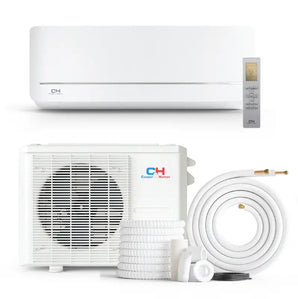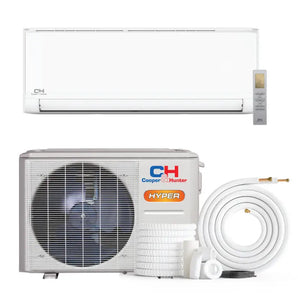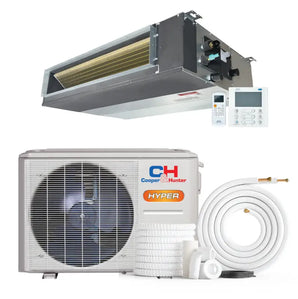
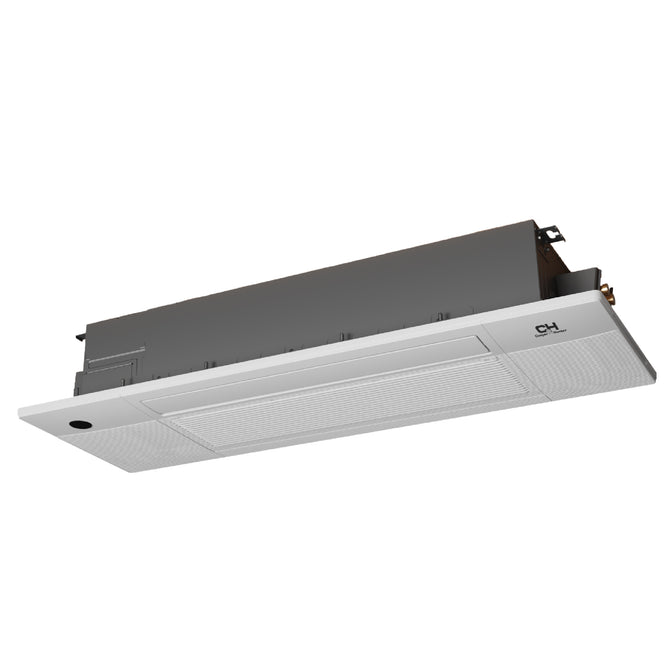
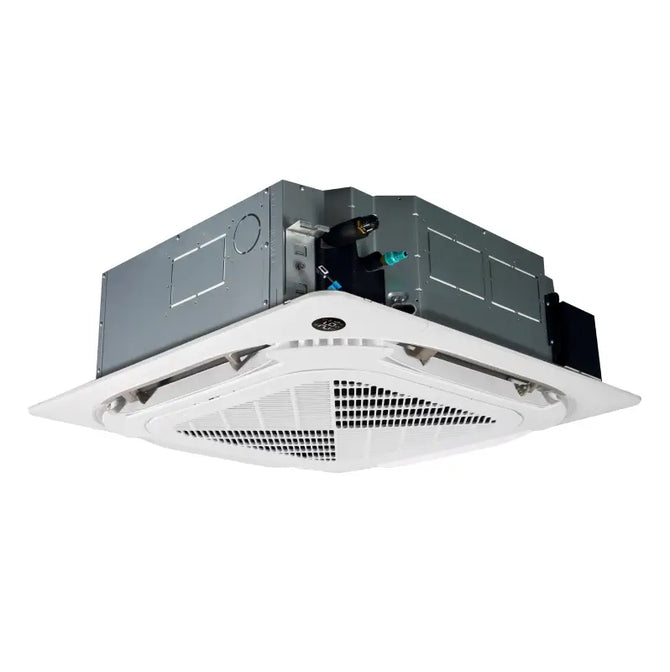
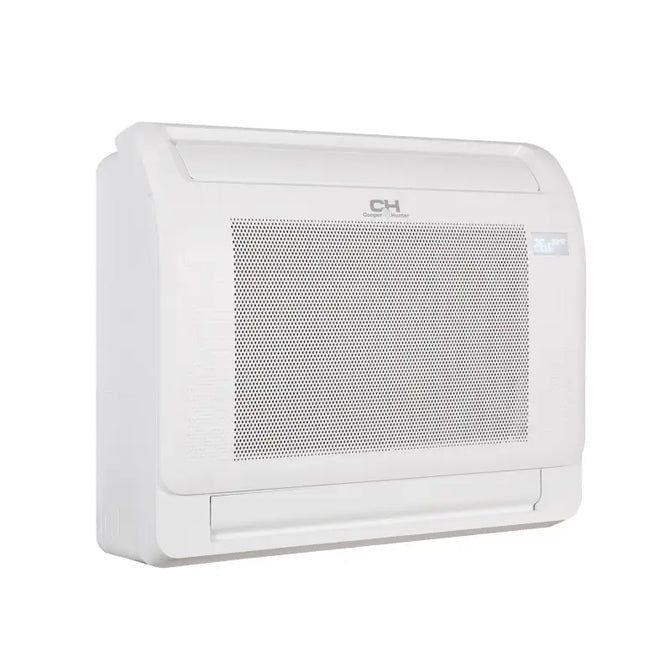
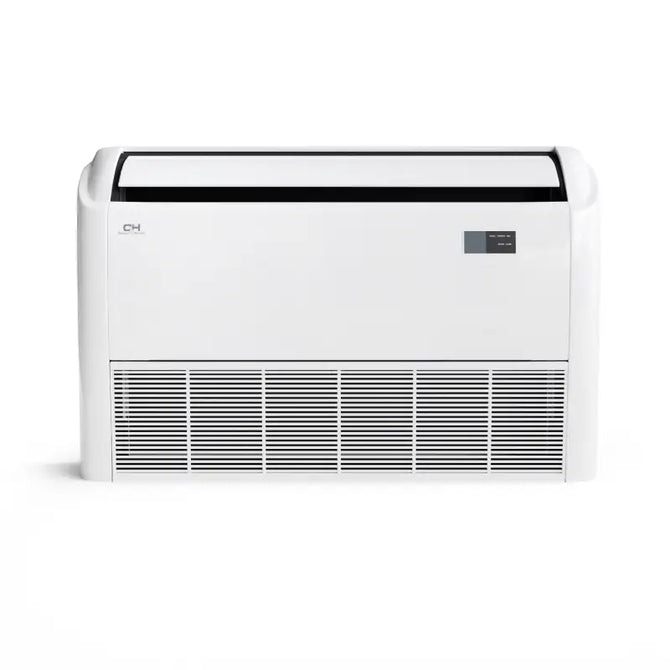

Mini split heat pump systems for Anchorage, AK — replace heating oil, cut your bill 40–60%
Ductless hyper-heat mini splits for Anchorage homes in Midtown, South Anchorage, the Hillside, Rabbit Creek, Eagle River, and the Mat-Su corridor. Zone 7 climate with average January lows of -5°F and recorded lows to -34°F. Our cold-climate units maintain full rated heating output to -22°F — the right tool for replacing expensive heating oil in Alaska. Authorized dealer for Cooper & Hunter, OLMO, and BRAVO. Contact us for freight shipping quote to your Anchorage location.
Why Anchorage homeowners choose MiniSplitsforLess
Anchorage homeowners face one of the highest residential heating costs in the United States. Most homes in the city — from the mid-century ramblers of Midtown to the newer construction on the Hillside and in South Anchorage's Rabbit Creek — heat with fuel oil or natural gas. Fuel oil at current Alaska prices means the typical Anchorage household spends $3,500–$7,500 per year on heating alone. A cold-climate hyper-heat mini split changes that equation completely: unlike conventional electric resistance heat, a heat pump moves heat rather than generating it, achieving 200–300% efficiency even at sub-zero outdoor temperatures. For a home spending $5,000 per year on heating oil, even a 40% reduction means $2,000 in annual savings — and our top-rated models consistently achieve 50–60% reductions in well-insulated Anchorage homes.
-
True Hyper-Heat Performance — Full Output at -22°F for Anchorage Zone 7
Standard mini splits rated to 0°F or 5°F are not designed for Anchorage's climate. The city sits firmly in ASHRAE Climate Zone 7, with average January lows of -5°F and documented multi-day cold snaps reaching -34°F in outlying areas. Our Cooper & Hunter and OLMO hyper-heat models maintain full rated heating output to -22°F — not reduced or partial capacity, but full design output. At -22°F these units continue to operate and deliver meaningful heat while a standard mini split would have already shut down. A licensed Alaska HVAC contractor (licensed through dba.alaska.gov) should review the exact cold-weather performance curve for any unit before your installation is finalized. Call 855-775-4822 and we'll identify the right hyper-heat model for your Anchorage neighborhood.
-
Replace Heating Oil — The Primary Value Proposition in Anchorage
Unlike most cities in the Lower 48, Anchorage's case for a mini split is almost entirely about heating, not cooling. Summers are mild — July averages around 65°F — so a mini split provides a modest cooling benefit that is essentially a bonus. The real financial case is replacing expensive heating oil. Fuel oil is subject to transportation costs, seasonal price spikes, tank maintenance, and supply uncertainty that natural gas users elsewhere do not face. A hyper-heat mini split operating at 250% efficiency during the core heating season (October through April) replaces a direct portion of your oil consumption with electrical energy from Chugach Electric Association. Chugach's rates and any available heat pump incentives — check chugachelectric.com for current programs — determine the exact payback period, but most Anchorage oil-heat homeowners see 40–60% reductions in heating expenditures after installation.
-
Authorized Dealer — Full Factory Warranty, Not Grey Market
MiniSplitsforLess is an authorized dealer for every brand we sell: Cooper & Hunter, OLMO, and BRAVO. Grey-market units from unauthorized resellers arrive with manufacturer warranties voided and may not pass inspection when your Municipality of Anchorage building permit is reviewed. Every system we ship to Anchorage includes full authorized dealer documentation — spec sheets, AHRI certificates, installation manuals — critical when your licensed Alaska HVAC contractor submits your mechanical permit application to the Municipality of Anchorage Development Services Department.
-
Chugach Electric Incentives + Federal 25C Credit — Stack Your Savings
Chugach Electric Association serves the majority of Anchorage and periodically offers heat pump incentive programs for residential customers — visit chugachelectric.com for current program availability and eligibility requirements. These utility incentives can be combined with the federal Section 25C tax credit: 30% of equipment and installation costs, up to $2,000 per year for qualifying heat pump systems in owner-occupied primary residences. Anchorage homeowners transitioning from oil heat can potentially combine utility incentives, the federal tax credit, and reduced ongoing fuel costs for a compelling total financial picture. Call 855-775-4822 for current model efficiency certifications to support your incentive applications and tax filings.
-
HVAC Specialists Who Know Alaska's Cold-Climate Demands
Our team handles only HVAC equipment. When you call 855-775-4822 about sizing a hyper-heat system for a Hillside home or configuring multi-zone heating for an Eagle River property, you reach specialists who understand Zone 7 heating load calculations, which models carry the performance curves needed for -22°F sustained operation, and what the Municipality of Anchorage building permit process requires. Mini splits are all we do — and we understand Alaska's unique demands better than any general HVAC retailer.
Anchorage climate & shipping facts
Anchorage HVAC sizing — what Zone 7 demands from your equipment
Anchorage is one of the most heating-dominated climates in the United States. Understanding the Zone 7 demands on your equipment — and selecting a unit rated for actual sustained operation at Alaskan temperatures — is the most important decision you make before purchasing.
Zone 7 heating: the only number that matters at -5°F
ASHRAE Climate Zone 7 defines subarctic heating conditions that the vast majority of mini splits sold in the Lower 48 are simply not rated for. Anchorage's average January low of -5°F is a statistical average — the actual temperature range during a seven-month heating season routinely includes multi-day stretches in the -10°F to -20°F range, particularly in South Anchorage, the Hillside, and outlying areas like Eagle River and Chugiak. The only safe purchase for an Anchorage home is a hyper-heat model with a certified minimum operating temperature of -22°F or lower and a published performance curve showing heating output at -13°F and -22°F specifically. Nameplate BTU ratings measured at 47°F do not reflect what the unit delivers during an Anchorage January. Call 855-775-4822 for model-specific cold-weather performance data before you buy.
Replacing heating oil: the core financial case
Anchorage's heating oil dependency is the dominant factor in the mini split decision. Unlike a homeowner in Detroit or Chicago who might be adding cooling comfort while also improving winter heating efficiency, an Anchorage homeowner is solving a serious cost problem: fuel oil at current Alaska delivery prices costs significantly more per BTU of delivered heat than electricity used by a heat pump operating at 250% efficiency. A well-sized hyper-heat mini split running on Chugach Electric power during the October-through-April heating season directly displaces oil consumption, often reducing annual oil usage by 40–60% in a well-insulated Anchorage home. The system does not need to replace your oil furnace entirely to generate meaningful savings — even partial displacement during the middle-of-the-season temperature range (0°F to 30°F) where heat pumps operate most efficiently produces thousands of dollars in annual savings.
Anchorage architecture: ramblers, newer builds, and Eagle River suburbs
Anchorage's housing stock varies significantly by neighborhood and era. Midtown features a concentration of mid-century ramblers built in the 1950s and 1960s — often single-story open floor plans that are well-suited to a single large-capacity wall-mounted head. South Anchorage's Hillside and Rabbit Creek neighborhoods include newer two-story and split-level construction from the 1980s through 2010s with better insulation values and often more complex floor plans suited to multi-zone systems. Eagle River, Chugiak, and Peters Creek represent a more suburban development pattern with a range of home vintages. Older Midtown homes and 1970s construction in Mountain View and Muldoon tend to have minimal wall insulation and benefit from more aggressive BTU sizing — use 20–25 BTU per sq ft as a starting point for pre-1980 Anchorage construction.
Summer cooling: mild and mostly unnecessary
Anchorage's summers are genuinely mild — July average highs around 65°F mean that residential air conditioning is not a standard requirement and most Anchorage homes have never had it. A mini split provides cooling capability as a secondary benefit: if you experience an unusual warm stretch or simply prefer to maintain indoor comfort during Alaska's extended summer daylight hours, the same unit that heats your home in winter can cool it in summer at the press of a button. However, no Anchorage homeowner should size or select their mini split based on cooling demand. Size the unit for your heating load — ASHRAE Zone 7 at the relevant square footage and construction vintage — and accept the cooling capability as a bonus feature.
What size mini split do you need for your Anchorage home?
Anchorage is in ASHRAE Zone 7. Use 20–25 BTU per sq ft for older pre-1980 construction and homes with minimal insulation; 18–22 BTU per sq ft for well-insulated newer construction in South Anchorage and Eagle River. Always select a hyper-heat model rated to -22°F minimum.
- Small bedroom or den
- Supplemental zone in older home
- Well-insulated cabin or ADU
- Master bedroom suite
- Well-insulated South AK zone
- Newer Eagle River bedroom wing
- Midtown rambler living area
- Open kitchen/dining zone
- South Anchorage main floor
- Hillside two-story main zone
- Eagle River or Chugiak home
- Large open-plan rambler
- Larger Rabbit Creek home
- Multi-zone anchor condenser
- Older Midtown or Muldoon home
Anchorage sizing tip: Never size down for Zone 7. Older pre-1980 Anchorage construction with minimal wall insulation should always size toward the upper end of the BTU range, and a hyper-heat model with a published performance curve at -22°F is non-negotiable. Use our free BTU Calculator for a room-by-room estimate based on your home's actual dimensions and construction vintage.
Multi-zone mini splits for Anchorage homes and Eagle River properties
One outdoor condenser serving multiple indoor heads — ideal for South Anchorage two-story homes, Hillside and Rabbit Creek split-levels, and Eagle River suburban properties where each floor or zone benefits from independent temperature control.
Multi-zone systems are particularly well-suited to Anchorage's newer two-story construction in South Anchorage and Eagle River, where independent control of upper and lower floors dramatically improves comfort and efficiency during Alaska's long heating season. One outdoor condenser mounted on the south or east wall of the home, linesets run to each zone, and fully independent temperature control throughout — all from a single system. Call 855-775-4822 for multi-zone sizing assistance specific to your Anchorage property.
Anchorage neighborhoods and surrounding communities we serve
We ship to all Anchorage ZIP codes and surrounding communities via freight carrier. Contact us at 855-775-4822 for a freight shipping quote to your specific Anchorage or Mat-Su Valley location.
Anchorage mini split installation and permit requirements
The Municipality of Anchorage and the State of Alaska both require a licensed contractor and a building permit for mini split installation. Here is what Anchorage homeowners and contractors need to know before the job starts.
Municipality of Anchorage Building Permit
- Mini split installations in Anchorage require a building/mechanical permit through the Municipality of Anchorage Development Services Department — submit applications through the Municipality's permitting portal
- A licensed Alaska HVAC contractor must pull the permit; the Municipality of Anchorage does not allow homeowners to self-permit mechanical HVAC work
- Submit equipment specifications, proposed condenser location, electrical load data, and lineset routing with the permit application
- A final inspection is required after installation is complete — your licensed contractor schedules this with the Municipality before the system is placed in service
- Permit required for all new installations, system replacements, and equipment relocations — there is no size or BTU threshold below which a permit is waived
- We provide complete manufacturer documentation packages — spec sheets, AHRI certificates, installation manuals — to support your contractor's permit submission at no charge. Call 855-775-4822
Alaska HVAC Contractor License
- All HVAC installation work in Alaska must be performed by a contractor holding a current Alaska HVAC license issued by the Division of Corporations, Business and Professional Licensing (dba.alaska.gov)
- Verify that any contractor you hire holds a current Alaska HVAC license through the Division's online license verification portal before signing any installation agreement
- EPA 608 refrigerant handling certification is required for all work involving refrigerants including R-32 and R-454B used in modern hyper-heat systems
- Unlicensed installation voids the manufacturer warranty, invalidates the Municipality of Anchorage permit, and can result in insurance claim denial and safety liability
- Alaska's contractor licensing requirements apply statewide — contractors licensed in other states cannot legally perform HVAC work in Alaska without an Alaska license
Chugach Electric Incentives & Federal 25C Credit
- Chugach Electric Association serves the majority of the Anchorage Bowl and periodically offers residential heat pump incentive programs — visit chugachelectric.com for current program availability, eligibility requirements, and rebate amounts before finalizing your purchase
- Federal Section 25C heat pump tax credit: 30% of combined equipment and installation cost, up to $2,000 per year for qualifying heat pump systems in owner-occupied primary residences — file on IRS Form 5695
- All Cooper & Hunter, OLMO, and BRAVO hyper-heat models we carry meet the ENERGY STAR efficiency requirements for the federal 25C credit
- Utility incentives and the federal 25C credit can be combined in the same tax year for maximum financial benefit
- Call 855-775-4822 for current ENERGY STAR certifications and SEER2/HSPF2 ratings to support both your Chugach incentive application and federal tax filing
Mini split questions for Anchorage, AK homeowners
Can a mini split actually heat an Anchorage home in an Alaska winter?
Yes — but only with a genuine hyper-heat model rated and certified for Zone 7 operation. This is the most important question Anchorage buyers ask, and the answer depends entirely on the specific model's cold-weather performance curve. Standard mini splits rated to 0°F or 5°F are not designed for Anchorage's climate. The city's average January low is -5°F, and multi-day cold snaps in the -10°F to -20°F range occur routinely across the seven-month heating season. Our Cooper & Hunter and OLMO hyper-heat units maintain full rated heating output to -22°F and continue operating at reduced capacity below that threshold. A licensed Alaska HVAC contractor holding a current dba.alaska.gov license should review the model's published performance curve before installation. Most Anchorage homeowners use the mini split as the primary heat source during October through April, supplemented by their existing oil or gas system only during extreme cold events. Call 855-775-4822 and we'll identify the right hyper-heat unit for your Anchorage home type and neighborhood.
How much can I save on heating oil by switching to a mini split heat pump?
Most Anchorage homeowners who install a hyper-heat mini split and use it as their primary heat source see 40–60% reductions in annual heating oil consumption. The exact savings depend on several factors: your home's size and insulation quality, your current oil consumption and price per gallon at delivery, Chugach Electric Association's electricity rate, and how aggressively you use the heat pump versus your oil furnace during the coldest weeks. For a rough estimate: if your home currently uses $5,000 per year in heating oil and you achieve a 50% reduction, you save $2,500 annually. A well-priced mini split system installed by a licensed Alaska contractor often pays back in four to six years on heating oil savings alone, not counting the federal Section 25C tax credit or any Chugach Electric incentive programs. Visit chugachelectric.com for current electricity rates and heat pump incentive details to run the numbers for your specific situation. Call 855-775-4822 and we'll help you model the payback for your Anchorage home.
Do I need a permit to install a mini split in Anchorage?
Yes. Mini split installations in Anchorage require a building/mechanical permit through the Municipality of Anchorage Development Services Department. A licensed Alaska HVAC contractor — licensed through dba.alaska.gov — must pull the permit; the Municipality does not allow homeowners to self-permit HVAC work. The permit process involves a plan review and a final inspection after installation is complete before the system can be legally placed in service. This applies to new installations, system replacements, and equipment relocations. We provide complete manufacturer documentation packages — spec sheets, AHRI certificates, installation manuals — to help your contractor's permit application move faster, at no charge. Call 855-775-4822 and we'll send everything you need.
How does shipping to Anchorage work?
Mini split systems are heavy freight — typically 80–180 lbs depending on the unit — and shipping to Alaska involves different logistics than mainland US freight. Our warehouse is in Medley, FL, and shipments to Anchorage travel via freight carrier to Alaska. Shipping costs and transit times to Anchorage vary based on the specific carrier routing, the size and weight of your order, and your delivery address within the Anchorage area. Before you place an order for Alaska delivery, please call us at 855-775-4822 so we can provide an accurate freight quote for your specific location. We want to make sure you have the complete picture — equipment cost plus freight — before you commit. Eagle River, Chugiak, Peters Creek, Wasilla, and Palmer addresses may have different freight rates than central Anchorage, so always contact us first for Alaska shipments.
What BTU size for a Midtown Anchorage rambler?
A typical Midtown Anchorage mid-century rambler is a single-story home ranging from roughly 900 to 1,400 sq ft depending on the original footprint and any additions. For Zone 7 with pre-1980 construction and minimal wall insulation, use 20–25 BTU per sq ft as your sizing baseline. A 1,000 sq ft rambler at 22 BTU/sq ft needs 22,000 BTU — size up to a 24,000 BTU unit. A 1,200 sq ft floor at 22 BTU/sq ft needs 26,400 BTU — a 30,000 or 36,000 BTU unit depending on ceiling height and window area. Many Midtown rambler owners install a 2-zone system with a large-capacity head in the main living area and a second head in the bedroom wing, served by a single outdoor condenser. Use our free BTU Calculator for a precise estimate based on your rambler's actual dimensions and construction. Then call 855-775-4822 — we'll confirm the sizing and identify the right hyper-heat model with verified Zone 7 performance data.
What Chugach Electric incentives are available for heat pumps in Anchorage?
Chugach Electric Association serves the majority of the Anchorage Bowl and has periodically offered residential heat pump incentive programs. The availability, eligibility requirements, and rebate amounts for these programs change over time, so always check chugachelectric.com for the most current program details before finalizing your purchase. Chugach incentives, when available, can be combined with the federal Section 25C tax credit: 30% of combined equipment and installation costs, up to $2,000/year for qualifying heat pump systems in owner-occupied primary residences. All Cooper & Hunter, OLMO, and BRAVO hyper-heat models we carry meet the ENERGY STAR efficiency thresholds for the federal 25C credit. Call 855-775-4822 for current ENERGY STAR certifications and HSPF2 ratings to support your Chugach incentive application and IRS Form 5695 filing.
What brands do you carry and are you an authorized dealer?
MiniSplitsforLess carries Cooper & Hunter, OLMO, and BRAVO mini splits — and we are an authorized dealer for all three brands. This matters for Anchorage buyers: grey-market units from unauthorized resellers have manufacturer warranties voided, and the Municipality of Anchorage's building permit process requires that installed equipment carry a valid manufacturer warranty. When you buy from us, your unit ships with a full factory warranty — typically 7 years on the compressor — legitimate serial numbers, and manufacturer-backed technical support. Every hyper-heat model in our catalog includes cold-weather performance documentation appropriate for Alaska Zone 7 winters. Call 855-775-4822 to verify authorized dealer status or get a model recommendation specific to your Anchorage home type, neighborhood, and heating oil displacement goals.
Mini split heat pump systems across Alaska
City guides for every Alaska market — ships from our Medley, FL warehouse via freight to Alaska