



2026 HVAC Guide
6000 BTU Mini Split: Best Compact Units for Small Rooms (2026 Guide)
I used to think bigger was always better when it came to air conditioning. Throw the biggest compressor you can afford at a room, right? Man, was I wrong.
When you put an oversized HVAC unit in a tiny bedroom or a cramped home office, you don’t get better cooling. You get a room that feels like a damp cave. The compressor short-cycles, the humidity stays trapped, and your electricity bill skyrockets.
If you’re outfitting a space that’s around 150 to 250 square feet, you need precision, not raw power. You might have already browsed our smallest mini split systems guide and realized that a 6,000 BTU unit—often categorized as a 0.5 ton mini split—is exactly what these micro-spaces need.
Let's cut the marketing fluff. In this guide, I’m going to walk you through the actual math of sizing a room, compare the costs against 9,000 BTU units, and give you my honest take on the models worth buying this year.
What Exactly Is a 6000 BTU Mini Split?
Basically, it's the smallest ductless air conditioner and heat pump you can buy. In professional contractor terms, this capacity is widely known as a half-ton mini split. "BTU" (British Thermal Unit) sounds like a technical headache, but it just measures how much heat the machine can pull out of your room in an hour.
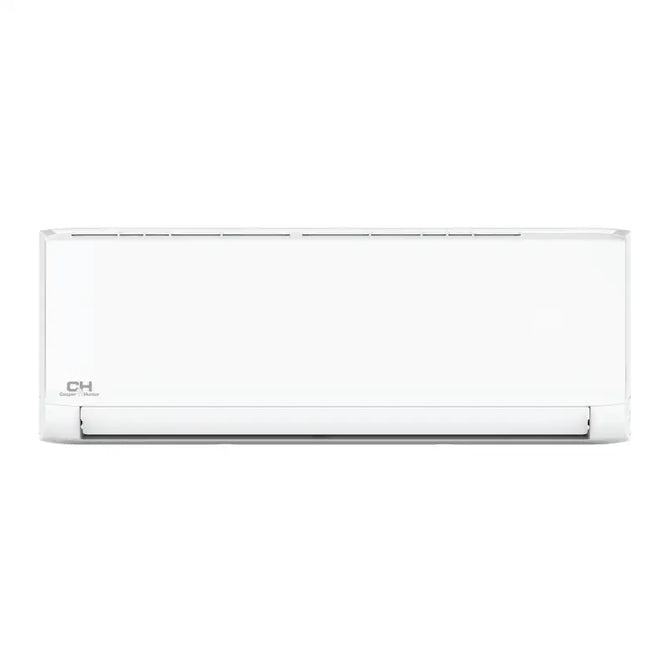
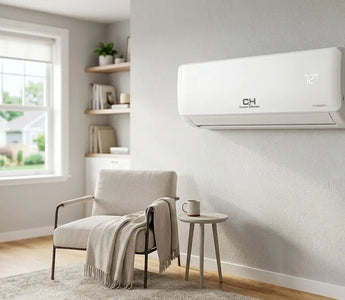
Forget about those clunky window units that block your sunlight and sound like a dying lawnmower at 2 AM. A ductless system splits the work: a quiet indoor air handler sits on your wall, while the noisy compressor stays outside.
Because modern units use inverter compressors, they don't do that annoying "blast on, blast off" routine. They gently ramp up and down to hold your set temperature. Honestly, once you sleep in a room with an inverter 0.5 ton ductless AC, you'll never tolerate a window AC again.

What Size Room Does a 6K Unit Actually Cool?
A 6,000 BTU mini split efficiently cools rooms between 150 and 250 square feet. Choosing a 0.5 ton air conditioner covers most standard bedrooms, home offices, and nurseries. However, if you live in a scorching southern climate or your room has the insulation of a cardboard box, you’ll want to cap that at 200 sq ft. For high ceilings or sun-baked rooms, step up to a 9,000 BTU unit.
To give you a better idea, here is the cheat sheet I usually use. Keep in mind, square footage isn't everything. Your exact environment matters. (If you hate doing math manually, just use our mini split size calculator).
| Climate Zone / Insulation | 8 ft Ceilings (Standard) | 10 ft Ceilings (Vaulted) | Sun Exposure Adjustment |
|---|---|---|---|
| Zone 1-2 (Hot/South) | 150 - 180 sq ft | 130 - 150 sq ft | Subtract 20 sq ft |
| Zone 3-4 (Moderate) | 180 - 220 sq ft | 150 - 180 sq ft | Subtract 15 sq ft |
| Zone 5-6 (Cold/North) | 200 - 250 sq ft | 180 - 200 sq ft | Subtract 10 sq ft |
| New Build (High Insulation) | 230 - 260 sq ft | 200 - 230 sq ft | No change |
When to Bite the Bullet and Go to 9,000 BTU
A half ton air conditioner is a workhorse, but it isn't magic. I had a buddy who tried to cool a heavily windowed, south-facing sunroom with a 6K unit. By July, he was miserable. If your room has uninsulated exterior walls, massive windows, or lots of heat-generating electronics (like a gaming setup or server rack), the heat load will overwhelm the tiny compressor.
In those specific cases, step up to a 9,000 BTU unit. It's better to have a slight buffer than a machine running at 100% capacity all day and still falling short.
6,000 vs 9,000 BTU: Let's Talk Costs
People love to "size up just in case." Don't do it unless the math says so. Oversizing leads to short-cycling, which ruins efficiency and leaves you clammy.
Here's how the 10-year total cost of ownership (TCO) breaks down. You can check our full BTU calculation guide if you want to geek out on the numbers.
| Metric | 6,000 BTU Mini Split | 9,000 BTU Mini Split |
|---|---|---|
| Ideal Room Size | 150 – 250 sq ft | 250 – 350 sq ft |
| Average Hardware Cost | $650 – $850 | $750 – $950 |
| Installation Cost | $600 – $1,000 | $600 – $1,000 |
| Estimated 10-Year Energy Cost | $1,300 | $1,800 |
| Total 10-Year TCO | $2,550 | $3,150 |
| Best Application | Small bedrooms, home offices | Master bedrooms, living rooms |
My Top 6000 BTU Mini Split Picks for 2026
If you’re ready to shop all 6,000 BTU mini splits, you need to look at SEER2 ratings and refrigerant types. Avoid old stock sitting in warehouses. Here are the ones I actually recommend:
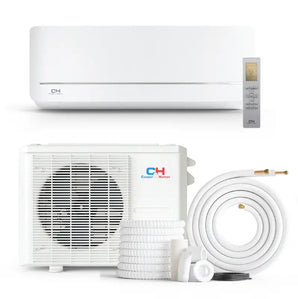
- 1. Cooper Hunter Olivia Midnight 6K (230V, 23.5 SEER) Look, this thing is beautiful. It has a black mirror panel that looks incredibly sharp in a modern bedroom. With a 23.5 SEER2 rating, this 0.5 ton mini split system sips electricity. The only downside? You'll definitely notice dust on it faster than a white unit, so keep a microfiber cloth handy.
- 2. Cooper Hunter Olivia 6,000 BTU R-454B The EPA is heavily phasing out older refrigerants right now. This half-ton mini split AC runs on the newer R-454B. It's better for the environment, but more importantly, it means you won't struggle to find compatible refrigerant if it needs a recharge five years from now.
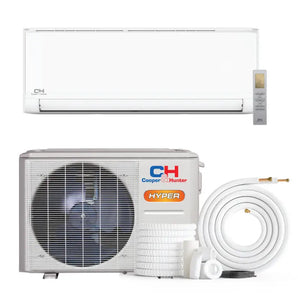
- 3. Cooper Hunter MIA Series 6,000 BTU 115V I usually call this the "landlord special" (in a good way). It delivers reliable half ton air conditioner performance on standard 115V power, meaning you don't need to hire an electrician to run a brand new 230V circuit to your panel. It just works.
- 4. Cooper Hunter Midnight Black 6,000 BTU 230V Similar to the Olivia Midnight but with a matte finish. Great if you want the dark aesthetic without the smudges of the mirror panel.
- 5. Cooper Hunter MIA-NY 6,000 BTU Series A basic, reliable workhorse. No flashy features, but it cools tight spaces quietly and the filters are dead simple to wash.
115V vs 230V: Don't Mess This Up
I see people buy the wrong voltage all the time. Let’s make this easy:
Go with a 115V System if:
- Your panel is full, or you live in an older house where running new 230V lines would cost a fortune.
- You already have a dedicated 15-amp or 20-amp standard outlet right where you want the unit.
Go with a 230V System if:
- You are already opening up the walls for a renovation.
- You want the absolute highest efficiency ratings (230V models just handle heavy continuous loads slightly better).
- You have open slots in your breaker box.
The Real Cost of Installation and Running It
People always ask me, "How much does it cost to run?"
A 6,000 BTU unit with a 23 SEER2 rating uses about 260 watts at an average load. If you run it 8 hours a day, your 0.5 ton AC unit is looking at maybe $10 to $13 a month on your electric bill. It's practically nothing compared to central air.
But upfront costs? That's a different story.
- The Gear: $650 to $850.
- The Pro Labor: $600 to $1,200.
Yes, the installation often costs as much as the unit itself. Good HVAC techs aren't cheap, and they shouldn't be. They have to mount the heavy condenser, run copper lines, flare connections without leaking, pull a deep vacuum, and release the refrigerant.
A Few Real-World Installation Tips
Sure, you can mount the indoor unit to the wall yourself, but unless you enjoy voiding warranties and dealing with a leaky mess, hire a pro for the final connections.
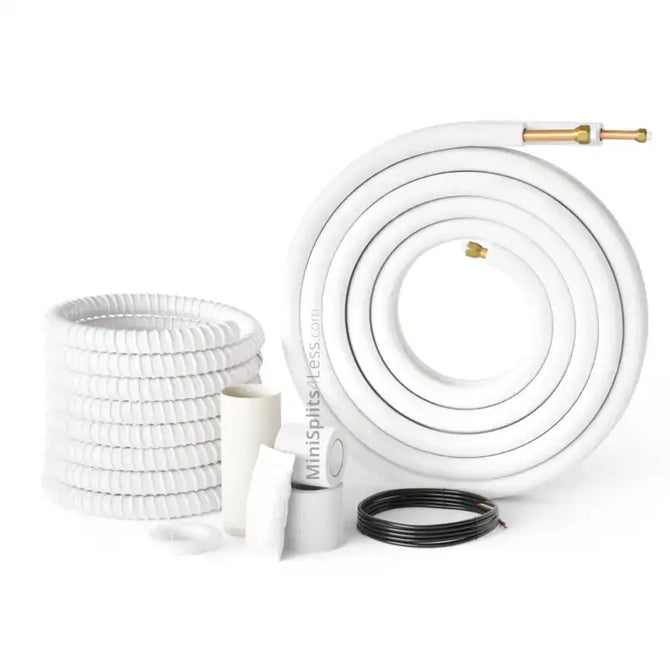
When I installed a Cooper Hunter 6K in my own cramped attic office last year, the biggest headache wasn't the noise or the wiring—it was figuring out how to hide the 15 feet of copper line set on the exterior of the house.
Here is my streamlined advice for getting it right:
Actually measure your room.
Don't guess. Multiply length by width. Add a bit for high ceilings or crazy sun exposure.
Double-check your electrical panel.
Buy the voltage that matches what your house can easily handle.
Plan the line set route first.
The shortest, straightest path from the indoor unit to the outdoor compressor is always best.
Hire a certified tech for the last step.
EPA Section 608 certification is required to handle the refrigerant. Skipping the vacuum process is the #1 way to kill a mini split early. Don't cut corners here.
Register the warranty immediately.
Do this the day it’s installed. Set a calendar reminder. If the compressor dies in year four, you’ll be incredibly glad you spent the 5 minutes filling out the online form.
A2L/A3 refrigerants require handling by certified professionals. Don't try to DIY the gas release.
Frequently Asked Questions
Is a 6000 BTU mini split enough for a bedroom?
Absolutely. Most U.S. bedrooms hover around 130 to 220 sq ft. A half-ton mini split system cools these spaces fast, maintains the temp without waking you up, and is whisper-quiet (usually between 24 and 32 decibels indoors).
Can I just plug a 115V mini split into any regular outlet?
Technically yes, but practically, you need to be careful. It needs a dedicated 15-amp or 20-amp circuit. If you plug it into an outlet that shares a breaker with a space heater or a high-end gaming PC, you’re going to be tripping breakers constantly.
What is the smallest ductless mini split available?
Right now, 6,000 BTUs—which equals a 0.5 ton mini split—is the floor for standard ductless systems. They are purpose-built for single bedrooms, tiny home offices, and security booths.
Do I need a permit for this?
Usually, yes. Check your local municipal codes. Most places want a permit if you are adding new electrical circuits or modifying the exterior of the home.
Can a 6K mini split heat my room in winter?
Yep, as long as you buy a heat pump model (which almost all modern ones are). Just make sure its low-ambient heating specs match your local winters.
Wrapping Up
A 6000 BTU mini split isn't going to cool your whole house, and it's not supposed to. By getting the exact right size for your 150-250 sq ft room, you get better humidity control, zero noise disruption, and an energy bill you'll barely notice. Ditch the noisy window unit, hire a decent installer, and finally make that small room comfortable. Check out the current line-up at Mini Splits For Less to find the right fit for your space.



)