


Rental property · ADU purchasing guide
Mini Splits for Rental Units and ADUs: Per-Unit Cost and Tenant Metering
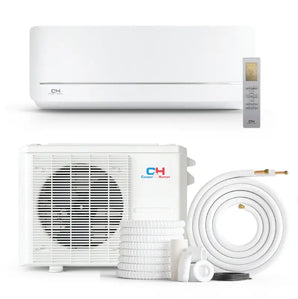
For mini splits for rental property, MiniSplitsforLess lists Cooper & Hunter MIA single-zone systems at $856.36 for 9,000 BTU, $860.89 for 12,000 BTU, $1,244.94 for 18,000 BTU, and $1,404.63 for 24,000 BTU. These are equipment prices, not installed totals. Through November 30, 2026, the same systems are on sale for about 15% less. See today’s prices in our MIA single-zone collection.
Before choosing condensers, decide how electricity will be billed. A dedicated system per dwelling offers a clearer measurement boundary than equipment shared across tenants. But separate equipment does not create permission to charge tenants: property classification and state rules still govern.
The purchasing sequence should be simple: approve the billing approach, establish each dwelling’s heating and cooling load, then request a fully itemized equipment and installation proposal.
Equipment cost per door: what the listed price covers
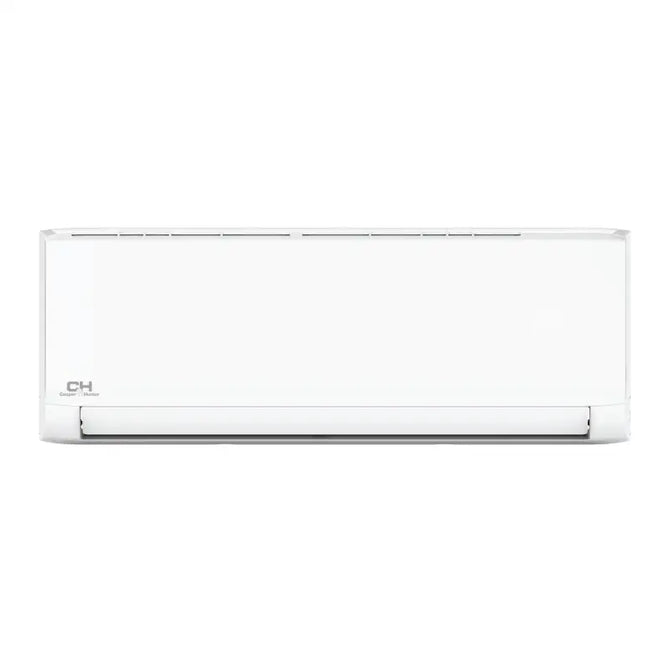
MiniSplitsforLess lists these Cooper & Hunter MIA single-zone, wall-mounted systems with 230V power and R-454B refrigerant in its MIA collection. Use the figures as procurement starting points, not a nationwide price range.
| Listed system capacity | Outdoor / indoor models | SEER2 | Listed price |
|---|---|---|---|
| 9,000 BTU | CH-RLS09MIA-230VO / CH-RLS09MIA-230VI | 21.2 | $856.36 |
| 12,000 BTU | CH-RLS12MIA-230VO / CH-RLS12MIA-230VI | 21.3 | $860.89 |
| 18,000 BTU | CH-RLS18MIA-230VO / CH-RLS18MIA-230VI | 19.2 | $1,244.94 |
| 24,000 BTU | CH-RLS24MIA-230VO / CH-RLS24MIA-230VI | 18.7 | $1,404.63 |
Price basis: the regular list prices (shown struck through during a sale) for the 230V systems in our MIA collection on November 10, 2026. During the November 2026 sale, which runs through November 30, 2026, the Factory 16 ft selections sell for $725.73 (9,000 BTU), $729.57 (12,000 BTU), $1,055.04 (18,000 BTU) and $1,190.37 (24,000 BTU). Prices change, so reconfirm price, stock and kit selection before ordering.
Kit length changes the price
Each MIA listing offers a Factory 16 ft selection and longer 25 ft and 50 ft options at a higher price. Choose the length from your measured route for each dwelling.
Ask for written confirmation of the kit that ships with the exact selection in your cart. Do not assume that the lowest displayed price includes every installation accessory.
For each system, ask the supplier to identify:
- Exact indoor and outdoor model numbers.
- Included line-set length and accessory contents.
- Refrigerant type and required electrical supply.
- Stock allocation for the entire order.
- Freight, taxes, and any excluded components.
A comparable Cooper & Hunter mini split quote should leave no ambiguity about what arrives at the property.

Size the dwelling before selecting the price
An ADU mini split should be selected using a Manual J load calculation (published by ACCA) or an equivalent method, plus manufacturer performance data at design conditions. The NEEP air-source heat pump sizing and selection guide, hosted by the US Department of Energy, treats ACCA Manual J or an equivalent as an acceptable method and points to manufacturers’ extended performance tables for capacity at design conditions.
Ask the designer to document room loads and how conditioned air will reach enclosed bedrooms. For heating-dependent rentals, request the selected system’s output at the project’s winter design temperature, not just its nominal BTU label.
Installed cost per unit: build a quote, not a guess
A defensible landlord HVAC cost per unit separates equipment from the work required to make it operational. Installed cost depends on the site, so a generic allowance should not be presented as a contractor commitment.
Use this bid schedule for each dwelling:
| Budget component | What to request in writing |
|---|---|
| Equipment | Matched models, quantities, selected options |
| Mechanical installation | Mounting, piping, drainage, startup, and commissioning scope |
| Electrical work | Circuit design, disconnect, panel work, and routing |
| Building work | Penetrations, required sealing, finish repairs, access provisions |
| Tenant metering | Approved equipment, installation, testing, and billing setup |
| Project charges | Permits, freight, taxes, and separately identified contingencies |
For underwriting, calculate:
Keep the original line items. An average is useful for a construction draw, but it should not conceal which apartment needs additional electrical work or a difficult piping route.
To frame the site survey and compare bids, start with our mini split installation cost guide for 2026, which breaks costs down by zone count. Ask bidders to identify exclusions before comparing totals.
Electrical scope needs model-specific confirmation
Include a dedicated electrical circuit mini split line item in the bid request, and size it from each model’s own electrical data. The outdoor units in our MIA listings show:
| Listed system capacity | Minimum circuit ampacity (MCA) | Maximum fuse size |
|---|---|---|
| 9,000 BTU | 12 A | 15 A |
| 12,000 BTU | 13 A | 15 A |
| 18,000 BTU | 15 A | 20 A |
| 24,000 BTU | 19 A | 20 A |
Have the electrician confirm the selected equipment’s requirements, the applicable code edition, and the 230V outdoor condenser disconnect arrangement. Do not use this article as a wiring diagram.
Six-door illustrative equipment budget
Consider a hypothetical property needing two 9,000-BTU systems, two 12,000-BTU systems, one 18,000-BTU system, and one 24,000-BTU system.
This is an illustrative budget, not a completed case study. No project invoices, installation timeline, or measured tenant savings support it.
| System size | Quantity | List price used | Extended equipment cost |
|---|---|---|---|
| 9,000 BTU | 2 | $856.36 | $1,712.72 |
| 12,000 BTU | 2 | $860.89 | $1,721.78 |
| 18,000 BTU | 1 | $1,244.94 | $1,244.94 |
| 24,000 BTU | 1 | $1,404.63 | $1,404.63 |
| Total | 6 | — | $6,084.07 |
Calculated from the list prices, the average mini split per door cost is $1,014.01 for equipment only, rounded to the nearest cent. Installation, metering, and other project charges remain outside this total, and longer kit selections would raise it.
November 2026 sale: through November 30, 2026, the same six systems total $5,156.01, or $859.34 per door, at the sale prices. Bulk tiers are not added on top, because the published bulk terms exclude items already on a separate sale. After the sale ends, a full-price subtotal of $6,084.07 is above the first published tier of $5,000 (3% for Cooper & Hunter). Confirm the price and tier for your actual cart before ordering.
This budget becomes a purchasing commitment only after kit contents and available quantities are confirmed in the written quote. Treat it as a worksheet, not an invoice.
Before approving the project, add an operating worksheet covering planned service visits, billing administration, and replacement responsibilities. Leave tax credits, depreciation treatment, and rebates outside the base calculation until the appropriate adviser verifies them.
Tenant electricity billing: choose the method first
There are three distinct arrangements to discuss with your utility and legal adviser:
| Arrangement | What it means for the project |
|---|---|
| Individual utility metering | The utility’s meter serves the dwelling; confirm account and circuit arrangements |
| Landlord submetering | The landlord measures usage downstream of the utility meter and bills under applicable rules |
| Electricity included in rent | Electricity remains part of the rental arrangement rather than a separately measured usage charge |
Massachusetts explicitly distinguishes utility-owned individual meters from landlord submeters, as explained on its electric submetering page. In Minnesota, the landlord of a shared-metered building must remain the customer of record and the bill payer; see Minn. Stat. §504B.216.
A ratio utility billing system (RUBS) allocates charges rather than measuring each tenant’s electricity directly. Arizona’s A.R.S. §33-1314.01 permits specified allocation methods; Minnesota prohibits apportioning electricity billed separately from rent. These are not interchangeable billing tools.
Five-state submetering snapshot
This is a limited legal screening tool, not nationwide permission. Before implementation, obtain property-specific review of the utility tariff, lease language, meter approval, and applicable local requirements.
| State | Position | Decision point for landlords |
|---|---|---|
| Massachusetts | Generally prohibits landlord electric submetering; official guidance identifies an exception involving a single meter installed before July 1, 1997 | Have the actual conditions of the exception checked; an older building does not automatically qualify |
| Texas | PUCT §25.142 permits submetering for covered properties; its apartment-house definition specifies more than five dwelling units and includes residential condominiums | Confirm the rule covers your property type before planning submetering for a standalone ADU or duplex |
| Arizona | A.R.S. §33-1314.01 permits submetering or RUBS, subject to disclosures, billing requirements, and charge limits | Existing tenancies require at least 90 days’ notice before a system starts |
| Virginia | Qualifying properties may use submetering or energy-allocation equipment under SCC requirements | Written notice to the commission and utility is required within 90 days after installation |
| Minnesota | Compliant electric submetering is permitted; separately billed electricity cannot be apportioned | Use actual readings and bill at least as frequently as the utility bills the landlord |
Sources: Massachusetts guidance, Texas PUCT §25.142, Arizona §33-1314.01, Virginia 20VAC5-305-20, and Minnesota §216B.023.
State-specific details
Several details deserve attention:
Massachusetts: The state’s guidance allows electricity costs to be included in rent when the owner does not measure the tenant’s usage or charge for it separately. Utility-owned individual meters are a different arrangement from landlord submeters.
Texas: The rule and the PUCT consumer fact sheet require submetered bills to follow the utility’s billing period, generally monthly. Electricity charges must be billed separately from rent and must exclude common-area consumption.
Arizona: The statute requires the rental agreement to list the utilities billed separately and any administrative fee, to describe the allocation method for RUBS, and to show opening and closing meter readings on submetered bills. Confirm the current statute text and any recent amendments before implementing.
Virginia: The notification rule, 20VAC5-305-20, was amended effective June 1, 2025, and cites Va. Code §56-245.3 among its statutory authority. Read both before installing equipment.
Minnesota: Under §504B.216, the shared-metered-building landlord must be the customer of record and bill payer, and must advise the utility that service applies to a shared-metered residential building. Budget administration accordingly.
Submeter hardware: define the measurement boundary
Before asking what a meter costs, ask what it must measure.
For a proposed submeter mini split electricity arrangement, request a one-line electrical diagram showing the utility meter, dwelling circuits, HVAC equipment, and proposed measurement points. Have the designer identify every load included in the tenant’s reading.
Specify the following in the metering quote:
- Approved meter model and applicable accuracy requirements.
- Installation and commissioning scope.
- Reading collection and record access.
- Billing software and recurring fees.
- Responsibility for testing, disputes, and replacement.
We do not list a submeter or billing-platform price, so keep these as quoted items.
The MIA listings show Wi-Fi as included in the system specifications, so confirm in the quote whether any additional Wi-Fi accessory is needed for your selection. Do not base tenant bills on app estimates unless the proposed system’s billing suitability and legal acceptance have been established.

Single-zone per door versus a shared condenser
For ductless mini split multifamily planning, distinguish several rooms within one rental from several separately leased rentals. They create different billing questions.
The following comparison is a planning inference from equipment architecture, not a verified design for your property:
| Design question | Dedicated system per dwelling | Condenser shared across dwellings |
|---|---|---|
| Electricity attribution | Clearer boundary if all system loads serve one tenant | Aggregate consumption alone does not establish each tenant’s share |
| Outdoor placement | Requires space for each dwelling’s equipment | Consolidates outdoor equipment |
| Service planning | Supports dwelling-by-dwelling equipment planning | Requires planning around shared equipment |
| Cost comparison | Obtain a complete per-door proposal | Obtain a matched-capacity proposal, including billing design |
Any shared-condenser scheme needs the proposed measurement approach approved by an engineer before purchase.
Imagine three apartments served by one condenser. Dividing its electrical reading into three equal portions is an allocation, not proof of three equal consumption amounts. Whether such an allocation is permitted is a separate legal question; Minnesota’s electricity submetering statute illustrates why that distinction matters.
To organize alternate bids, compare our single-zone systems with the multi-zone systems that share one condenser, and read the dual-zone setup and cost guide. Require equivalent design conditions and complete scopes.
Neither arrangement should be declared cheaper without that comparison. A lower equipment subtotal is not the same as a lower completed-project cost.
Pre-order readiness checklist
Before placing the order, confirm each of these:
- Your pro forma counts tenant billing only after that billing method has been approved.
- Any shared condenser comes with a billing design that does not treat the shared total as individual consumption.
- Your ADU plan relies on a rule written for its own property category.
- Metering administration has an assigned owner and an operating budget.
- Kit contents, electrical scope, and stock are confirmed in writing.
For Massachusetts properties, have the actual conditions of the pre-July 1, 1997 exception checked; it is neither a blanket exclusion nor an automatic approval.
Likewise, if electricity stays included in rent, assess the investment on that basis. Do not assume future tenant reimbursement will close a funding gap.
Bulk purchasing: the threshold is subtotal, not six doors
Our published bulk pricing terms are applied automatically in the cart, with no code, based on cart subtotal and brand. Eligibility depends on the order and its exclusions, not a six-door minimum.
| Cart subtotal | BRAVO | Other brands (including Cooper & Hunter) |
|---|---|---|
| $5,000+ | 5% | 3% |
| $10,000+ | 10% | 5% |
| $15,000+ | 13% | 6% |
| $50,000+ | 15% | 8% |
Each line item earns the tier for its brand’s track. Items already on a separate sale are excluded (for example, the MIA systems during the November 2026 sale, which ends November 30, 2026), and the discount cannot be combined with other offers, so the supplier must confirm eligibility for the actual cart.
Published continental-US transit estimates run 1–6 business days depending on the delivery zone, and peak-season processing can take up to 72 business hours. These are estimates, not guarantees, and transit time does not include processing. Orders over $300 ship free, standard LTL freight is the primary method, bulk consolidated pallet shipping applies to 5 or more units, and orders over $500 require a signature.
Request a written multi-door quote with:
- Delivery ZIP code and receiving arrangements.
- Dwelling count and calculated capacity requirements.
- Proposed system layout and exact model pairs.
- Required accessories for each dwelling.
- Confirmed discount eligibility and stock.
- Requested delivery window and quote expiration.
Schedule installation after equipment receipt and inspection, rather than treating a transit estimate as a crew reservation.
Frequently asked questions
How much does it cost to put a mini split in an ADU?
The Cooper & Hunter MIA 9,000-BTU system is listed at $856.36 for equipment alone, or $725.73 during the November 2026 sale (through November 30, 2026). Installation, electrical work, metering and project charges need separate quotes. See the current prices in our MIA single-zone collection.
Do I need a separate electric meter for a rental mini split?
Not automatically. Individual utility metering, landlord submetering and electricity included in rent are different arrangements, and some states restrict or prohibit landlord submetering. Confirm the lawful approach before designing the circuit; Massachusetts, for example, explains the distinction on its electric submetering page.
What size mini split does a studio or ADU need?
Use a Manual J or equivalent load calculation and the manufacturer's performance data at design conditions. Nominal BTU labels and square footage alone are not a sufficient sizing method.
Can I bill tenants separately for mini-split electricity?
Possibly, depending on jurisdiction and property classification. A separate system or meter does not by itself authorize billing. Verify the applicable rules, utility tariff and lease requirements first.
What electrical circuit does a rental mini split need?
Size the dedicated circuit from the exact model's minimum circuit ampacity (MCA) and maximum fuse size. The outdoor units in our MIA 9K to 24K listings show 12 to 19 A MCA and a 15 to 20 A maximum fuse, and a licensed electrician confirms the requirements against the nameplate and local code.
Can a rental order qualify for a bulk discount?
Possibly. Published terms start at a $5,000 cart subtotal, with separate tiers for BRAVO and other brands, and exclude items already on a separate sale, such as the MIA systems during the November 2026 sale. See the bulk pricing and freight terms and ask for written confirmation for your cart.
Related questions
- Can a shared condenser support the proposed billing method?
- Which loads must the meter capture?
- Who retains the readings and resolves disputes?
Resolve these together through the electrical design and property-specific billing review, before ordering equipment.
Turn the worksheet into an approvable purchase
For mini split cost per unit in 2026, use the listed equipment prices as a starting point, then obtain written installation and metering proposals. Approve tenant billing before committing to shared equipment. Keep procurement cost and ongoing utility responsibility separate.
Send MiniSplitsforLess your capacity schedule, delivery ZIP code, and proposed layout. Request a SKU-level quote confirming kit contents, stock, and discount eligibility. We can help you choose: call (855) 775-4822 (Monday to Friday, 9 AM to 5 PM ET) or use our contact page. That produces a purchasing document you can review, rather than a headline price you must later reconstruct.
*Disclaimer: A2L refrigerants like R-32 and R-454B require installation by licensed technicians; local codes may vary. Use qualified HVAC and electrical professionals and confirm local licensing rules. This article provides purchasing information, not legal, tax, or electrical-design advice. Warranty coverage depends on licensed installation; see our warranty policy page.*