


Acoustic Testing Data
Room Air Conditioner Noise Levels: My dB Test of a Window Unit vs. a 110V Mini Split (61 dB vs. 19 dB)
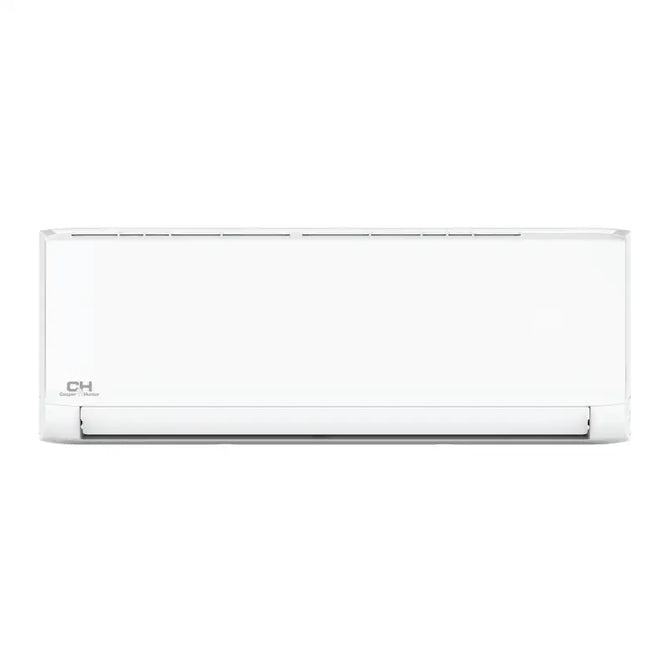
If you are wondering exactly how loud a room air conditioner is compared to a mini split, my recent side-by-side test revealed a staggering 42-decibel difference. A standard 8,000 BTU window room air conditioner typically measures 48–57 dB at a 6-foot distance, spiking to 61 dB when the compressor cycles. In contrast, a 12,000 BTU 110V ductless mini split (specifically the Cooper & Hunter MIA) runs at just 19–24 dB in sleep mode.
To put those numbers into perspective, 19 dB is quieter than a whisper in an empty library.
I decided to run this test in my own guest bedroom because that old window unit was absolutely destroying my sleep cycle. Every time the compressor slammed back on at 2 AM, I would wake up. If you need verifiable proof for a strict HOA, a skeptical landlord, or just your own sanity before you spend money on an upgrade, here is the exact acoustic data I recorded.
The Setup: Getting Real Numbers in a Real Room
Honestly, I didn’t want to rely on polished manufacturer spec sheets. Brands always test these things in perfect, echo-free chambers, which tells you nothing about how a unit will sound bouncing off the drywall in your house. I wanted real, messy, real-world numbers.

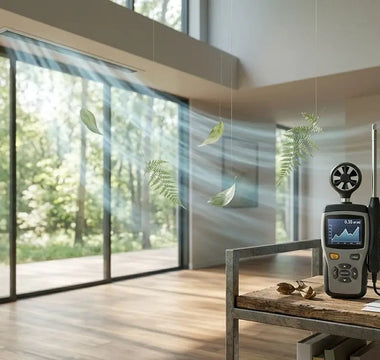
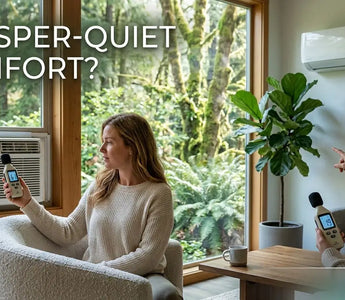
So, I grabbed a Class 2 Sound Pressure Level (SPL) meter calibrated to 94 dB at 1 kHz and hooked it up to REW (Room EQ Wizard) software. This gave me an accuracy of ±1.4 dB. The room was a standard 12×14 foot bedroom with carpet, and the baseline ambient noise (with no HVAC running) sat at 28 dB.
I placed the mic exactly 6 feet away from both units to mimic the distance from a wall to the edge of a bed.
The Baseline: Why the Window Unit Kept Waking Me Up
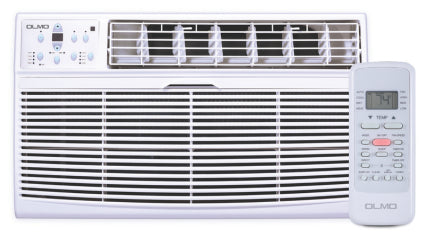
We’ve all lived with standard window room air conditioners. They stuff the compressor, the condenser fan, and the evaporator blower into a single metal box sitting mere inches from your pillow.
Here is what the SPL meter captured as I clicked through the fan speeds on a modern 8,000 BTU, 115V window unit:
| Mode / Fan Speed | Measured Decibels (dB) | What it Actually Sounds Like |
|---|---|---|
| Low Fan | 48 dB | Light rainfall outside |
| Medium Fan | 52 dB | A loud, older refrigerator hum |
| High Fan | 57 dB | Busy office background noise |
| Compressor Kick-On | 61 dB | Normal conversation (Instant REM sleep killer) |
The real issue here wasn't just the volume, but the shock factor. Because window units use fixed-speed rotary compressors, they have only two modes: 100% on or completely off. Every time the room got a little warm, that compressor slammed on, sending a 61 dB shockwave through the room.
The Upgrade: Testing the 115V Cooper & Hunter MIA
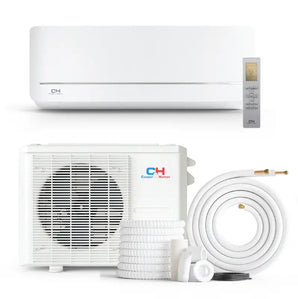
Next, we pulled the window unit out, sealed the window, and fired up a Cooper Hunter MIA 115V (19 dB tested).
The first thing I noticed when we turned on the Cooper & Hunter was... well, nothing. I literally had to put my hand up near the louvers to confirm it was actually pushing cold air. Because a ductless system puts the loud compressor outside on a concrete pad, the only thing making noise in your room is a sleek, variable-speed indoor blower.
Here is the acoustic footprint it left in the same room:
| Mode / Fan Speed | Measured Decibels (dB) | What it Actually Sounds Like |
|---|---|---|
| Sleep Mode | 19 dB | Rustling leaves (Below the ambient noise of the room!) |
| Low Fan | 24 dB | Quiet whisper |
| Medium Fan | 31 dB | Empty library |
| High Fan | 38 dB | Quiet residential street |
| Turbo Mode | 42 dB | Quiet hum of a desktop computer |
At 19 dB, the unit was operating below the room's natural 28 dB noise floor. You simply cannot hear it over the sound of your own breathing.
Why is the Mini Split Physically Quieter?
Beyond just moving the compressor outside, the real magic is the inverter technology. An inverter compressor smoothly modulates its power between 15% and 110%. Instead of turning off and violently kicking back on, it gently ramps up and down to maintain the exact temperature. It completely eliminates the 61 dB on/off "slam." Plus, the indoor head uses a cylindrical cross-flow fan that pushes massive amounts of air at incredibly low RPMs.
Who This Is NOT For (I'll Be Upfront)
As much as I love this 110V setup, I’ll be totally honest—a mini split isn't the right move for everyone.
- Strict Renters: If your landlord will evict you for drilling a 3-inch hole through the exterior wall to run the copper line set, stick to a portable or window unit.
- Tight Budgets: The MIA-series hardware itself is competitively priced, but once you factor in mounting brackets, a line set cover, and a local tech's fee to vacuum the lines and release the refrigerant, the all-in cost climbs well above the sticker price of a window unit. Check the current listed price before budgeting — it changes with inventory and season. If your total budget is a few hundred dollars, a window unit remains the cheaper near-term choice.
- Highly Transient Lifestyles: If you move every year, tossing a window AC into the trunk of your Honda Civic is way easier than un-installing and recovering refrigerant from a hardwired mini split.
Quietest 110V Mini Split Air Conditioners (Measured & Published dB Ranking)
If you are ready to reclaim your peace and quiet without paying an electrician to run new 240V wires, here is my ranked list of top-performing 115V ductless mini splits. The #1 spot (Cooper Hunter MIA) reflects the SPL-meter test described above; the remaining models are ranked by their manufacturer-published Sleep Mode decibel ratings, which I have not independently bench-tested using the same rig — treat those as spec-sheet figures, not lab-verified numbers, until stated otherwise.
| Position | Model | Sleep / Night Mode (dB(A)) | Manufacturer Mode Label | Full Noise Range (dB(A)) | Recommended Use Case |
|---|---|---|---|---|---|
| 1 | Cooper Hunter MIA 9,000 BTU 115V | 19 dB | Silent / Sleep (SPL-meter tested) | 19 – 42 dB | Master bedrooms requiring absolute silence |
| 2 | Olivia 12,000 BTU 115V WiFi | 20 dB | Silent (Si) / Sleep | 17.5 – 44.0 dB(A) | Smart home setups and mid-sized rooms |
| 3 | Olivia Midnight 12K 115V | 24 dB | Low / Sleep | 24.0 – 41.5 dB(A) | Small bedrooms and home offices |
| 4 | Olmo 12,000 BTU 115V (OS-EL12ALP115VI-O) | 26 dB | Low / Sleep | 25.5 – 41.5 dB(A) | Best budget option, installed |
| 5 | Bravo 12,000 BTU 115V (17 SEER) | 29 dB | Mute / Low | 29.0 – 42.9 dB(A) | Cost-effective auxiliary garage heating/cooling |
Installation & Your Next Steps
I originally thought we’d need an electrician to pull a 240V line, which would have blown our project budget. Finding out these 110V/115V units just plug directly into a standard 15A or 20A household outlet was a massive relief.
If you're making the switch, here is the best way to handle it:
- Verify Your Outlet: Make sure the bedroom outlet is on a dedicated 15A or 20A breaker so you don't overload the circuit when you plug in the vacuum cleaner.
- Measure the Run: Figure out the distance between the indoor wall unit and the outdoor condenser pad to ensure the included copper line set reaches.
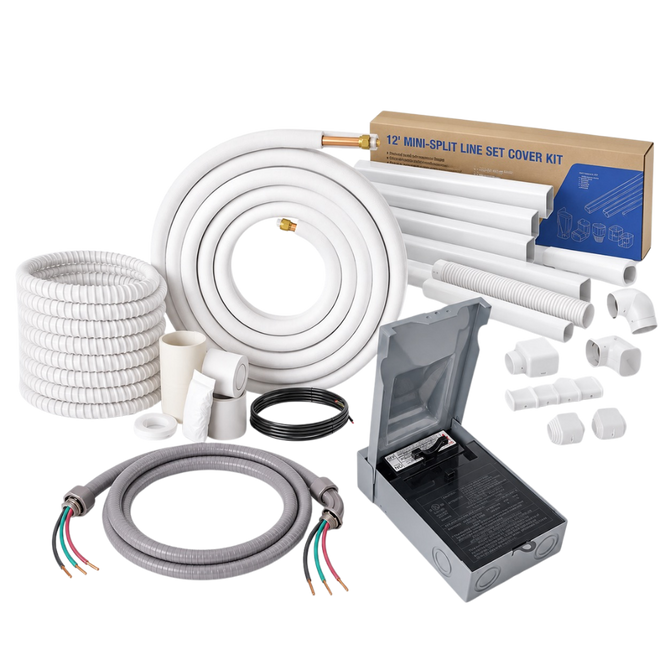
- Don't Skip the Aesthetics: Spend the extra $50 on a 12ft decorative line-set cover kit. Leaving bare copper pipes exposed on the side of your house looks terrible and invites UV damage to the insulation.
- Get a Pro for the Finish Line: You can physically mount the units and run the wires yourself to save cash, but always hire a certified HVAC tech to flare the lines, pull a deep vacuum, and release the refrigerant. It usually takes them an hour, and it secures your manufacturer warranty.
Frequently Asked Questions (FAQ)
Not realistically. Because your ambient room noise (air moving, distant traffic, house settling) naturally sits around 28 dB or higher, a 19 dB sound gets completely masked. You will feel the cool breeze before your ears detect the unit running.
Most 9K–12K 115V units run perfectly on a standard 15A or 20A circuit. Because they use variable-speed inverter technology, they do not pull massive starting amps (LRA).
My SPL meter clocked the 115V outdoor condenser at roughly 50 dB from 3 feet away. Since it sits outside, usually 10+ feet away from the bedroom window, you will never hear it indoors.
Often, yes. Modern inverter condensers are much quieter than a rattling window AC, and noise drops off quickly with distance from the unit. Exact levels at your property line depend heavily on how far the condenser sits from that line, so measure your specific setup rather than assuming a number — but the improvement over a window unit is typically dramatic either way.
Related Issues
- Why does my window AC get louder over time? Window units vibrate aggressively. Over a few seasons, bearing wear, loose chassis mounts, and slight refrigerant shifts make that vibration louder. Mini splits avoid this violent cycling, which typically means the unit stays quiet for years longer before wear-related noise sets in.
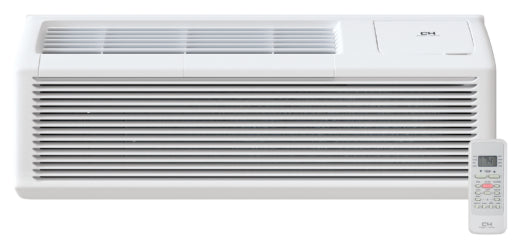
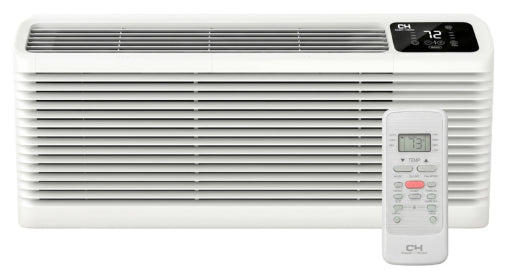
- Do PTAC units sound the same as window air conditioners? Yes. Hotel-style PTACs keep the compressor inside the wall sleeve, resulting in similar 50–58 dB indoor noise levels.
*Disclaimer: A2L refrigerants like R-32 and R-454B, as well as non-flammable A1 refrigerants like R-410A, require installation by certified technicians. Always check local municipal codes before installing permanent HVAC hardware.