


Home Heating Upgrade
Replacing Cast-Iron Radiators with Low-Profile Floor Console Heat Pumps: Real Costs & Performance
If you're swapping an old cast-iron radiator for a floor console heat pump this fall, expect warm air out of the unit within a few minutes of switching it on, instead of waiting for an entire hydronic loop to come up to temperature.
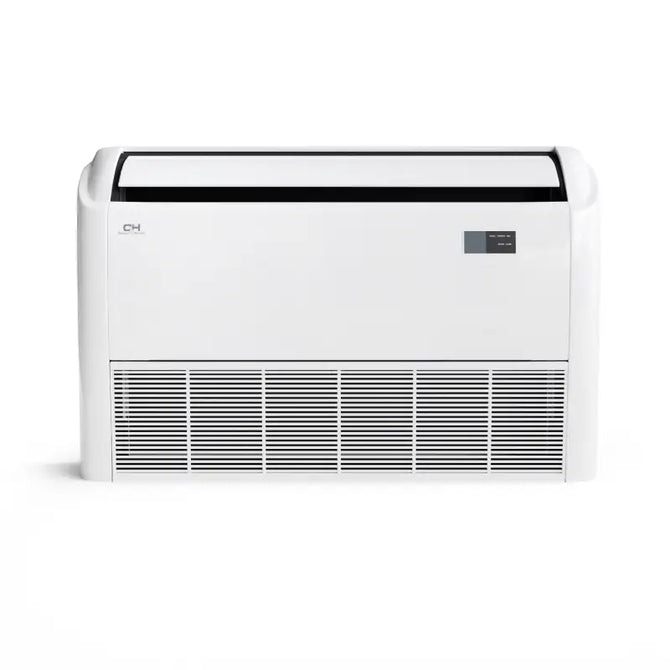
A standard 12,000 BTU floor console starts around $1,600 for the hardware alone (before an install kit). Because these units sit about 24 inches high, they slide right into the physical footprint of most under-window steam radiators. You get immediate, pinpoint heating at a COP of 3.9 at 47°F (meaning 1kW of electricity yields about 3.9kW of heat) without tearing up your walls for a high-wall mini-split.
The Shoulder Season Problem
Honestly, it drives me crazy when people try to heat a single cold room by cranking up their entire boiler system during the shoulder season (45–60°F ambient). I saw this constantly last October in a 1920s Tudor we were evaluating. The homeowner’s boiler would violently short-cycle, burning expensive gas just to warm one freezing home office, while the rest of the house roasted. By the time the room was warm, the midday sun was out, and they had to crack a window.
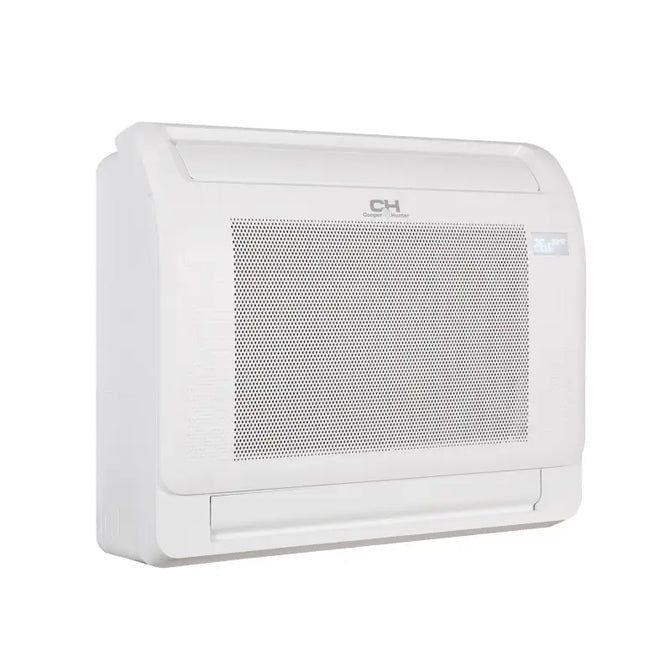
We pulled out the dead-weight radiator and dropped in a Cooper Hunter 12,000 BTU floor console. Problem solved. It operates at a whisper-quiet 23.5 dB(A) on Silent mode from the bottom louvers, pushing warm air right across the floor to mimic the radiant heat they were used to—just instantly.

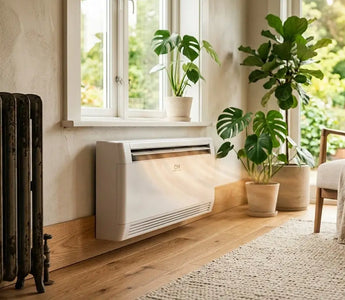
A low-profile floor console sitting perfectly within the roughly 24-inch vertical footprint of a removed steam radiator.
Installation Reality Check
Here is something you won't read in the sterile, glossy installation manuals. When you decommission a radiator, everyone tells you to just reuse the old pipe penetrations in the floor for your new refrigerant line-set. Great in theory. In practice, older houses settle and floors sag. If you don't level the heavy-duty mounting bracket perfectly against the wall studs—and I mean dead-center bubble level, ignoring the slanted baseboard—the indoor unit will leak condensate water all over your hardwood the moment you switch it to cooling mode next summer. I always have to use shims on the bracket if the house has settled.
Sizing & Capacity Guide
For most mid-sized bedrooms or offices (up to 500 sq ft), a 9,000 to 12,000 BTU unit is the sweet spot. Do not size your heat pump based on the radiator's BTU plate. Historic radiators are chronically oversized by 30–50%. Instead, work from the coverage we publish for each model: 9,000 BTU up to 400 sq ft, 12,000 BTU up to 550 sq ft, and 16,000 BTU up to 800 sq ft in an insulated home. For your exact room, run it through our load calculator, which starts from 26 BTU per square foot and then adjusts for ceiling height, insulation, sun exposure and glazing. You can browse single-zone floor console options to match individual room loads. If you want to nerd out on the physics of why these modern units don't lose power in mild cold, check out how inverter compressors sustain COP at 47°F.
Bigger Spaces & Gut Jobs
If you have an open-concept living room where you ripped out massive baseboards, you'll need more punch. The 16,000 BTU floor console is what we usually spec for rapid morning heat recovery in bigger spaces — it is the largest single-zone console in the line, rated for rooms up to 800 sq ft. Doing a multi-room gut job? You can replace multiple radiators using just one outdoor condenser with a system like the Floor Console dual-zone setup.
Maintenance & Smart Features
Another major advantage of replacing your old radiator with a floor console is the massive upgrade in air quality and environmental control. Modern consoles feature washable, reusable air filters that trap dust, allergens, and pet dander—something a standard cast-iron radiator obviously cannot do. Routine maintenance is as simple as popping the front grille off and rinsing the filters every few weeks.
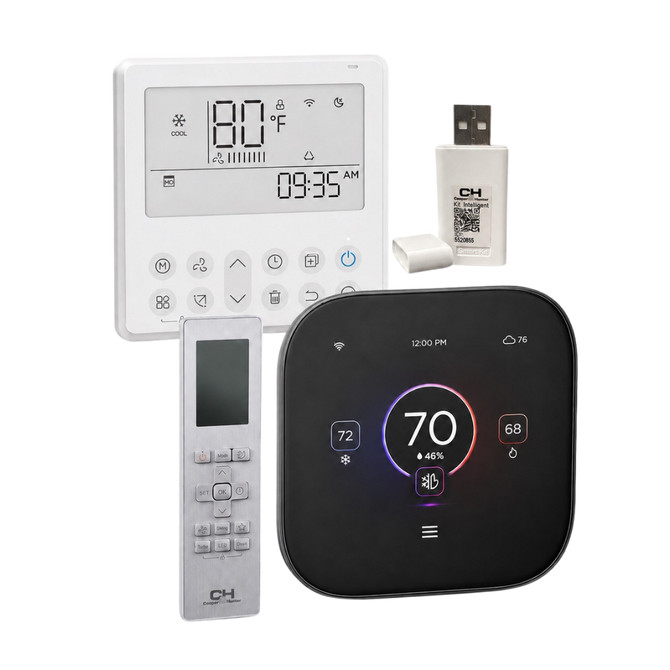
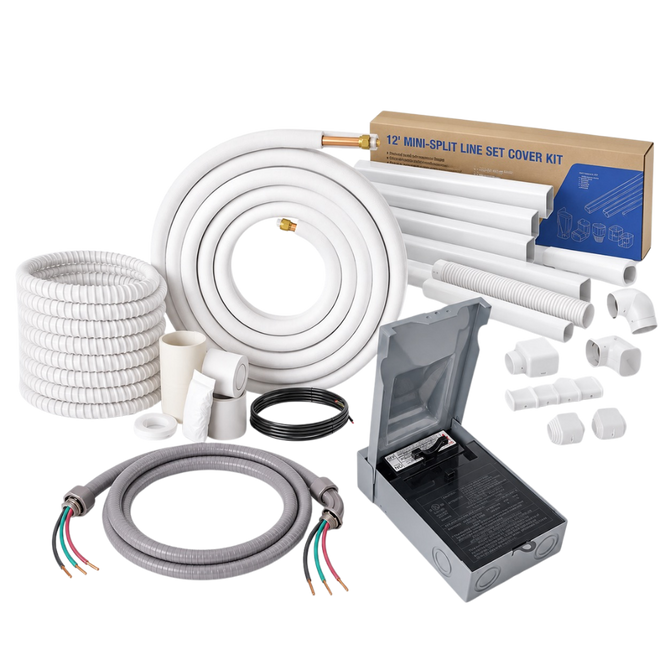
Additionally, you don't need to run new thermostat wires through your plaster walls. You can seamlessly integrate a Wi-Fi adapter module to control the floor console directly from your smartphone. For the exterior of your home, you can keep the facade looking pristine by installing a PVC decorative line set cover kit, which neatly conceals the refrigerant lines and protects them from weathering.
- Dual Airflow: High-quality floor consoles feature dual louvers, pushing warm air across the floor and cool air toward the ceiling for optimal circulation.
- Extreme Cold Performance: Units built with Hyper Heat technology can maintain superior heating capacity even when outdoor temperatures plummet far below freezing.
- No Water Damage Risk: Unlike steam or hot water radiators that can suddenly leak and destroy expensive hardwood floors, modern heat pumps use safely contained refrigerant lines.
Logistics & Financials
Let's be clear, though. I never push this upgrade if it doesn't make sense. If you live in a strict historic district, getting architectural board approval to bolt an outdoor condenser and run line-set covers on your facade is often a nightmare. Skip it. Likewise, if your electrical panel is an old 100-amp service, adding dedicated 230V circuits for heat pumps means a $2,000+ panel upgrade before you even purchase the AC equipment.
For everyone else, the math works in your favor over time. Note that the federal 25C Energy Efficient Home Improvement Credit expired for any system placed in service after December 31, 2025, so it no longer applies to new installs. Check current HOMES and HEAR/HEEHRA federal rebate programs, along with your state and utility rebates, which can still meaningfully offset the cost. Factor in the reduction in monthly fuel costs during the shoulder seasons, and most homeowners still see a return on investment within a reasonable timeframe — just confirm current incentive eligibility with your installer before budgeting around a specific number.
Ready to measure your space and plan the exact replacement? Browse the full mini floor console catalog at Mini Splits For Less to find the precise capacity your room demands. If you aren't 100% sure how to size your retrofit, reach out to our team with your room dimensions and we'll map out the exact hardware you need.
Frequently Asked Questions
Yes, in the vast majority of scenarios. As long as the hardware is sized correctly (our published coverage is 12,000 BTU for rooms up to 550 sq ft and 16,000 BTU up to 800 sq ft), modern floor consoles equipped with inverter technology can fully replace a boiler-dependent radiator, providing consistent and reliable warmth even when sub-zero temperatures hit.
While classic cast-iron radiators often clank, hiss, and bang as steam or hot water expands the metal during a heating cycle, modern floor consoles are incredibly quiet. Most premium units operate at sound levels between 23.5 and 27 dB(A) on their quietest settings, which is equivalent to a soft whisper.
No, a hardwired wall thermostat is not required. Floor consoles come with intuitive remote controls and feature built-in thermistors to automatically monitor and adjust the room's temperature. You can also easily add smart Wi-Fi adapters for complete mobile smartphone control, completely bypassing traditional thermostat wiring.
***
Disclaimer: A2L refrigerants require installation by licensed technicians; local codes and rebate eligibility may vary based on your municipality.