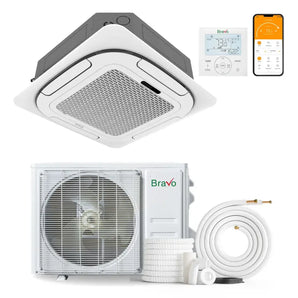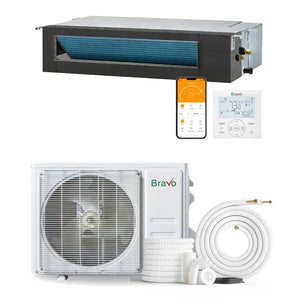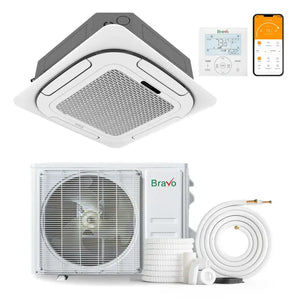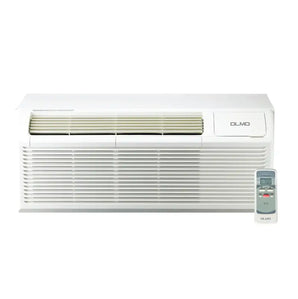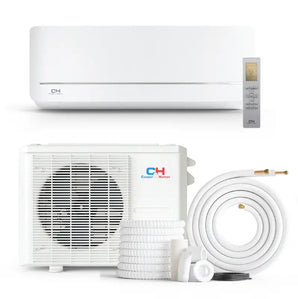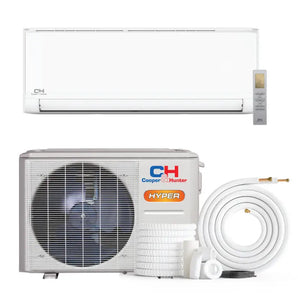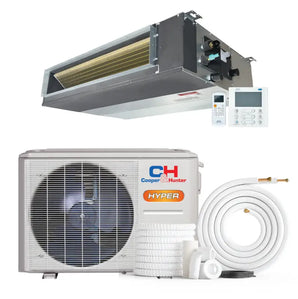



Mini split AC & heat pump systems for Chicago, IL — hyper-heat for polar vortex winters
Ductless mini split AC for Chicago greystones, Lincoln Park condos, Wicker Park two-flats, Oak Park bungalows, and every Chicago neighborhood and suburb. Hyper-heat systems operate to -22°F. Free freight shipping from our Medley, FL warehouse — 3–4 business days to Cook County and the full Chicagoland metro. Authorized dealer for Cooper & Hunter, OLMO, and BRAVO.
Updated
Ductless mini splits in Chicago, IL
Yes — we ship ductless mini split systems to every Chicago ZIP code. Orders leave our Medley warehouse and arrive in 3–4 business days, with free freight on orders over $300. You buy the equipment from us; a licensed local contractor installs it.
Older housing here runs on radiators or baseboard heat and has no ductwork at all. A ductless mini split is built for exactly that case: one small line set through an exterior wall, no demolition, no duct run. Chicago sits in climate zone 5A — cold winters, so we stock cold-climate models that keep heating output down to −22°F.
Why Chicago homeowners choose MiniSplitsforLess
Chicago is the third-largest city in the US with 2.7 million residents and a 9.5-million-person metro that extends across Cook, DuPage, Lake, Kane, and Will counties. The housing stock is dominated by pre-1960 construction — greystones, Pilsen two-flats, Logan Square three-flats, Wicker Park vintage apartments, Hyde Park 1920s walkups, and Oak Park and Berwyn bungalows — most of which were built without central air conditioning and have little or no existing ductwork. Chicago also has some of the most brutal winters in any major US city: the 2019 polar vortex hit -23°F in the city proper, colder than parts of Antarctica. When you order from MiniSplitsforLess, you get an authorized dealer shipping hyper-heat systems rated to -22°F — purpose-built for Chicago's climate extremes.
-
Hyper-Heat Technology — Operates Down to -22°F (Polar Vortex Ready)
Chicago's 2019 polar vortex dropped temperatures to -23°F. Standard mini splits rated to 0°F or 5°F fail in those conditions. Our Cooper & Hunter and OLMO hyper-heat models maintain full rated heating output to -13°F and continue operating at reduced capacity to -22°F — the only ductless systems genuinely suited to Chicago's worst winter events. Your licensed HVAC contractor can confirm the cold-weather rating for any model you select. Call 855-775-4822 and we'll identify the right hyper-heat unit for your Chicago home or condo.
-
Authorized Dealer — Full Factory Warranty, Not Grey Market
MiniSplitsforLess is an authorized dealer for every brand we sell. Grey-market units purchased from unauthorized resellers have manufacturer warranties voided and may fail Chicago building permit inspection if the equipment cannot be verified. Every system we ship to Chicago includes authorized dealer documentation — critical when your licensed contractor submits a mechanical permit to the City of Chicago Building & Inspections portal.
-
Free Freight Shipping — 3–4 Business Days to Chicagoland
Mini split systems weigh 80–180 lbs and ship as heavy freight — typically $200–$400 per pallet when billed separately. We include free freight shipping on all orders over $300 to every Chicago ZIP code, every Chicago suburb, and all Chicagoland communities from Joliet to Elgin to Skokie. No residential delivery upcharges, no fuel surcharges. What you see in the cart is what you pay.
-
HVAC Specialists Who Know Cold-Climate Systems
Our team handles only HVAC equipment. When you call 855-775-4822 Mini splits are all we do.
-
Check ComEd.com for any current appliance and efficiency program offerings.
Chicago climate & delivery facts
Chicago HVAC sizing — what the climate demands year-round
Chicago's Zone 5A climate is a full-spectrum challenge: roasting summers with a real humidity problem, and winters capable of -23°F wind chills. Correct equipment selection and sizing is non-negotiable.
Summer cooling: hot, humid, and underestimated
Chicago has a genuine summer heat problem. July average highs reach 84–88°F with a heat index regularly exceeding 100°F when Lake Michigan's moisture combines with stagnant air masses. The 1995 Chicago heat wave killed over 700 people. Modern ductless mini splits with inverter compressors modulate output continuously, maintaining set temperatures even during extended heat events without the on/off cycling that shortens the life of conventional window units and portable ACs. For Zone 5A sizing, use 15–20 BTU per square foot as a baseline for well-insulated homes; older construction (pre-1970) should use 20–22 BTU per square foot.
Winter heating: polar vortex demands hyper-heat
Standard mini splits rated to 0°F or 5°F are genuinely insufficient for Chicago winters. The 2019 polar vortex sent temperatures to -23°F in the Chicago metro; the 2024 event hit -16°F in the city proper. Only hyper-heat mini splits — specifically rated for cold-climate operation — handle these extremes. Our Cooper & Hunter and OLMO hyper-heat models maintain full rated heating capacity to -13°F and operate at reduced output to -22°F. When specifying a Chicago mini split, always confirm the model's HSPF2 rating and minimum operating temperature before purchase. Your licensed HVAC contractor should verify this with you before the installation quote is finalized.
Chicago's pre-war housing stock and ductwork reality
Chicago's iconic greystones, Pilsen two-flats, Wicker Park three-flats, Logan Square vintage apartments, and Hyde Park walkups represent the dominant housing type in the city's densest neighborhoods. The vast majority were built between 1880 and 1940 — long before central air conditioning existed. Retrofitting a forced-air central AC system into a Chicago greystone requires routing sheet metal ductwork through lath-and-plaster walls, often costing $12,000–$22,000 for ductwork alone before any equipment is installed. A ductless mini split installs in one or two days through a 3-inch wall penetration, delivering zoned comfort to every room without structural demolition.
Chicago green initiatives and electrification
Chicago has published aggressive sustainability and electrification goals, and heat pump mini splits align directly with the city's direction. Unlike gas furnaces, mini splits produce zero on-site combustion emissions. ComEd currently does not offer major standalone heat pump rebates, but program offerings change — check ComEd.com for current promotions and consult energystar.gov/rebate-finder for any updated Illinois utility incentives at the time of your purchase.
What size mini split do you need for your Chicago home?
Chicago is in ASHRAE Zone 5A. Use 15–20 BTU per sq ft for well-insulated newer construction; 20–22 BTU per sq ft for older pre-1960 Chicago housing with minimal insulation. Always choose a hyper-heat model rated to at least -13°F.
- Small bedroom or studio
- Lincoln Park condo room
- Home office addition
- Master bedroom suite
- Andersonville 1BR floor
- Converted attic or coach house
- Greystone main floor unit
- Two-flat apartment zone
- Open living/dining combo
- Bucktown or Pilsen two-flat floor
- Evanston or Oak Park condo unit
- Schaumburg townhome zone
- Single-family Naperville home
- Arlington Heights or Palatine
- Multi-zone anchor condenser
Chicago sizing tip: Always select a hyper-heat model rated to -13°F or lower. Pre-war Chicago housing — greystones, two-flats, and bungalows with brick construction and minimal insulation — should size toward the upper end of the BTU range. Use our free BTU Calculator for a precise room-by-room estimate based on your home's actual dimensions and insulation.
Multi-zone mini splits for Chicago two-flats, condos, and bungalows
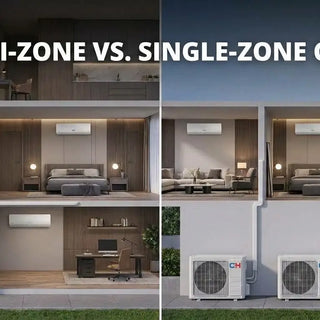
One outdoor condenser, multiple indoor heads — the ideal solution for Chicago's multi-story two-flats and three-flats, converted condo buildings, and suburban single-family homes where each floor or room needs independent temperature control.
Chicago's iconic two-flat and three-flat buildings are ideal for multi-zone mini splits — install one condenser on the roof or rear of the building, run linesets to each unit, and give every tenant independent climate control without separate condensers on each floor. Call 855-775-4822 for multi-zone sizing help specific to your Chicago building type.
Chicago neighborhoods and Chicagoland suburbs we serve
Free freight shipping to every Chicago ZIP code and every Chicagoland suburb. All systems ship from our Medley, FL warehouse in 3–4 business days.
Chicago mini split installation and permit requirements
The City of Chicago requires a licensed contractor and a building permit for every new mini split installation. Here's what Chicago homeowners and contractors need to know before the job starts.
City of Chicago Building Permit
- All new mini split installations in Chicago require a mechanical permit through the City of Chicago Department of Buildings — apply online at chicago.gov/permits
- A licensed Illinois HVAC contractor must pull the permit; homeowners cannot self-permit HVAC work in Chicago
- Submit equipment specifications, proposed condenser location, and electrical load information with the permit application
- A final mechanical inspection is required before the system can be legally placed in service — your contractor schedules this after installation is complete
- Permit required for new installs, system replacements, and equipment relocations — not just new construction
- We provide full manufacturer documentation packages (spec sheets, installation manuals, AHRI certificates) to support your contractor's permit submission — call 855-775-4822
Illinois HVAC Contractor License
- Illinois requires a licensed HVAC contractor for all refrigerant work — verify credentials through the Illinois Department of Labor (labor.illinois.gov)
- EPA 608 refrigerant handling certification is required for all contractors working with refrigerants including R-32, R-454B, and R-410A
- Chicago also enforces city-level contractor licensing requirements — verify both state and city licensing before signing an installation contract
- Unlicensed installation voids the manufacturer warranty and can result in permit violations and insurance claim denials in the event of property damage
- For multi-family buildings and condo conversions, verify that the contractor has experience with Chicago's multi-unit HVAC permit process
Ships from Medley, FL to Chicago in 3–4 business days
Our fulfillment warehouse at 9400 NW 104th St #150, Medley, FL 33178 is approximately 1,300 miles from Chicago. Mini split orders ship via freight carrier and typically arrive anywhere in Chicagoland in 3–4 business days.
Why stocking 2,000+ models matters for Chicago customers
When your HVAC supplier maintains a large in-stock inventory rather than drop-shipping from a manufacturer, your order moves immediately rather than waiting for factory availability. Chicago's peak HVAC demand runs in two intense windows — summer (June–August) when cooling demand spikes, and late October through November when the first serious cold fronts arrive and homeowners scramble for heating solutions before winter sets in. We maintain 2,000+ models in stock precisely so Chicago homeowners and contractors aren't waiting 2–3 weeks for a backordered unit during a heat wave or early cold snap.
Freight from our Medley dock routes through standard regional carriers to Chicago-area freight hubs, then to your delivery address. Orders placed by our daily shipping cutoff leave the same business day. Most Chicago and Chicagoland addresses receive delivery in 3–4 business days. If you're coordinating delivery with a contractor's installation window, call us at 855-775-4822 and we'll help schedule the shipment to arrive when your crew is ready.
Warehouse address: 9400 NW 104th St #150, Medley, FL 33178
Mini split questions for Chicago, IL
Can a mini split actually heat a Chicago home in winter?
Yes — with the right model. This is the most important question Chicago buyers ask, and the answer depends entirely on the model's cold-weather rating. Standard mini splits rated to 0°F or 5°F are not adequate for Chicago winters. The 2019 polar vortex dropped temperatures to -23°F in the city. You need a hyper-heat model specifically designed for cold-climate operation. Our Cooper & Hunter and OLMO hyper-heat units maintain their full rated heating output down to -13°F and continue operating at reduced but meaningful capacity to -22°F. This means the system keeps your home warm through Chicago's most extreme cold snaps without requiring a gas furnace backup. Your licensed HVAC contractor should verify the model's HSPF2 rating and minimum operating temperature before finalizing your installation. Call 855-775-4822 and we'll identify the right hyper-heat model for your Chicago home or building type.
Do I need a permit to install a mini split in Chicago?
Yes. All new mini split installations in Chicago require a building permit through the City of Chicago Department of Buildings — apply online at chicago.gov/permits. A licensed Illinois HVAC contractor must pull the permit; homeowners cannot self-permit HVAC work. The permit process includes a plan review and a final mechanical inspection before the system can be legally placed in service. This applies to new installations, system replacements, and equipment relocations. For multi-family buildings — two-flats, three-flats, and condo conversions — there may be additional building code requirements specific to multi-unit residential properties. We provide complete manufacturer documentation packages (spec sheets, installation manuals, AHRI certificates) to help your contractor's permit application move faster. Call 855-775-4822 and we'll send everything you need.
How long does shipping take to Chicago from your warehouse?
Our Medley, FL warehouse is approximately 1,300 miles from Chicago. Orders placed before our daily shipping cutoff ship the same or next business day by freight carrier. Chicago city addresses and Chicagoland suburbs — from Naperville and Joliet to Skokie and Des Plaines — typically receive freight delivery in 3–4 business days. Free freight shipping is included on all orders over $300. No residential delivery upcharges, no fuel surcharges, no surprises at checkout. You'll receive a tracking number once the shipment leaves our Medley dock. If you have a contractor or renovation timeline, call us at 855-775-4822 to coordinate the delivery schedule with your installation window.
What BTU size for a Chicago greystone floor?
A typical Chicago greystone floor runs 800–1,200 sq ft depending on the building's width and layout. For Zone 5A, use 18–22 BTU per sq ft for older pre-1950 construction with brick walls and minimal insulation. An 800 sq ft greystone floor × 20 BTU = 16,000 BTU, so an 18,000 BTU unit is the standard starting point. A 1,000–1,200 sq ft floor at 20 BTU/sq ft needs 20,000–24,000 BTU, so a 24,000 BTU unit is appropriate. If the floor has a large open kitchen, high ceilings common in vintage Chicago construction, or west-facing windows with strong afternoon sun exposure, size up to the next BTU tier. Many Chicago two-flat owners install a 2-zone system — one head in the main living area and a second in the primary bedroom — off a single outdoor condenser mounted on the roof or rear of the building. Use our free BTU Calculator for a precise estimate.
Can I get ComEd rebates on a mini split in Chicago?
ComEd (Commonwealth Edison) currently does not offer major standalone heat pump rebates for mini split installations. However, ComEd does offer energy efficiency programs and appliance incentives that change periodically — check ComEd.com for current program offerings at the time of your purchase. All Cooper & Hunter, OLMO, and BRAVO hyper-heat models we carry meet the efficiency requirements. Also check energystar.gov/rebate-finder for any updated Illinois utility programs. Call 855-775-4822 for current ENERGY STAR certifications and SEER2/HSPF2 ratings to support your tax filing.
What brands do you carry and are you an authorized dealer?
MiniSplitsforLess carries Cooper & Hunter, OLMO, and BRAVO mini splits — and we are an authorized dealer for all three brands. This distinction matters for Chicago buyers: grey-market units sold by unauthorized resellers often have manufacturer warranties voided, and Chicago building permits require that installed HVAC equipment carry a valid manufacturer warranty. When you buy from us, your unit ships with a full factory warranty — typically 7 years on the compressor — legitimate serial numbers, and manufacturer-backed technical support. We stock over 2,000 models across single-zone, multi-zone, and commercial configurations. Every hyper-heat model in our catalog is rated for cold-climate operation appropriate for Chicago winters. Call 855-775-4822 to verify authorized dealer status or get a model recommendation for your specific Chicago building type.
Do you sell commercial mini splits for Chicago businesses?
Yes. We carry commercial mini split systems suitable for Chicago retail spaces, offices, restaurants, medical suites, and light commercial buildings. The Loop, River North, and Chicago's neighborhood commercial corridors along Milwaukee Ave, North Ave, Belmont Ave, and throughout the neighborhoods are among our most active commercial markets. Commercial systems range from single-zone 18,000 BTU units for a small office or server room up to 60,000 BTU multi-zone systems capable of conditioning an entire retail floor or restaurant dining room. Commercial Chicago installations follow the same City of Chicago permit process — a licensed HVAC contractor, building permit, and final inspection. Call 855-775-4822 to discuss your commercial project and we'll help you spec the right system and BTU capacity for your space.
Mini split AC systems across Illinois
City guides for every Illinois market — all ship from our Medley, FL warehouse in 3–4 business days