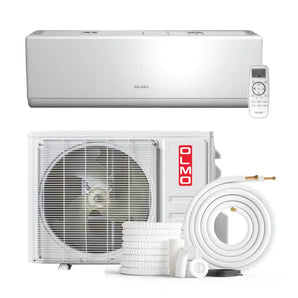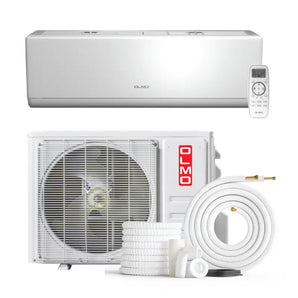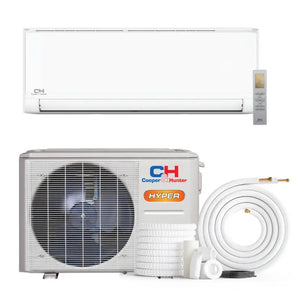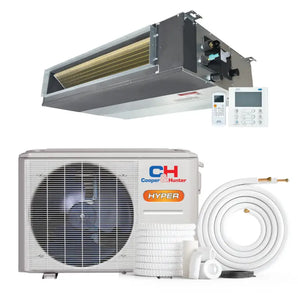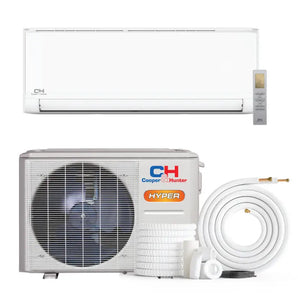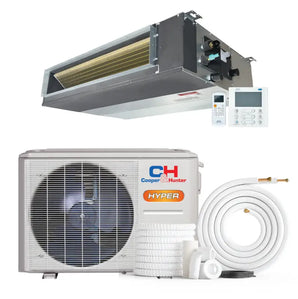



Mini Split AC Systems for San Francisco, CA
Ductless mini split heat pumps for San Francisco Victorian flats, Edwardian buildings, Castro cottages, Sunset Ranch homes, and SOMA lofts. Ships free from our Medley, FL warehouse — 2,900 miles, 5–7 business days. Authorized dealer for Cooper & Hunter, OLMO, and BRAVO. Qualifies for TECH Clean California ($3,000), federal 25C ($2,000/yr), PG&E rebates, and BayREN rebates — up to $6,000+ in combined savings.
Why San Francisco homeowners choose MiniSplitsforLess
San Francisco is one of the most unique HVAC markets in the country. The city's marine climate meant that for over a century, most homes were never built with air conditioning at all — Victorian flats, Edwardian buildings, and classic SF row houses were designed for the fog. But that calculus has changed dramatically. Increasingly severe heat waves, some pushing 100°F in a city where 90% of homes have no AC, have exposed a critical gap. At the same time, San Francisco's gas ban on new connections and California's aggressive electrification programs make heat pump mini splits not just a comfort upgrade — they're the city's endorsed path forward. We ship every Cooper & Hunter, OLMO, and BRAVO system from our Medley, FL warehouse with free freight delivery to San Francisco in 5–7 business days, with full TECH Clean California and federal 25C rebate eligibility.
-
Authorized Dealer — Full Manufacturer Warranty (Not Grey Market)
MiniSplitsforLess is an authorized dealer for Cooper & Hunter, OLMO, and BRAVO. This matters for San Francisco buyers because SF DBI (Department of Building Inspection) may require manufacturer documentation for permit applications, and TECH Clean California rebates require equipment from verified dealers in the authorized channel. Grey-market units sold through unauthorized resellers have voided warranties and fail the documentation requirements for CA rebate programs. Every system we ship to San Francisco includes verifiable authorized dealer documentation to support your DBI permit and TECH Clean CA application.
-
Free Freight Shipping — Medley, FL to San Francisco in 5–7 Business Days
Our warehouse in Medley, FL ships to San Francisco approximately 2,900 miles via major freight carriers. Free freight shipping is included on all orders over $300 — no fuel surcharges, no residential delivery upcharges, no surprises at checkout. Mini split systems ship as heavy freight (80–180 lbs) and would normally cost $300–500 to freight separately; that cost is fully absorbed in our price. Most San Francisco orders arrive in 5–7 business days after shipment. Call 855-775-4822 if you have a contractor schedule to coordinate around — we'll give you the tracking number and carrier contact the moment your order ships.
-
TECH Clean CA and 25C Documentation — We Know the Rebate Process
California's TECH Clean California program (up to $3,000 for heat pump replacing gas heat), the federal 25C tax credit (up to $2,000/year), PG&E rebates, and BayREN rebates can stack to over $6,000 in savings on a qualifying installation. Each program has documentation requirements — AHRI certificates, ENERGY STAR certification, authorized dealer proof, efficiency ratings. Our team handles these daily and will provide the complete documentation package needed for every program at no charge. San Francisco's energy-conscious buyers deserve to capture every dollar of available incentive, and we make that straightforward. Call 855-775-4822 for a rebate checklist for any system you're considering.
-
Victorian and Edwardian Building Expertise — Ductless Is the Only Option
San Francisco's Victorian flats (stick-frame, balloon-frame construction) and Edwardian buildings cannot be retrofitted with central forced-air HVAC without destroying the structural fabric and historic character of the building. Cutting duct chases through Victorian plaster walls and floors is not only technically difficult — it often violates historic preservation guidelines and HOA/TIC agreements in SF's densely governed housing stock. Ductless mini splits require only a 3-inch hole through the wall for the refrigerant line and electrical conduit. Our team understands the constraints of SF's housing stock and can help you select the right system for your building type.
-
PG&E High Rates Make Efficiency Critical — We Carry Only High-SEER2 Systems
PG&E (Pacific Gas & Electric) has some of the highest residential electricity rates in the United States — averaging $0.30–$0.45/kWh depending on tier and time-of-use plan. San Francisco also has CleanPowerSF, a community choice aggregator that sources renewable energy but runs on the same PG&E grid infrastructure. With electricity this expensive, every SEER2 point matters. All Cooper & Hunter, OLMO, and BRAVO systems we carry are ENERGY STAR certified and high-SEER2 rated — modern inverter-driven compressors that modulate output rather than cycling on and off, cutting electricity consumption by 30–50% compared to older resistance heating or window units. We don't carry low-efficiency equipment. Use our free BTU Calculator for an energy-cost estimate specific to your SF home.
San Francisco climate & delivery facts
San Francisco heat waves — a city built for fog, now hitting 100°F+
San Francisco's reputation as a cool, fog-shrouded city has masked a growing danger: multi-day heat events that slam neighborhoods completely unprepared for extreme heat. The city has no traditional cooling infrastructure, and the consequences are deadly.
A city with no AC — until the heat wave hits
San Francisco's famously mild marine climate — cool summers, pervasive fog, average July highs of 65°F — meant that for over a century, residential air conditioning was considered unnecessary. Victorian and Edwardian buildings were designed to breathe with the fog, not to manage 100-degree heat. As a result, roughly 90% of San Francisco homes have no air conditioning of any kind. When heat waves arrive, residents have nowhere to turn. Portable units sell out within hours across the Bay Area. Window AC units are often prohibited by HOA and TIC agreements in Victorian buildings — and don't fit the historic window dimensions anyway. Mini splits are the permanent, code-compliant, rebate-eligible solution that SF residents increasingly rely on after their first real heat wave experience.
Recent SF heat events — worse than most residents expect
In recent years San Francisco has seen multi-day heat waves that brought temperatures exceeding 100°F in parts of the city — particularly the Mission District, Bernal Heights, Excelsior, and Potrero Hill, which are sheltered from the usual westerly fog and experience significantly higher temperatures than the tourist-facing areas near the bay and ocean. The Sunset and Richmond Districts, typically foggier, still recorded 80°F+ during these events. The inland neighborhoods effectively become different climate zones during heat waves. A home that feels comfortable in July fog can become a 95°F oven in a heat dome event with zero ability to cool down overnight. These events are projected to increase in frequency and duration. One installed mini split changes everything about how that home performs during the next event.
Sizing for SF's dual reality: fog baseline + heat wave peaks
Sizing a mini split for San Francisco requires thinking about two different scenarios. The baseline case — 340+ foggy days per year — is modest: a 9,000 or 12,000 BTU unit would handle heating needs in many SF rooms under normal marine conditions. But the heat wave scenario changes the calculation: when ambient temperatures hit 95–105°F in an uninsulated Victorian flat with south- or east-facing windows, a small unit is overwhelmed quickly. Most HVAC professionals serving SF recommend sizing for the heat wave peak, not the fog baseline — meaning 12,000–18,000 BTU for average SF rooms rather than the 9,000 BTU that might technically suffice on paper. The upfront cost difference is modest; the performance difference during the next heat event is enormous. Use our free BTU Calculator for a room-by-room estimate specific to your SF home.
Mini splits as year-round heat pump — not just AC
San Francisco's winters are mild but damp and cool — average January lows of 46°F, frequent 40s. Victorian and Edwardian homes typically rely on gas-fired wall furnaces, floor furnaces, or radiators for heat. Under San Francisco's gas ban on new connections (effective 2021 for most new construction, expanding under State policy) and California's TECH Clean California program which offers up to $3,000 for replacing gas heating with a heat pump, the economic and policy case for a mini split heat pump is compelling. A modern inverter heat pump is 3–4x more efficient than electric resistance heating and significantly cheaper to operate than gas at current PG&E rates. The system provides both heating in winter and cooling during summer heat waves — one installation solves both problems permanently.
Ductless mini splits for San Francisco's Victorian and Edwardian buildings
San Francisco has approximately 48,000 Victorian and Edwardian buildings — more than any other US city. These structures are irreplaceable, and mini splits are the only practical way to add modern climate control without damaging them.
-
Why you can't add ducts to a Victorian flat
Victorian and Edwardian buildings in San Francisco were constructed using balloon framing and solid plaster walls — structural systems that have no voids or chases suitable for running supply and return ducts. Retrofitting forced-air HVAC would require opening floors, walls, and ceilings throughout the building; installing a new air handler and ductwork in spaces that don't have room for it; and potentially violating historic preservation guidelines if the building is in a designated historic district or has an Article 10 or Article 11 landmark designation. The SF Planning Department and SF DBI both recognize that ductless systems are the preferred mechanical upgrade for historic residential buildings precisely because they require only a single 3-inch penetration through the exterior wall for the lineset.
-
HOA, TIC, and condo board approvals in SF buildings
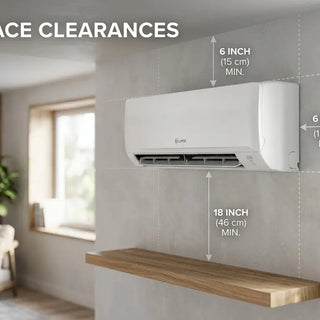
San Francisco has a large number of Tenancy-in-Common (TIC) buildings and condo conversions — housing arrangements where multiple owners share a building without fully separate legal units. TIC agreements and condo CC&Rs typically require written approval from co-owners or the condo board before any exterior modification, including condenser placement. Most SF TICs and condo boards are receptive to mini split installations because ductless systems are non-invasive, require only a small exterior condenser, and preserve the building's structural integrity. We provide complete manufacturer documentation packages — spec sheets, condenser dimensions, installation clearance requirements, noise specifications — to support your building's approval process. Call 855-775-4822 for the package for any unit you're evaluating.
-
Steep hills and narrow lots — ductless installation is practical
San Francisco's famous topography creates real logistical challenges for HVAC installation. Homes on steep hills — Russian Hill, Noe Valley, Cole Valley, Bernal Heights, Potrero Hill — may have limited exterior access for running refrigerant lines. The compact footprint of a mini split system (indoor wall-mount head + small outdoor condenser) makes it the most practical mechanical upgrade available. Condensers can be mounted on exterior walls, balcony rails, or rooftop platforms with minimal structural work. Line sets run up to 50–75 feet from condenser to indoor head, giving installers significant flexibility in condenser placement even on difficult San Francisco lot configurations. Our technical team can consult on line set routing and condenser placement for unusual buildings at no charge — call 855-775-4822.
SF Historic Preservation & Ductless Systems
San Francisco has two landmark designation categories: Article 10 (individual landmarks) and Article 11 (conservation districts, which cover most of the city's Victorian and Edwardian neighborhoods). For buildings in these categories, any exterior modification — including condenser placement — may require a Certificate of Appropriateness from the SF Historic Preservation Commission.
In practice, mini split condensers are routinely approved in SF historic districts because they are small, reversible, and do not alter the character-defining features of the building facade. Rear-yard and side-yard condenser placement is standard. We provide complete documentation packages that include condenser dimensions, color specifications, and installation clearance diagrams to support your permit and historic preservation review. Work with your licensed CA C-20 contractor to navigate the SF DBI and Planning workflow — it is manageable with the right preparation.
What size mini split for your San Francisco home?
San Francisco's mild baseline climate is deceptive — size for heat wave performance, not the fog. Use 12–18 BTU per square foot for well-insulated newer construction; 18–22 BTU/sq ft for Victorian/Edwardian buildings with minimal insulation and single-pane windows.
- Small Victorian bedroom
- Home office / studio
- Glen Park cottage room
- Victorian master bedroom
- Castro cottage main room
- Noe Valley flat bedroom
- Victorian flat living area
- Sunset Ranch open floor plan
- SOMA loft main space
- Full Victorian flat main floor
- Pacific Heights flat zone
- Richmond District home floor
- Full-floor Victorian flat
- Large SOMA loft or office
- Mixed-use ground floor
SF sizing tip: Victorian and Edwardian buildings typically have minimal wall insulation and single-pane windows — use 18–22 BTU per square foot. Mission District, Bernal Heights, Potrero Hill, and Excelsior neighborhoods run significantly hotter than the Richmond or Sunset during heat waves; homes in those neighborhoods should size up. Use our free BTU Calculator for a precise room-by-room estimate tailored to your SF building.
Multi-zone mini splits for San Francisco Victorian flats and multi-unit buildings
One outdoor condenser, multiple indoor heads — the ideal solution for San Francisco's Victorian flats, multi-story TIC buildings, and mixed-use properties. Cover every room without adding more condensers to the exterior.
Full Victorian flat multi-zone setup
- Typical SF Victorian flat: 1,000–1,400 sq ft across 4–6 rooms
- Recommended: 3-zone or 4-zone system with one 18K BTU head in living room, one 12K BTU in master bedroom, one 9K–12K BTU in secondary bedroom
- Single outdoor condenser placed in rear yard or on rear wall — typically away from street facade for historic preservation
- Line sets route through the building's existing chase paths or along exterior walls in painted conduit
- All zones independently controlled — living room can be cooling while bedrooms are heating, or vice versa
- Qualifies for TECH Clean CA rebate on the full system if replacing gas heat
TIC and mixed-use building considerations
- TIC buildings: each unit typically installs its own separate system with its own outdoor condenser; multi-zone heads serve only one unit's spaces
- Multi-unit buildings: a single high-capacity condenser can serve multiple heads within one dwelling unit but cannot span separate legal units
- SOMA lofts and live-work units: large open-plan spaces often benefit from a 2-zone or 3-zone setup with heads at different heights (ground level and mezzanine)
- Ground-floor retail / upper-floor residential: each is a separate system with its own permit and condenser — often placed on the rooftop for commercial spaces
- Noise considerations: our condensers operate at 52–58 dB — below most SF noise ordinance thresholds for rear-yard placement
- Call 855-775-4822 for multi-unit building sizing and condenser placement consultation
Stack up to $6,000+ in San Francisco rebates and tax credits
San Francisco mini split buyers have access to the most generous rebate stack in the country. TECH Clean California, the federal 25C credit, PG&E rebates, and BayREN rebates can be combined on qualifying installations.
TECH Clean California
California's TECH Clean California program (administered by BayREN and other regional networks) offers up to $3,000 for qualifying heat pump installations that replace gas-fired heating systems. To qualify: the system must replace an existing gas appliance (furnace, wall heater, floor furnace), must be installed by a licensed CA C-20 contractor, and must meet efficiency thresholds. Application is typically handled through the installing contractor. All Cooper & Hunter, OLMO, and BRAVO heat pump systems we carry qualify. Visit techcleanca.org for current program terms.
Federal 25C Tax Credit (per year)
The federal Inflation Reduction Act Section 25C tax credit provides 30% of qualified heat pump costs up to $2,000 per year for owner-occupied primary residences. This is a tax credit (not a deduction) — it reduces your federal tax liability dollar-for-dollar. Eligible equipment must meet CEE Tier 1 efficiency standards (all of our heat pump models meet this threshold). The credit resets annually and can be claimed in the same year as installation. Consult your tax advisor for eligibility — investment properties and rental units may not qualify. IRS Form 5695 is used to claim this credit.
PG&E Rebates
Pacific Gas & Electric offers energy efficiency rebates for qualifying high-SEER2 heat pump mini splits for PG&E residential customers — which includes virtually all San Francisco single-family and multi-unit residential accounts. Rebate amounts vary by equipment efficiency tier and program year. All ENERGY STAR certified systems we carry are eligible to apply. Rebates are applied after installation through PG&E's online portal. CleanPowerSF customers still have PG&E as their utility delivery company and are eligible for PG&E rebate programs. Check pge.com for current rebate amounts. Call 855-775-4822 for SEER2 documentation for any model.
BayREN Rebates
BayREN (Bay Area Regional Energy Network) is the Bay Area's regional energy efficiency organization, which administers several rebate programs for SF Bay Area homeowners and renters in addition to TECH Clean California. BayREN's Home+ program offers additional rebates for qualifying heat pump installations in the nine-county Bay Area including San Francisco. Rebate amounts are updated periodically; check bayren.org for current program offerings. BayREN rebates can typically be stacked on top of TECH Clean CA and PG&E rebates for qualifying installations. Your licensed C-20 contractor can assist with BayREN application requirements.
How to stack your SF rebates
A typical SF homeowner replacing a gas wall heater with a qualifying heat pump mini split can access: TECH Clean CA ($3,000) + Federal 25C credit (up to $2,000/yr) + PG&E rebates (varies) + BayREN (up to $1,500). The combined value can exceed $6,000 on a qualifying installation — making a premium-efficiency mini split heat pump one of the best-returning home investments available in San Francisco. Key requirements: the system must be installed by a licensed CA C-20 contractor, you must be replacing an eligible gas appliance, and applications must be submitted through the appropriate program portals within specified timeframes after installation. We provide the complete documentation package needed for all programs at no charge. Call 855-775-4822 before you purchase to confirm which rebates apply to your specific installation.
San Francisco's gas ban — mini splits are the city's endorsed path forward
San Francisco became one of the first major US cities to ban new natural gas connections in most new construction. Mini split heat pumps align perfectly with the city's electrification direction — and make economic sense even without the mandate.
SF's natural gas ban — what it means for homeowners
San Francisco enacted a prohibition on natural gas infrastructure in new construction for most building types, and California statewide building codes have moved progressively toward all-electric requirements for new buildings. While the ban does not require existing buildings to immediately remove gas appliances, it creates a clear trajectory: when existing gas heating equipment fails or is replaced, electric heat pumps are the preferred and incentivized replacement. The TECH Clean CA program was explicitly designed to accelerate this transition by making it financially attractive. SF homeowners with aging gas wall heaters, floor furnaces, or older gas boilers are prime candidates for a TECH Clean CA-eligible mini split replacement — and the economics with stacked rebates are compelling.
Why mini splits align with SF's electrification goals
A mini split heat pump does not use natural gas — it moves heat electrically using an inverter-driven compressor, operating at 300–400% efficiency (versus 100% for electric resistance heating). In SF's moderate climate, even during cold damp winters, a modern heat pump operates efficiently down to 5°F ambient — well below anything SF will ever experience. Paired with PG&E's TOU (time-of-use) rate plans and potentially solar panels or battery storage, a mini split can be operated at the lowest available electricity rates. For SF renters and homeowners who are part of CleanPowerSF's GreenFuture program (100% renewable energy supply), the carbon footprint of operating a mini split heat pump approaches zero — something no gas appliance can claim.
Economics at PG&E rates
With PG&E residential rates among the highest in the nation at $0.30–$0.45/kWh, the efficiency advantage of an inverter heat pump over electric resistance heating is critical. A 12,000 BTU mini split operating at 300% COP (coefficient of performance — typical for mild SF conditions) consumes roughly 1.2 kW per hour while delivering the equivalent of 3.6 kW of heating or cooling. Compared to an electric resistance wall heater running at 100% efficiency, the mini split delivers the same heat for one-third of the electricity cost. Compared to gas, the operating cost comparison depends on current PG&E vs. gas rates and the TECH Clean CA rebate value. With $3,000+ in rebates factored in, the payback period for most SF homeowners is 2–4 years. Call 855-775-4822 for a model-specific cost analysis.
SF DBI permits, historic building considerations, and CA C-20 requirements
San Francisco's permitting process is more complex than most California cities — particularly for buildings in historic districts or landmark structures. Here's what SF homeowners need to know before installation begins.
SF DBI Mechanical Permit (sfdbi.org)
- All new mini split installations in San Francisco require a mechanical permit from SF DBI (Department of Building Inspection) — apply online at sfdbi.org or in person at 49 South Van Ness Ave
- California C-20 (HVAC) contractor license required to pull the permit — homeowners cannot self-permit HVAC in California
- Permit application requires equipment specifications, electrical load information, and proposed condenser location
- SF DBI performs a mechanical inspection after installation before the system is legally placed in service
- SF has higher permit fees and more complex workflows than most CA jurisdictions — budget 2–4 weeks for permit review in most cases
- We provide complete manufacturer documentation packages (spec sheets, installation manuals, AHRI certificates) to support your contractor's DBI permit application — call 855-775-4822
Historic Building Permit Considerations
- Buildings in SF's Article 11 conservation districts (which cover most Victorian and Edwardian neighborhoods) may require Planning Department review for exterior modifications including condenser placement
- A Certificate of Appropriateness from the SF Historic Preservation Commission may be required for Article 10 individual landmarks and some Article 11 buildings
- In practice, mini split condensers placed in rear yards or non-street-facing locations are routinely approved with minimal review — consult your contractor early in the process
- Condenser placement on the street-facing facade is almost never approved in historic districts; rear-yard, side-yard, or rooftop placement is standard SF practice
- Provide condenser color/finish specifications to your historic preservation reviewer — neutral gray or beige finishes are standard and generally uncontested
- Your licensed C-20 contractor should be familiar with SF DBI and Planning workflows — ask specifically about their SF historic building experience
CA C-20 Contractor License
- California C-20 (HVAC) license is required for all refrigerant work — this is a state-level requirement under the CA Contractors State License Board
- Verify any contractor's C-20 license at cslb.ca.gov before signing an installation contract
- C-20 contractors must also hold EPA Section 608 certification for refrigerant handling — required to purchase and handle R-32, R-410A, and R-454B refrigerants used in modern mini splits
- Unlicensed installation voids the manufacturer warranty, invalidates TECH Clean CA rebate eligibility, and can result in DBI permit violations and insurance claim denials
- SF has numerous qualified C-20 contractors experienced with ductless mini splits and Victorian building installations — our team can refer you to contractors in your neighborhood if needed
- TECH Clean CA and BayREN rebates require contractor-submitted applications — your C-20 contractor must be enrolled in the TECH Clean CA contractor network
Mini splits delivered to every San Francisco neighborhood
We ship to every zip code in San Francisco — from the hottest inland neighborhoods to the foggy outer avenues. Free freight delivery to all of them.
Ships from Medley, FL — Free Freight to All San Francisco ZIP Codes
Our warehouse at 9400 NW 104th St #150, Medley, FL 33178 ships to San Francisco via major national freight carriers. The route covers approximately 2,900 miles, and most SF orders arrive in 5–7 business days after shipment. Free freight shipping is included on all orders over $300 — no fuel surcharges, no residential delivery upcharges.
If you have a contractor installation date scheduled, place your order at least 10 business days in advance to ensure the system arrives before your installer's scheduled date. We'll send you the freight tracking number the moment your order ships from Medley — call 855-775-4822 to coordinate timing.
Mini split questions for San Francisco, CA
Can a mini split be installed in a Victorian flat without cutting through historic plaster walls?
Yes — mini splits require only a single 3-inch core drill through the exterior wall for the refrigerant lineset, electrical conduit, and condensate drain line. This is far less invasive than any duct-based system. The indoor wall-mount head is attached to the interior wall with a mounting plate using four standard screws; no opening of the wall cavity is required. In Victorian buildings with plaster-over-lath walls, most licensed C-20 contractors handle this regularly. The hole is typically made through a non-decorative section of the exterior wall — often a closet wall, mudroom, or utility area — and sealed with flashing and sealant after the lineset passes through. On the exterior, the condenser is mounted in the rear yard or on the rear building wall well away from any street-facing historic facade. Call 855-775-4822 for our technical documentation package for any unit you're considering.
How should I size a mini split for San Francisco heat waves?
San Francisco's mild baseline climate (65°F summer average) is deceptive when sizing for heat wave performance. During SF's multi-day heat events, ambient temperatures in Mission District, Bernal Heights, Potrero Hill, and Excelsior can reach 95–105°F — and Victorian/Edwardian buildings with minimal insulation absorb and retain heat intensely. Our recommendation: size for the heat wave peak, not the fog baseline. For a typical SF Victorian flat room (250–400 sq ft), a 12,000 BTU unit provides adequate headroom for heat wave conditions. For living areas and open floor plans (600–900 sq ft), 18,000 BTU is the SF standard. Use 18–22 BTU per square foot for Victorian/Edwardian buildings and 12–15 BTU/sq ft for post-1980 construction with better insulation. Neighborhoods sheltered from the fog (Mission, Bernal, Noe Valley, Excelsior) should size one step higher than the Sunset or Richmond. Use our free BTU Calculator for a room-by-room estimate.
Does a mini split comply with San Francisco's gas ban?
Yes. A mini split heat pump is a fully electric appliance — it uses no natural gas. In San Francisco's policy environment, installing a mini split to replace gas-fired heating (wall heater, floor furnace, gas boiler radiator system) directly aligns with the city's electrification mandate and earns access to California's TECH Clean California program rebate of up to $3,000 for qualifying heat pump replacements of gas heating systems. As SF's gas ban expands and California's building code continues its all-electric trajectory, mini splits are the standard path for residential heating and cooling. Every Cooper & Hunter, OLMO, and BRAVO heat pump system we carry is a qualified heat pump for purposes of TECH Clean CA and the federal 25C tax credit. Call 855-775-4822 to confirm rebate eligibility for the specific model you're considering.
What is TECH Clean California and how do I apply for the $3,000 rebate?
TECH Clean California (Technology and Equipment for Clean Heating) is a statewide program that offers incentives for heat pump space heaters replacing gas-fueled heating systems. For San Francisco residents, the rebate is administered through BayREN (Bay Area Regional Energy Network). The standard rebate for a qualifying heat pump replacing a gas heating system is up to $3,000. To qualify: (1) your existing heating system must be gas-fired (wall heater, floor furnace, central furnace, boiler); (2) the replacement heat pump must meet program efficiency requirements; (3) the system must be installed by a licensed C-20 contractor enrolled in the TECH Clean CA contractor network; (4) the application must be submitted through the TECH Clean CA portal within the program's application window after installation. Our systems meet the efficiency requirements, and we provide the equipment documentation needed for the application. Visit techcleanca.org or call BayREN at their program line for current incentive levels and contractor enrollment requirements. Call us at 855-775-4822 for equipment documentation.
Are PG&E rates really that high and does a mini split save money?
PG&E has some of the highest residential electricity rates in the United States — baseline rates in 2025–2026 range from $0.28–$0.50/kWh depending on tier and rate plan, with many SF customers on tiered rates where high usage gets expensive quickly. Despite high rates, a modern inverter mini split heat pump still saves significant money compared to electric resistance heating (baseboard heaters, portable electric heaters) because it is 3–4x more efficient. Running at 300% COP in SF's mild climate, a mini split delivers 3 kWh of heating or cooling for every 1 kWh of electricity consumed. Compared to gas heat: the comparison depends on current PG&E vs. gas rates; with TECH Clean CA and BayREN rebates factored in, payback periods of 2–4 years are typical. For cooling, mini splits replace portable AC units or window units that typically operate at 200–250% efficiency — mini splits operating at 300%+ are more efficient. Call 855-775-4822 for a cost analysis specific to your situation.
What are BayREN rebates and can they be stacked with TECH Clean CA?
BayREN (Bay Area Regional Energy Network) is the regional energy efficiency organization that administers programs across the nine-county San Francisco Bay Area including San Francisco County. BayREN operates several rebate programs including its Home+ program, which provides additional incentives for qualifying heat pump installations beyond the baseline TECH Clean CA rebate. BayREN rebates can typically be stacked with TECH Clean CA incentives and PG&E rebates on the same installation, subject to program stacking rules. Total stacked rebates for a qualifying SF heat pump installation replacing gas heat can exceed $5,000–$6,000 when TECH Clean CA, BayREN, PG&E, and federal 25C tax credit are combined. BayREN rebate amounts are updated periodically — visit bayren.org for current program terms. Your licensed C-20 contractor who is enrolled in TECH Clean CA can typically assist with BayREN applications as well.
Do I need a special permit for a mini split in a San Francisco historic building?
All mini split installations in San Francisco require a mechanical permit from SF DBI regardless of historic status. For buildings in Article 10 landmark or Article 11 conservation district designations, an additional Planning Department review and potentially a Certificate of Appropriateness from the SF Historic Preservation Commission may be required for any exterior modification, including condenser placement. In practice, mini split condensers placed in rear yards or on non-street-facing walls are routinely approved in SF historic districts with minimal friction because they are small, reversible, and do not alter character-defining features of historic facades. Your licensed C-20 contractor should be familiar with SF DBI and Planning workflows. To determine if your property has a historic designation, check SF Planning's property information map at sfplanningcodes.com or call SF DBI at 415-558-6088. We provide complete manufacturer documentation packages for all permit applications — call 855-775-4822.
Can I install a mini split in a TIC or condo in San Francisco?
Yes, with proper approvals. For Tenancy-in-Common (TIC) buildings — which are very common in San Francisco — the TIC agreement typically requires written consent from all co-tenants or the TIC management committee before any exterior modification. For condominiums, the condo board and CC&Rs govern exterior changes. Most SF TIC and condo boards are receptive to mini split installations because they are non-invasive, professionally installed, and the condenser is typically placed in the rear yard out of public view. Your application to the board should include: the manufacturer's specification sheet with condenser dimensions and noise rating, the proposed installation location with a photo or site diagram, your licensed contractor's CA C-20 license number, and the SF DBI permit application number (or confirmation that one will be pulled). We provide the full manufacturer documentation package at no charge — call 855-775-4822 or use our contact form to request it.
How long does delivery take from your warehouse to San Francisco?
Our warehouse in Medley, FL ships to San Francisco approximately 2,900 miles via national freight carriers. Orders placed before our daily shipping cutoff ship the same or next business day. Transit time from our Medley dock to San Francisco is typically 5–7 business days. Free freight shipping is included on all orders over $300 — no surcharges, no residential delivery upcharges. We send a freight tracking number the moment your order ships. If you're coordinating delivery with a scheduled installation date, we recommend placing your order at least 10 business days before your contractor's scheduled date to allow buffer for transit and any scheduling adjustments. Call 855-775-4822 if you need to coordinate timing or have questions about the freight delivery process for your SF address.
Mini split AC systems across California
City guides for every California market — all ship from our Medley, FL warehouse within 5–7 business days